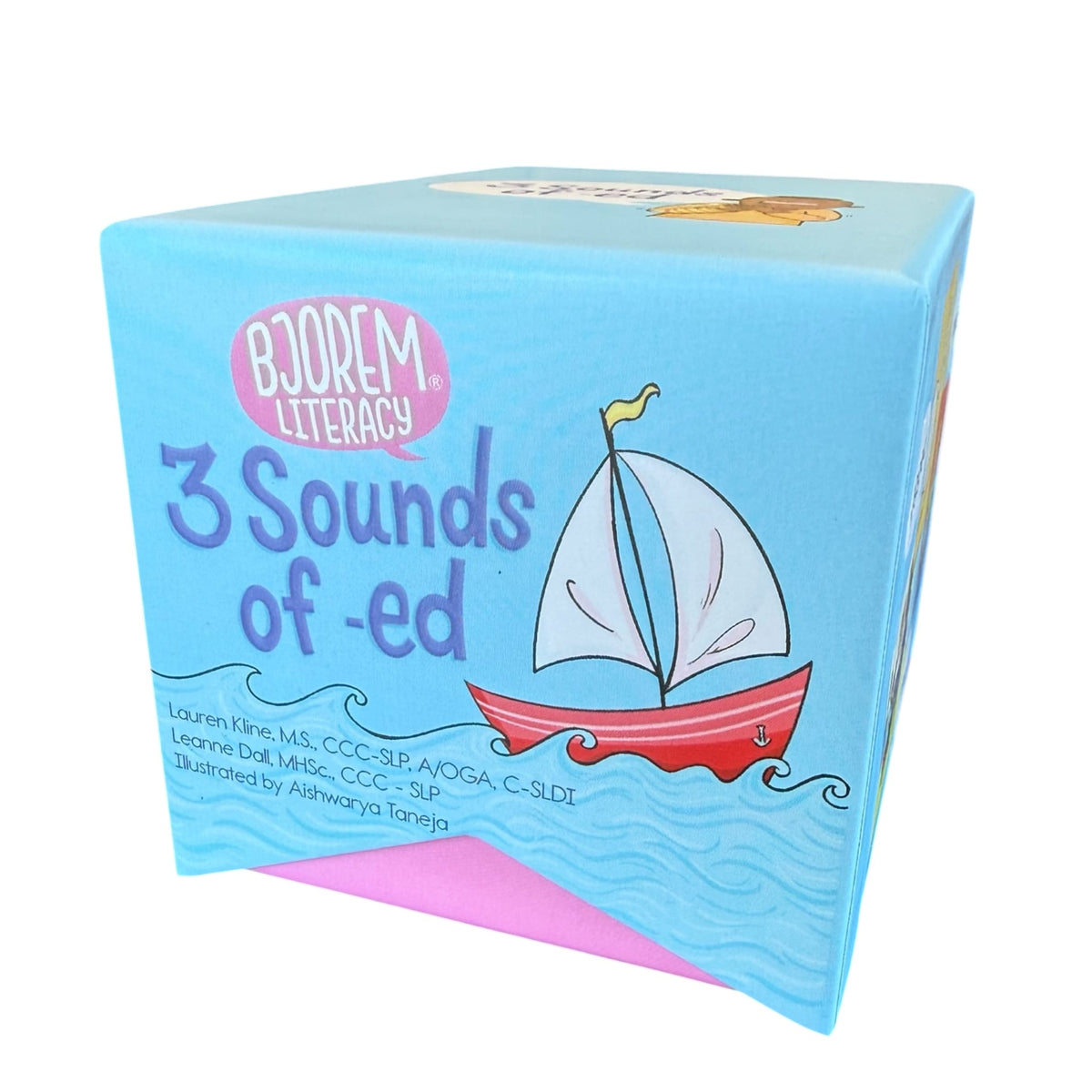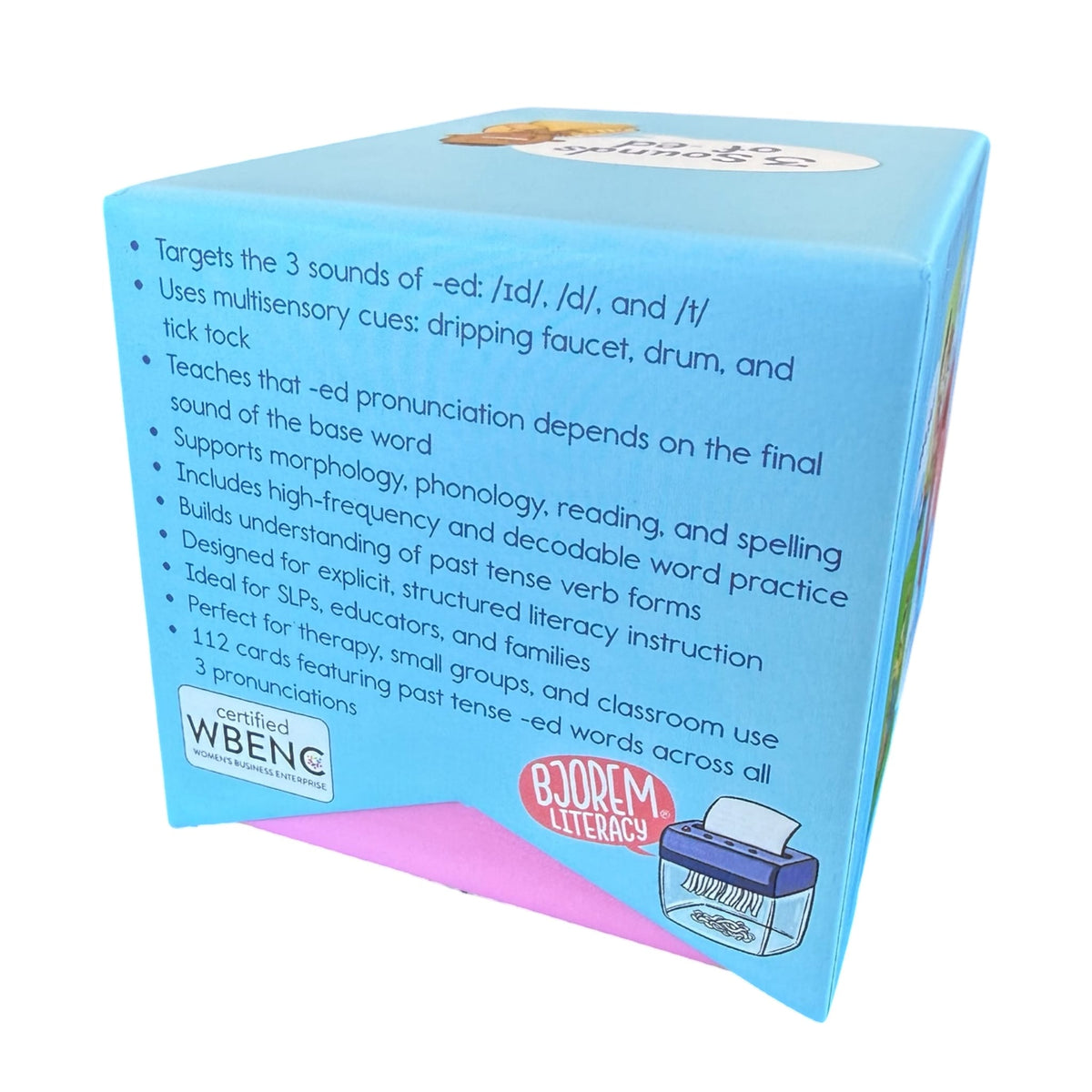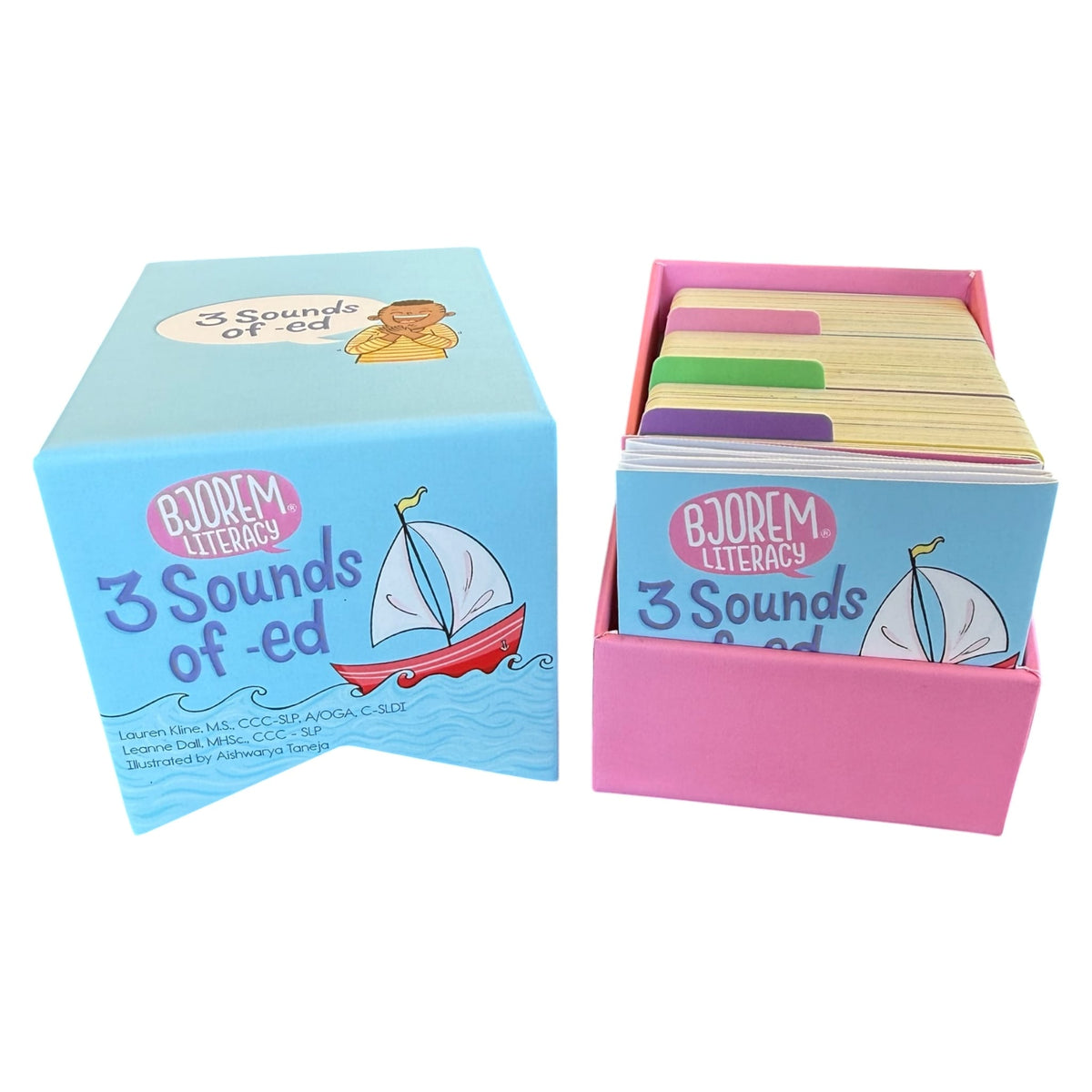

3 sounds of -ed
Did you know that suffix -ed has 3 different sounds? Recently I went to a school district and spoke to a group of SLPs and this was such an “aha moment!” I had them do a 3 column spelling sort, where I would dictate a word and they would then write the word in the correct column (e.g., “id” column if -ed makes that sound.)
Surprisingly, while these SLPs had no problem spelling the words, their ability to isolate the final sound and sort it was honestly challenging. Well, one of the reasons we created this deck was to work on phonemic awareness!
What is a Suffix and what does -ed do?
A suffix is a letter or group of letters added to the end of a base word to change its meaning or grammatical function. The -ed suffix is added to a base word to mark past tense. The base word stays a verb; only the tense changes.
How did we make this easier to teach?
-
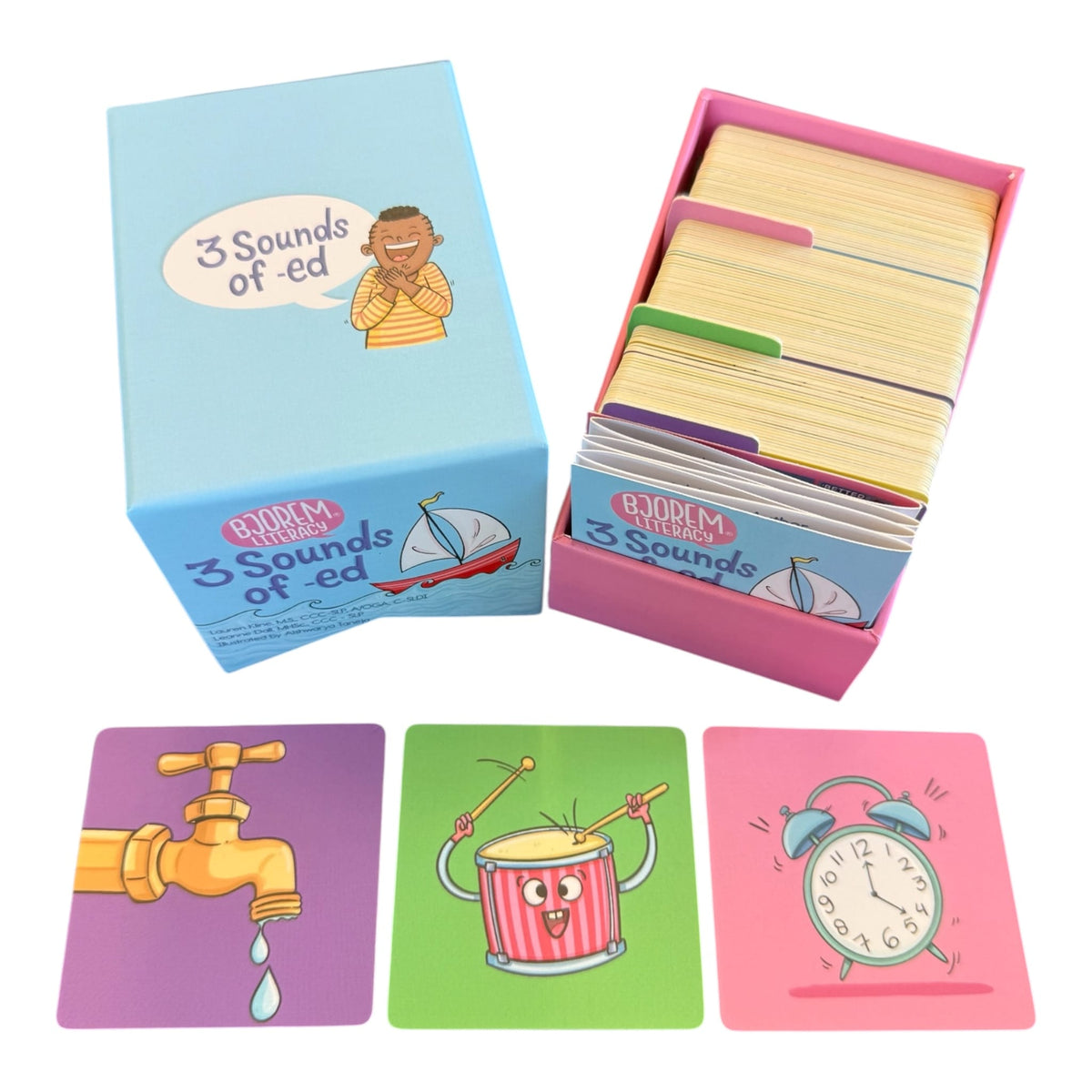
We created 3 visual cues that represent the 3 sounds of -ed.
-
We created kid friendly pictures and sentences that include the different sounds of -ed.
-
We incorporated spelling rules.
The 3 Sounds of the -ed Suffix
The suffix -ed makes three sounds: "id," "d," and "t." Which sound it makes depends entirely on the final sound of the base word.
The "id" Sound
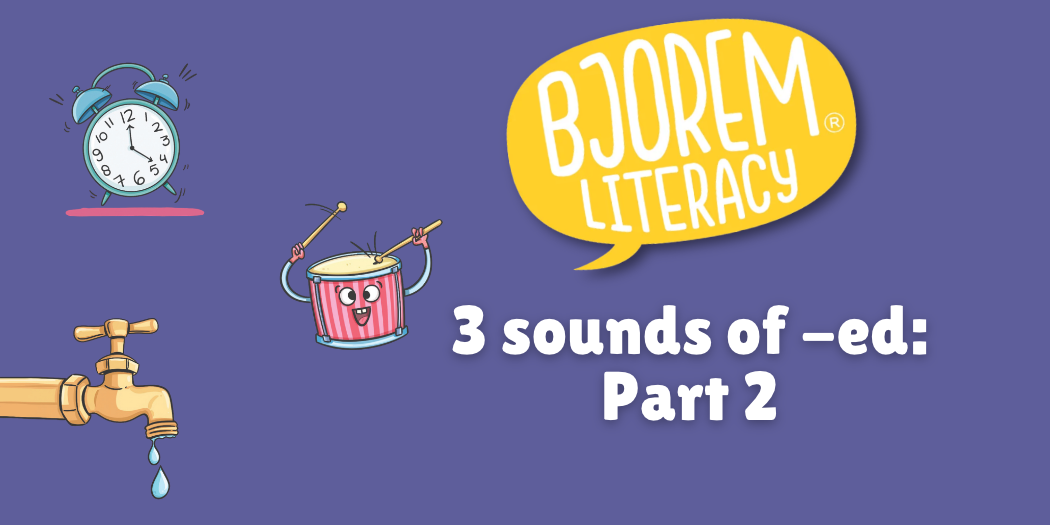
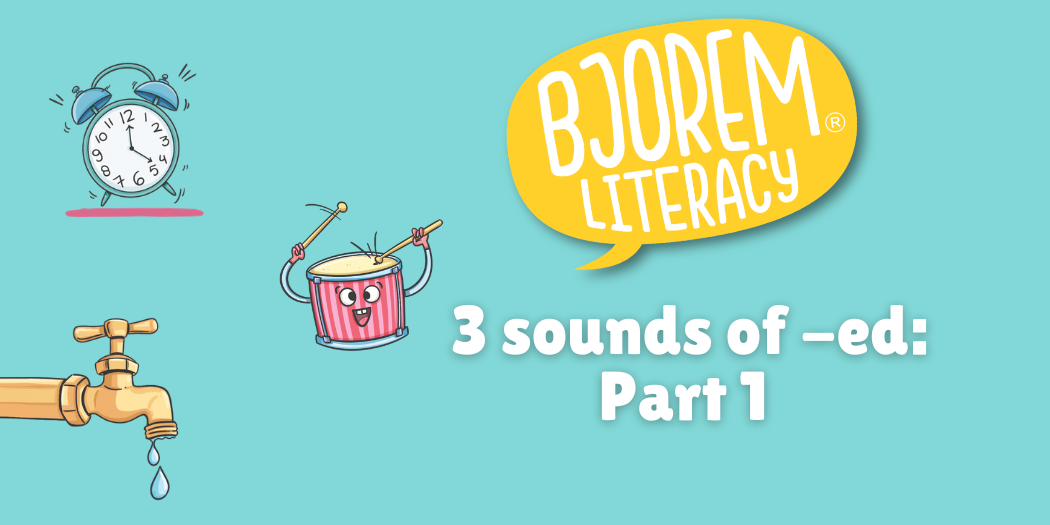
We use a dripping faucet sound to represent the "id" sound. It's closer to a short i than a short e. The -ed suffix makes this sound after a base word ending in t or d. This addition also adds a syllable to the word, since -ed now carries a vowel sound.
Take the word "rented": the base word "rent" is one syllable, and the suffix "-ed" adds a second.
The "d" Sound
We use a drum sound to represent the /d/ sound. The suffix -ed makes this sound after a voiced final sound. In the base word "drum," the final sound /m/ is voiced, so adding -ed produces "drummed," sounding like /d/.
The "t" Sound
We use a tick-tock sound to represent the /t/ sound. The suffix -ed makes this sound after a voiceless final sound. In the base word "match," the final sound /tʃ/ is voiceless, so adding -ed produces "matched," sounding like /t/.
*Did you notice that /d/ and /t/ are voiced and voiceless cognates? Yeah, this is when teaching voiced and voiceless cognates is SO important for our kids and can decrease the mental load of teaching a suffix like this.
Spelling Rules for the -ed Suffix
Okay, now let’s dive into spelling. So, with suffixes it’s not as straight forward as base word + suffix = new word. This is when you have to bring in the 3 great spelling rules.
If you need a refresher on what the 3 great spelling rules are, feel free to read them here: part 1 (doubling rule), part 2 (drop e rule), and part 3 (change y to i rule).
Look at three examples: grabbed, smiled, and carried.
-
Grabbed: base word "grab" follows the doubling rule, so the final b doubles before adding -ed.
-
Smiled: base word "smile" follows the drop e rule, so the final silent e drops before adding -ed.
-
Carried: base word "carry" follows the change y to i rule before adding -ed.

Well this deck in combo with the prefixes, suffixes, and bases deck is just perfect for teaching this suffix!
This deck is great for phonemic awareness, reading, spelling, and vocabulary practice. Once you teach the different spellings, that’s when a spelling sort (either 2 column or 3 column) is great practice for your students!