
When we teach kids to read and spell with confidence, one of the most important tools we can give them is a simple rule that works. That’s what the Drop E Rule does! It helps students unlock the mystery of what happens to that silent “e” when adding a suffix.
This is the second of three great spelling generalizations we love to teach. (Check out the first: Three Great Spelling Rules: Part 1 - The Doubling Rule if you haven’t already!) Let’s dive in.
What Is the Drop E Rule?
The Drop E Rule teaches that:
When adding a vowel suffix to a base word ending in silent e, you drop the e.
Simple, right? Let’s look at some examples:
-
hope + ing = hoping (not hopeing)
-
race + er = racer (not raceer)
In each case, the final e in the base word is dropped before adding a suffix that starts with a vowel like -ing, -ed, -able, or -er.
But here’s the twist—if the suffix starts with a consonant, you keep the silent e:
-
hope + less = hopeless
-
care + ful = careful
Why This Rule Can Be Tricky
Kids often struggle with this rule when decoding. That dropped e plays an important job—it tells the reader, “Hey! The vowel in this word is long!”
Take a look:
-
hoping (long o, as in hope)
vs. -
hopping (short o, as in hop)
👀 One letter makes a big difference in meaning and pronunciation!
Hands-On Learning with Bjorem Literacy®
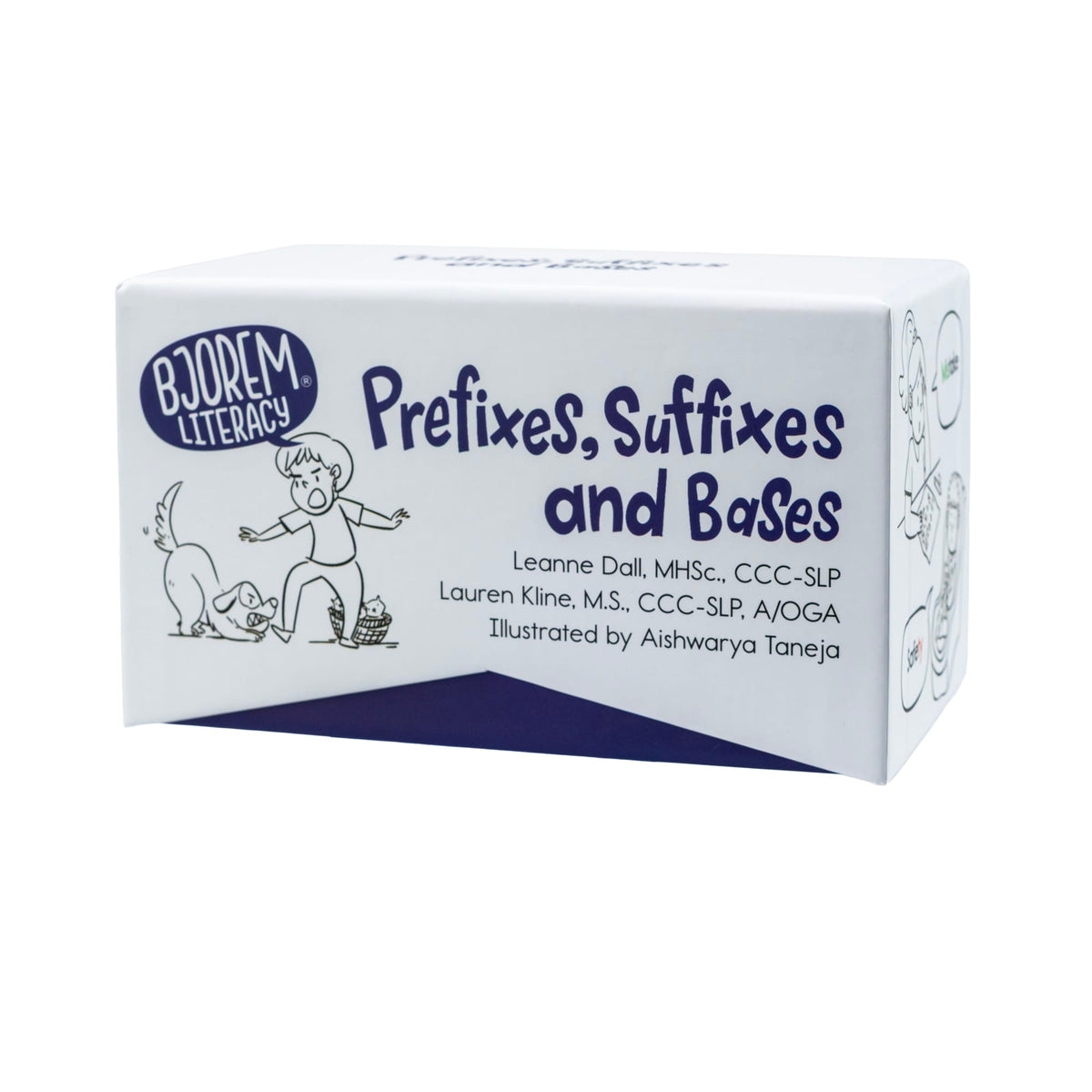
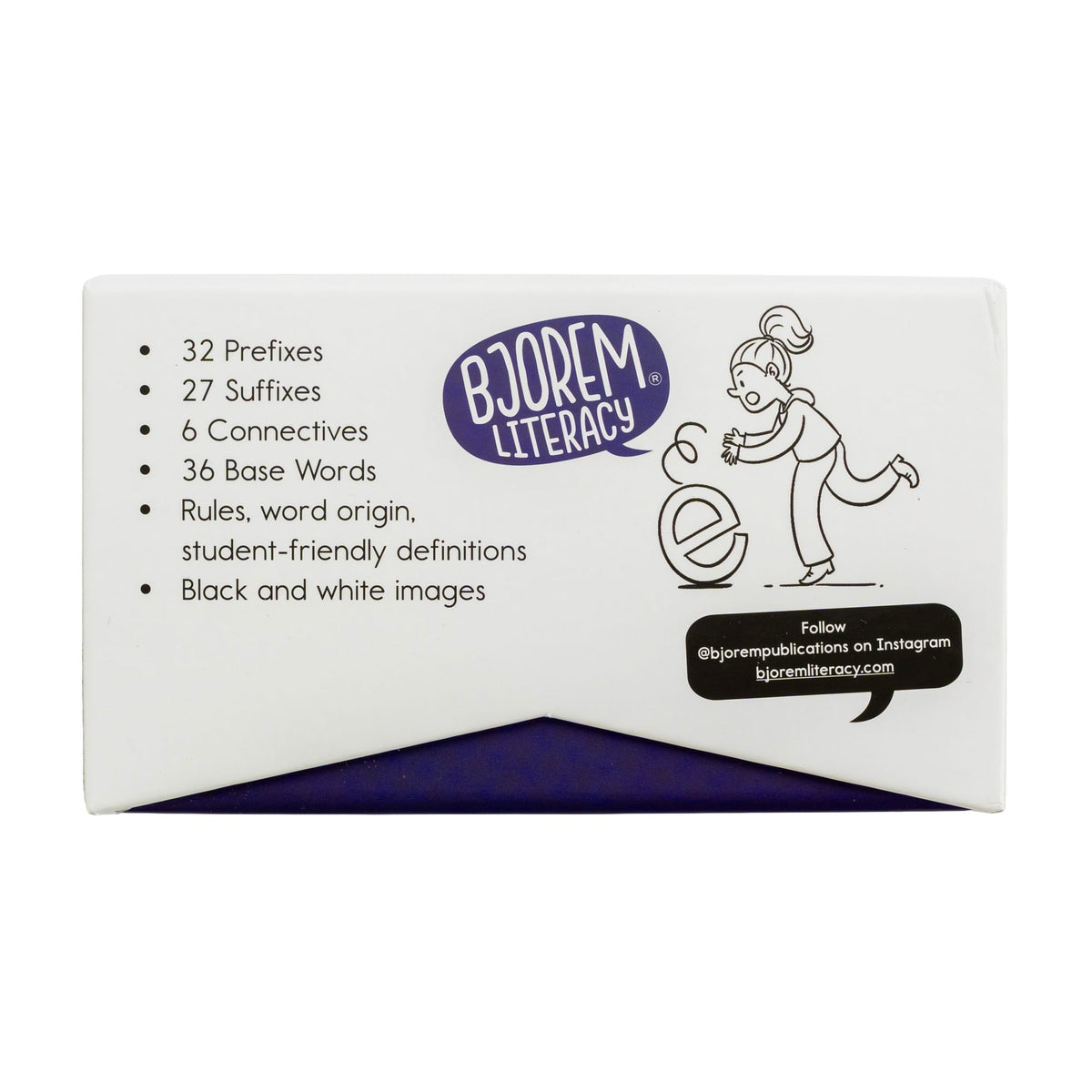
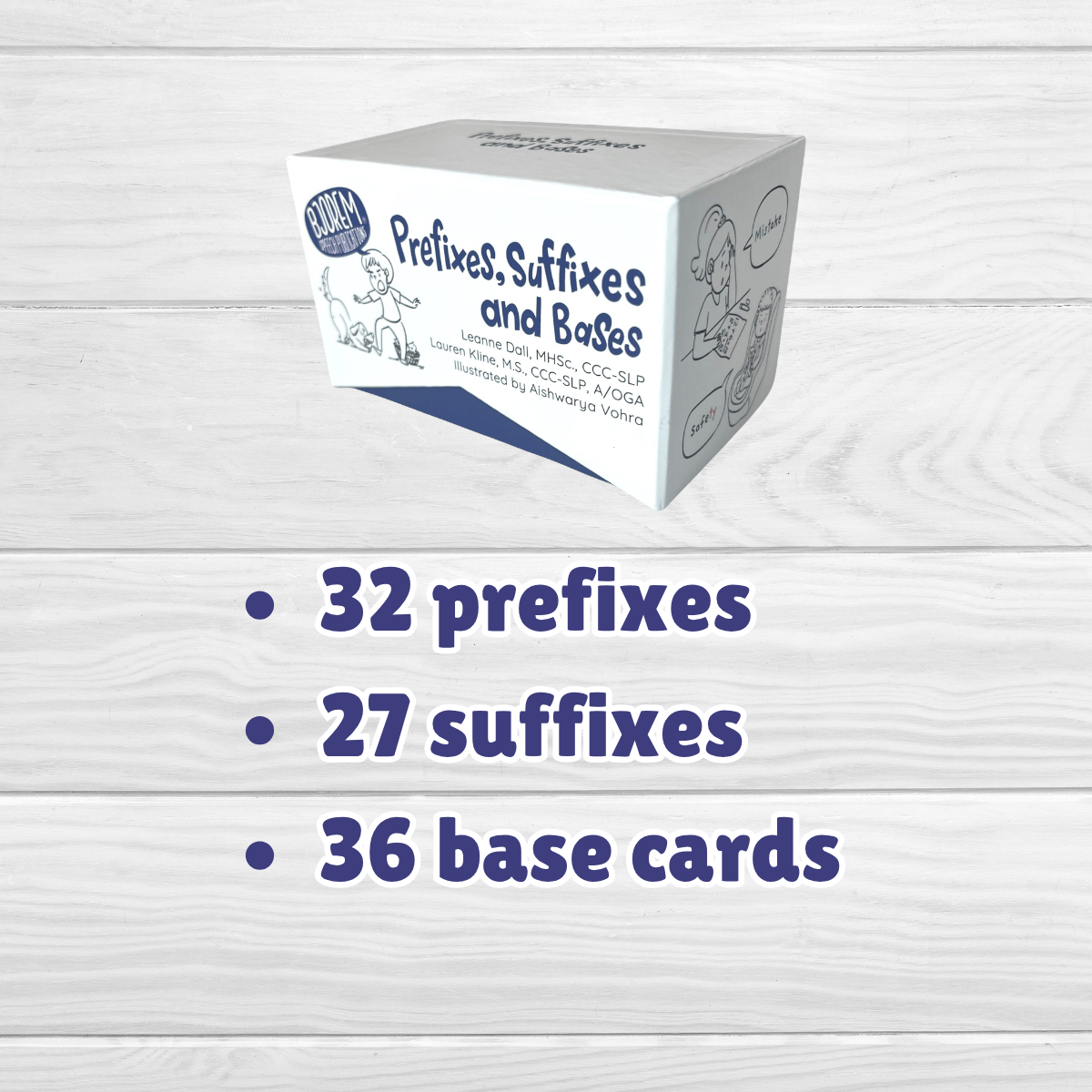
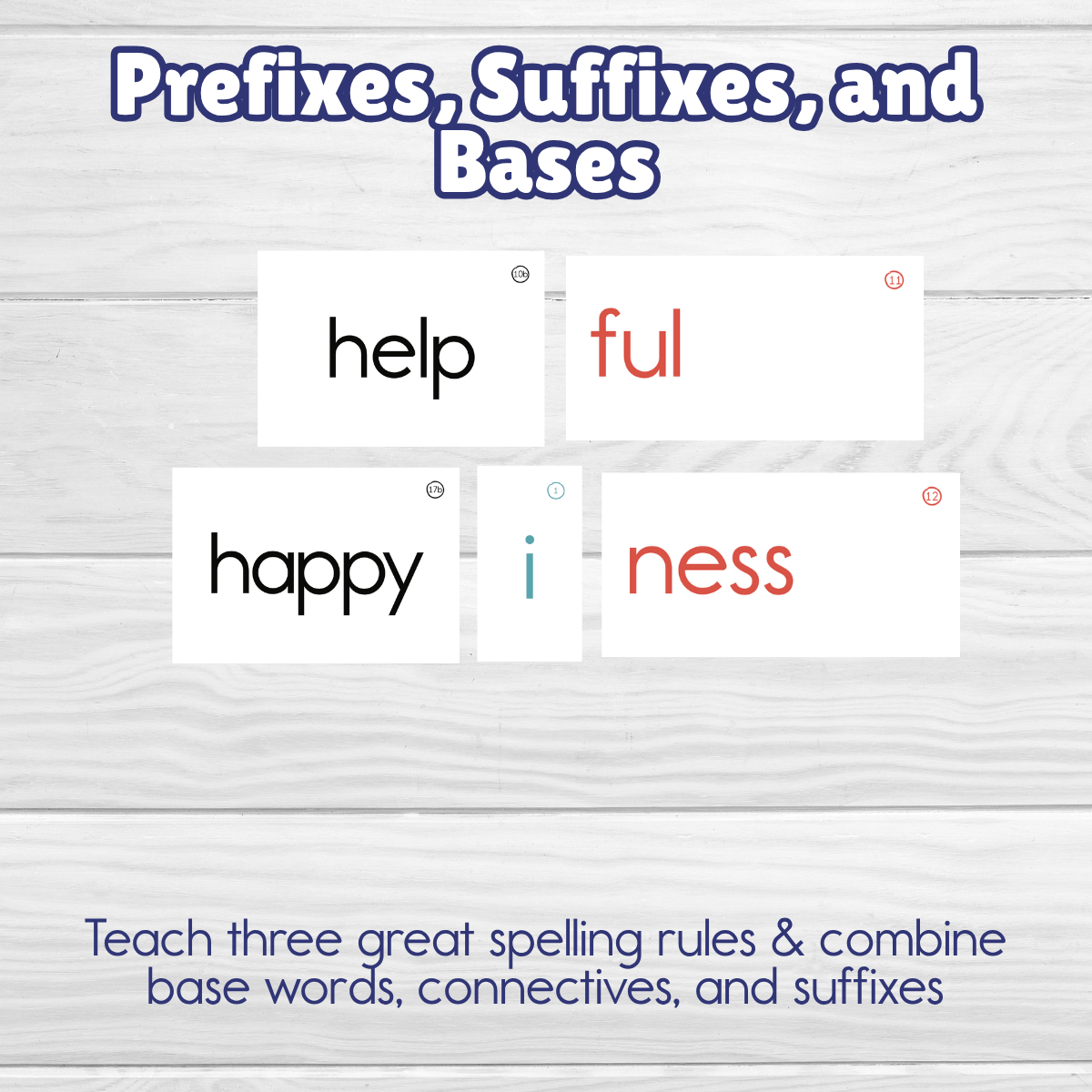
The Bjorem Literacy® Prefixes, Suffixes, and Bases Deck is a perfect tool for making this rule stick.
Here are some ways to use the deck:
-
Sort suffixes into vowel suffixes (like -ing, -ed, -able) and consonant suffixes (like -ness, -ly, -ful).
-
Build words with base words that end in silent e and add different types of suffixes to see what happens.
-
Create real and nonsense words to test understanding—and have a little fun!
-
Draw attention to vowel sounds so students remember why the e is dropped or kept.
Let’s Recap:
✅ Drop the final e when adding a vowel suffix
✅ Keep the final e when adding a consonant suffix
✅ Use visuals and word-building practice to make the rule stick
📚 The Bjorem Literacy® Prefixes, Suffixes, and Bases Deck is built for hands-on discovery, with student-friendly definitions, sort activities, and clear visuals—perfect for any literacy block or speech-language session.
Looking to learn about one syllable spelling generalizations? Check out these blogs:
Understanding Three One-Syllable Spelling Generalizations: -ck, -tch, and -dge