
Your child can sound out every word on the page, but when you ask what the story was about, you get a shrug. Sound familiar? You are not alone, and it is not a sign that something is wrong. Reading the words and understanding the words are two different skills, and plenty of kids master the first before catching up on the second.
At Bjorem Speech, we build tools that help children turn spoken words into real understanding, so we know this gap well. If you have been searching for how to help my child with reading comprehension, the good news is that this skill can grow at home, one conversation at a time. Here is what it actually involves, plus eight tips you can start using tonight.
What this article covers:
What is Reading Comprehension, Exactly?
Reading comprehension is the ability to read words and actually understand what they mean, both in the moment and as part of a bigger story. It goes beyond recognizing letters and sounding words out.
A child with strong comprehension can follow a plot, remember what happened earlier, and guess what comes next. They can also explain a story in their own words instead of repeating it back. This skill rests on vocabulary, listening comprehension, and a child's ability to connect new information to what they already know.

How to Improve Your Child's Reading Comprehension: 8 Tips
None of these strategies require special training or expensive materials, just a little intention. Try one or two to start, then build from there as they become habit:
1. Read Together Every Day
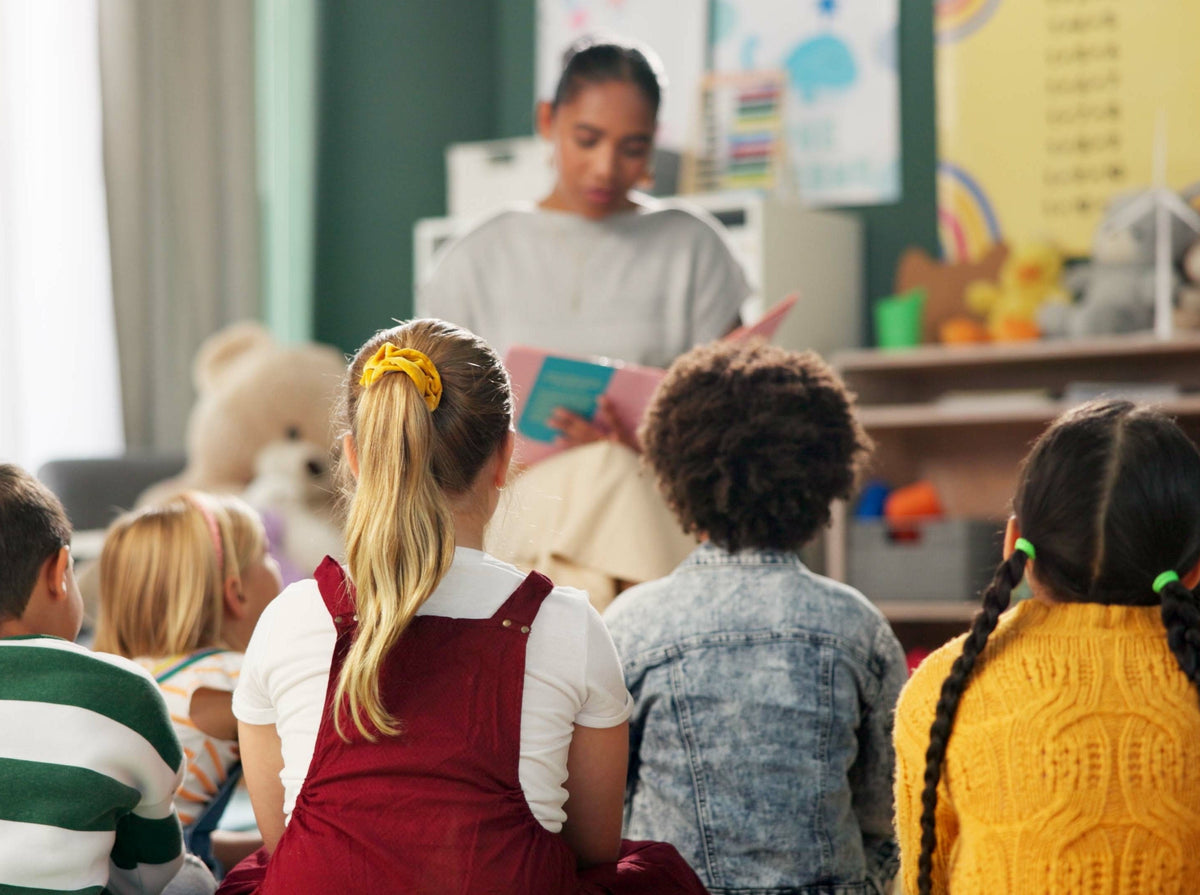
There are numerous benefits of reading to children. A steady 15 to 20 minutes each day builds more comprehension than an occasional hour-long marathon. Take turns reading aloud when you can, since hearing the words spoken gives the brain a chance to process meaning instead of just decoding letters (Whitehurst et al., 1988).
If your child needs a playful nudge to get excited about letters and sounds in the first place, our Better Letters card deck with the Laurie Berkner Band pairs familiar songs with letter practice, which makes that daily reading habit easier to stick to.
Curious about how reading together can help your child? Read our breakdown on the importance of reading to children.
2. Build Background Knowledge Before You Read
Comprehension leans heavily on what a child already knows, sometimes more than it leans on raw reading skill (Recht & Leslie, 1988). Before opening a new book, preview the cover and talk about what your child already knows about the topic. A quick real-world explanation of anything unfamiliar goes a long way.
3. Ask Questions the Whole Way Through
Before you start, ask what your child thinks the book might be about. While reading, pause every page or two and ask what just happened or why a character made a choice. Afterward, have them tell you the story in their own words (Joseph et al., 2019).

4. Encourage Retelling and Summarizing
Retelling forces a child to organize a story in their head, which is exactly what comprehension requires (Barton-Hulsey, Sevcik, & Romski, 2017). After a chapter, ask your child to walk you through what happened, in order, from start to finish. Our language-building card sets, designed by speech therapists, use this same structure to build sequencing skills.
5. Grow Vocabulary in Context
A child cannot understand a sentence if too many of its words are unfamiliar (Ouellette, 2006). When your child hits a word they do not know, ask them to guess its meaning from the sentence before you define it. Keep a running list of new words and look for chances to use them again that week.
6. Bring the Story to Life
Acting out a scene requires a child to understand a character well enough to become them (Rowe, 1998). After finishing a book, let your child pick characters and act out a favorite moment. Our sequencing card decks, designed by speech therapists, work well for this kind of hands-on practice.
7. Choose Just-Right Books
A book that is too hard pulls all of a child's attention toward decoding individual words, leaving little energy for the story itself. Look for books where your child can read roughly 9 out of every 10 words without help (Burns et al., 2015), and lean into whatever genre actually excites them.

8. Know When to Ask for Help
Every child develops on their own timeline, and a rough patch is normal. But if your child is consistently frustrated by reading or struggles to understand stories well below their age level, it's worth a closer look, as it could be a sign of language or speech problems in children (Spencer et al., 2018).
A speech-language pathologist can pinpoint the root cause and build a plan around it, so don't wait - evaluate. It's the first step in learning how to help a child struggling with reading.
Conclusion
Reading comprehension does not grow from drilling flashcards or logging minutes in a reading journal. It grows from real conversations about real stories, told again and again in small, everyday moments. Every question you ask and every story your child retells in their own words is building the skill in a lasting way.
Our tools are designed by speech therapists who understand exactly how language and comprehension develop together. Give a few of these tips a try this week, and be patient with the process. A child who reads for real understanding is well worth the wait.
Sources:
- Barton-Hulsey, A., Sevcik, R. A., & Romski, M. (2017). Narrative language and reading comprehension in students with mild intellectual disabilities. American Journal on Intellectual and Developmental Disabilities, 122(5), 392 to 408. https://doi.org/10.1352/1944-7558-122.5.392
- Burns, M. K., Pulles, S. M., Maki, K. E., Kanive, R., Hodgson, J., Helman, L. A., McComas, J. J., & Preast, J. L. (2015). Accuracy of student performance while reading leveled books rated at their instructional level by a reading inventory. Journal of School Psychology, 53(6), 437 to 445. https://pubmed.ncbi.nlm.nih.gov/26563597/
- Joseph, L. M., Alber-Morgan, S., Amspaugh, L. A., Ross, K., Helton, M., Konrad, M., & Davenport, C. (2019). Stop to ask and respond: Effects of a small-group self-questioning intervention on reading comprehension performance. Research and Practice for Persons with Severe Disabilities, 6(1), 27 to 40. https://pmc.ncbi.nlm.nih.gov/articles/PMC7367087/
- Ouellette, G. P. (2006). What's meaning got to do with it: The role of vocabulary in word reading and reading comprehension. Journal of Educational Psychology, 98(3), 554 to 566. https://doi.org/10.1037/0022-0663.98.3.554
- Recht, D. R., & Leslie, L. (1988). Effect of prior knowledge on good and poor readers' memory of text. Journal of Educational Psychology, 80(1), 16 to 20. https://doi.org/10.1037/0022-0663.80.1.16
- Rowe, D. (1998). The literate potentials of book-related dramatic play. Reading Research Quarterly, 33(1), 10 to 35. https://ila.onlinelibrary.wiley.com/doi/abs/10.1598/RRQ.33.1.2
- Spencer, M., Wagner, R. K., Petscher, Y., & Rivas, B. (2018). The reading comprehension and vocabulary knowledge of children with poor reading comprehension despite adequate decoding: Evidence from a regression-based matching approach. Journal of Educational Psychology, 111(1), 1 to 14. https://pmc.ncbi.nlm.nih.gov/articles/PMC6364747/
- Whitehurst, G. J., Falco, F. L., Lonigan, C. J., Fischel, J. E., DeBaryshe, B. D., Valdez-Menchaca, M. C., & Caulfield, M. (1988). Accelerating language development through picture book reading. Developmental Psychology, 24(4), 552 to 559. https://doi.org/10.1037/0012-1649.24.4.552