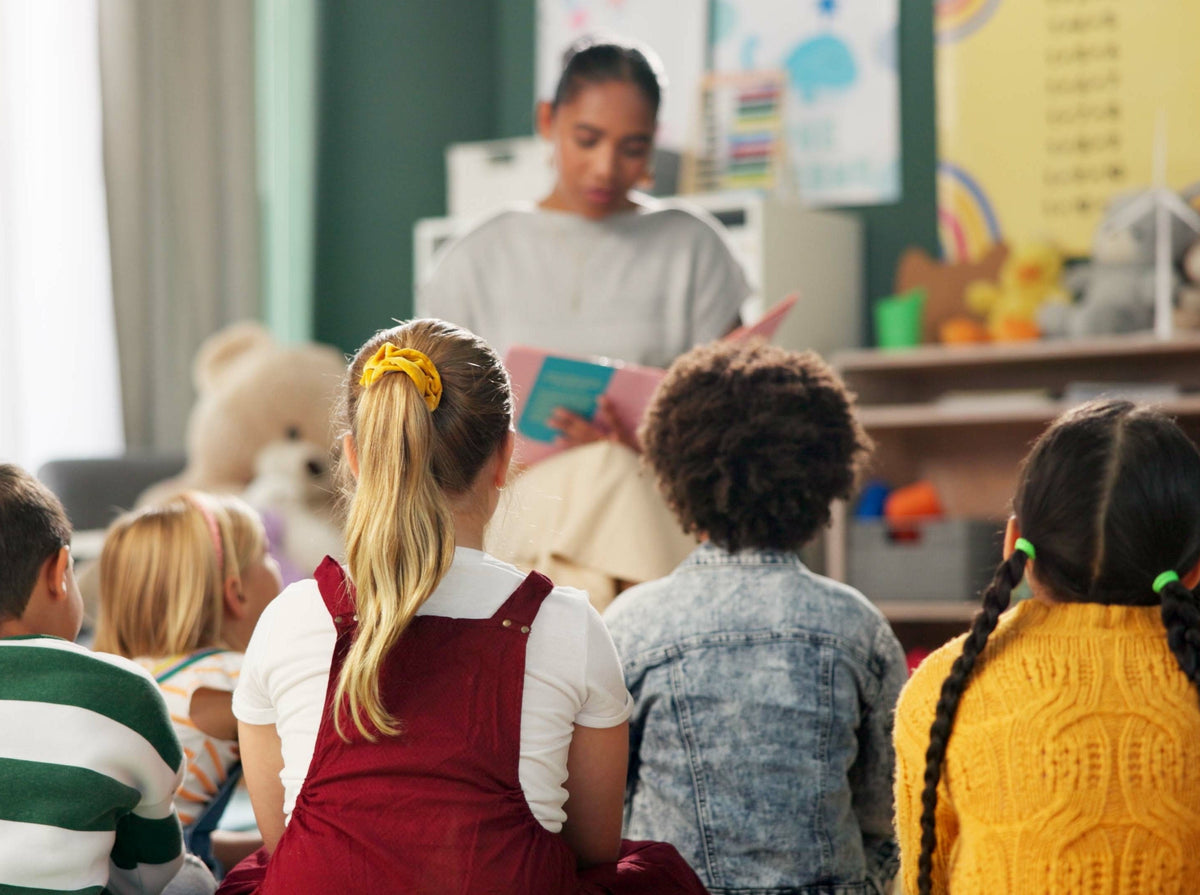

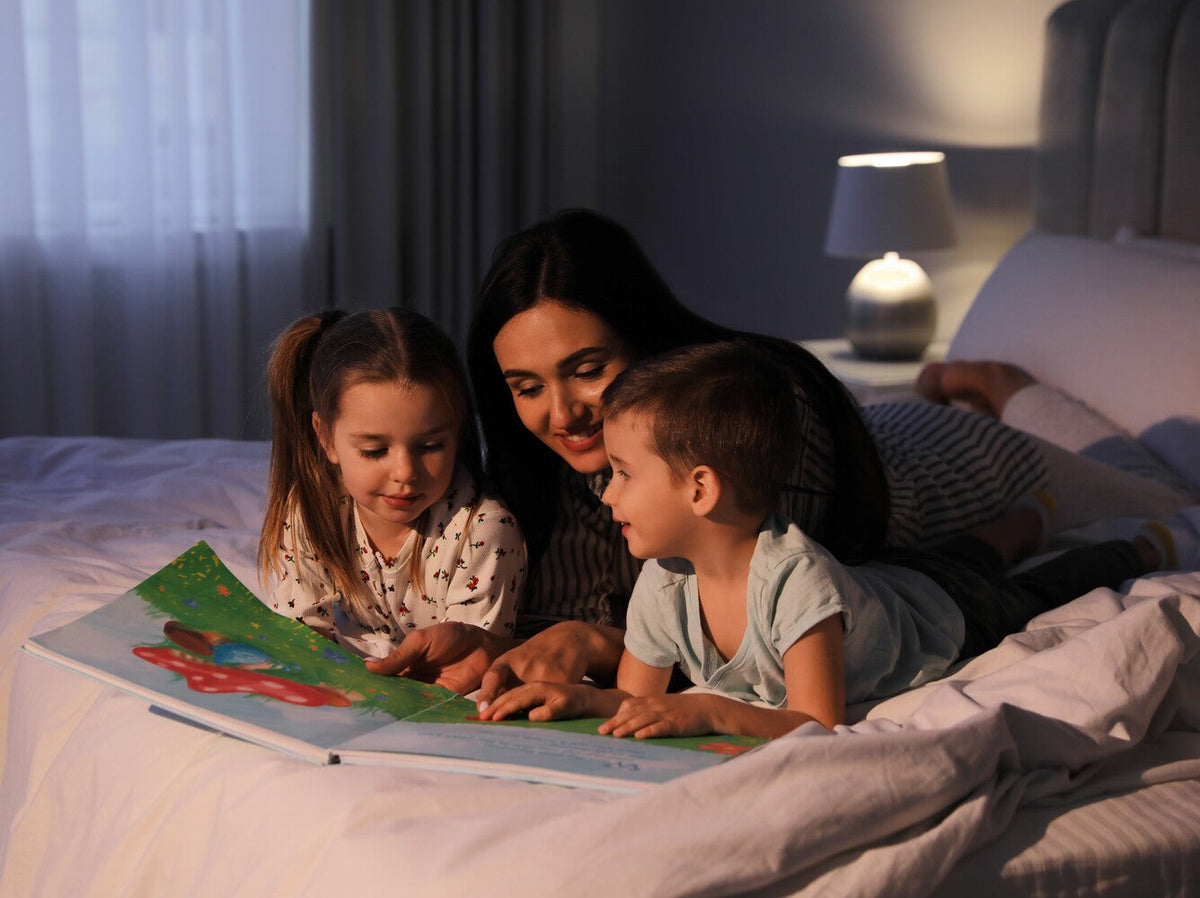
We've spent years helping families build strong communication skills, and if there's one habit we recommend above almost everything else, it's this: read to your child. It sounds simple, maybe even a little old-fashioned in a world full of apps and screens. But the research keeps saying the same thing. A few minutes with a book does more for a growing brain than most of us realize.
As speech-language pathologists, we see the ripple effects of reading every single day in our work with kids. It shapes vocabulary, attention, memory, and connection all at once. Let's walk through the benefits of reading to kids and why this small daily habit makes such a big difference.
Top 7 Benefits of Reading to Your Children
From the sounds your child hears to the way they handle big feelings, story time works on more fronts than most parents realize. Here's why reading is important for kids:
1. Builds Phonological Awareness Through Rhyme and Repetition
Rhyming books do double duty. Kids naturally tune into repeated sounds and syllables, and that skill, known as phonological awareness, is one of the strongest predictors of later reading success (Bryant, MacLean, Bradley, & Crossland, 1990). It's one of our favorite hidden benefits of story time as speech-language pathologists.
When your child chimes in on a familiar rhyme or notices that two words end the same way, they're practicing skills that support both clearer speech and stronger reading readiness. A silly rhyming book can quietly lay the groundwork for accurate sound production and easier phonics down the road.

2. Boosts Memory
Following a story means remembering who did what and why. Caregivers who ask questions and connect new details to what a child already knows help them fold fresh facts into memory more effectively, strengthening recall over time (Miller-Goldwater, Williams, Hanft, & Bauer, 2024).
Reading the same book more than once builds this skill even further. Children start predicting what happens next or filling in a missing word before you say it. That kind of recall strengthens the same memory pathways they'll lean on for following directions and learning new information at school.
3. Introduces Kids to the Wider World
Books hand your child a passport before they can even walk. Even children as young as 15 months can transfer what they learn from a picture book to a real object, especially when the illustrations closely resemble real life (Ganea, Pickard, & DeLoache, 2008).
That exposure builds more than curiosity. Seeing characters who look different or live differently helps children understand that the world is bigger than their own experience, and that understanding lays early groundwork for open-mindedness. A single picture book can spark a question that leads to a whole conversation about somewhere new.
4. Grows Empathy and Emotional Understanding
Stories put children inside someone else's experience. When a character feels scared, embarrassed, or joyful, a child gets to notice that feeling from a safe distance and start connecting it to words like nervous or proud.
Mothers who read often and choose books thoughtfully tend to have kindergartners with stronger empathy and social-emotional adjustment (Aram & Aviram, 2009).
That practice adds up. Children who hear stories regularly tend to recognize emotions more easily and relate to other people's perspectives with more ease. Understanding feelings is a foundational social skill, and books offer a low-pressure way to build it one page at a time.

5. Reduces Stress and Supports Emotional Regulation
Story time has a calming effect that goes beyond a soft voice and a warm lap. Sitting down with a book gives a child's nervous system a chance to slow down, especially after a busy day full of new experiences.
Warm, interactive shared reading has even been shown to soften the impact of a parent's own stress on a child's development and behavior (Kroeff, Bernardi, Da Silva, Valentini, Goldani, & Bandeira, 2025).
That predictable pause helps kids self-soothe and manage big emotions with less overwhelm. For children who deal with anxiety or sensory overload, a familiar book can become a genuine coping tool, not just entertainment.
6. Creates Comforting Routines
Children thrive on predictability, and reading fits neatly into a daily routine. Family routines like this provide both a stable structure and an emotional climate that supports healthy development in young children (Spagnola & Fiese, 2007).
Routines like this also help children wind down and transition between activities. Reading before sleep, for example, signals that it's time to settle in, which can make bedtime smoother for the whole family.
7. Naturally Reduces Screen Time
Every minute spent with a book is a minute spent away from a screen, and that swap matters more than it might seem. Pediatric guidelines encourage caregivers to favor hands-on, face-to-face activities like reading over passive screen use for young children (American Academy of Pediatrics, Council on Communications and Media, 2016).
Swapping even one screen session a day for reading time gives kids valuable practice with focus and imagination, all without the passive pull of autoplay. It's a simple substitution that adds up over the course of a childhood.
Ready to help your child read with more confidence? Check out our guides on how to improve your child's reading comprehension and how to help a child with reading difficulties.

Conclusion
Reading to your child costs nothing but a few minutes and a good book, yet the benefits stretch across language, memory, empathy, and connection. It's one of the most powerful tools parents have.
Every child develops language at their own pace. But if reading time reveals a gap, like a toddler who isn't picking up new words, trust your instincts. Don't wait - evaluate. A speech-language pathologist can help you understand what's typical and what might need extra support.
We build our tools, designed by speech therapists, to make speech and language practice feel like play, especially if you’re struggling with speech disorders in children. Keep turning those pages. Your child's brain is listening to every word.
Sources:
-
American Academy of Pediatrics, Council on Communications and Media. (2016). Media and young minds. Pediatrics, 138(5), e20162591. https://doi.org/10.1542/peds.2016-2591
-
Aram, D., & Aviram, S. (2009). Mothers' storybook reading and kindergartners' socioemotional and literacy development. Reading Psychology, 30(2), 175 to 194. https://doi.org/10.1080/02702710802275348
-
Baker, L., Scher, D., & Mackler, K. (1997). Home and family influences on motivations for reading. Educational Psychologist, 32(2), 69 to 82. https://doi.org/10.1207/s15326985ep3202_2
-
Bryant, P.E., MacLean, M., Bradley, L.L., & Crossland, J. (1990). Rhyme and alliteration, phoneme detection, and learning to read. Developmental Psychology, 26(3), 429 to 438. https://doi.org/10.1037/0012-1649.26.3.429
-
Ganea, P.A., Pickard, M.B., & DeLoache, J.S. (2008). Transfer between picture books and the real world by very young children. Journal of Cognition and Development, 9(1), 46 to 66. https://doi.org/10.1080/15248370701836592
-
Kroeff, C.R., Bernardi, J.R., Da Silva, C.H., Valentini, N.C., Goldani, M.Z., & Bandeira, D.R. (2025). Maternal stress and child development: The moderating role of interactive shared reading. International Journal of Environmental Research and Public Health, 22(6), 916. https://doi.org/10.3390/ijerph22060916
-
Miller-Goldwater, H.E., Williams, B.M., Hanft, M.H., & Bauer, P.J. (2024). Contributions of shared book reading to children's learning of new semantic facts through memory integration. Early Childhood Research Quarterly, 68, 99 to 111. https://doi.org/10.1016/j.ecresq.2024.04.005
-
Spagnola, M., & Fiese, B.H. (2007). Family routines and rituals: A context for development in the lives of young children. Infants & Young Children, 20(4), 284 to 299. https://doi.org/10.1097/01.IYC.0000290352.32170.5a