
A speech delay means your child is having trouble producing speech sounds clearly. A language delay means they’re slower to understand words or put them together. The two often turn up together, and about 40% of children with a speech sound disorder also have a language difficulty.
If you’re wondering how to help a child with a speech delay at home, you don’t have to wait for an appointment to start. The single most useful thing you can do at home is talk, play, and read with them every day. Answer every sound, point, and reach they offer you, because each one is your child communicating.
We’re speech-language pathologists, and what families ask us most is what they can do between sessions. The habits below support both kinds of delay, and they work best alongside an SLP rather than instead of one.
Incorporate Daily Habits
Your child learns to talk through hundreds of small exchanges with you outside of practice sessions. Five habits make the most powerful difference:
- Respond to every attempt. A point, a sound, or a reach is your child telling you something, and answering teaches them that communicating gets results.
- Model words and gestures together. Say “up” as you hold out your arms, so your child hears the word and sees what it means at the same time.
- Imitate, then add one word. Your child says “ball,” you say “big ball.” One extra word is a small enough step that your child can copy it, where a full sentence would be too much (Cleave, Becker, Curran, Van Horne, & Fey, 2015).
- Praise the attempt, however it comes out. Your child keeps trying when trying goes well for them.
- Wait. Leave a longer gap than usual after you speak, because your child could need more time to get a word out.
If your child waves instead of saying hello, wave back and carry on the exchange. Gestures, signs, and pictures are all communication, and using them doesn’t hold spoken words back (Millar, Light, & Schlosser, 2006).

Narrate Your Routines
One of the best ways to work speech therapy into everyday activities is to narrate your routine. Say what you’re doing while you do it, in short phrases your child can catch. “Stir, stir, stir.” “Apples in the cart.” “Socks on.”
Your child hears the word at the exact moment they see the thing, so they know what it refers to (Masek et al., 2021). Tasks like cooking, bath time, and getting dressed come round every day, so the same words turn up in the same situations.
And if you narrate whatever your child is already looking at, they’re extra likely to remember it because they’re already interested in it.
Make Book Time Interactive
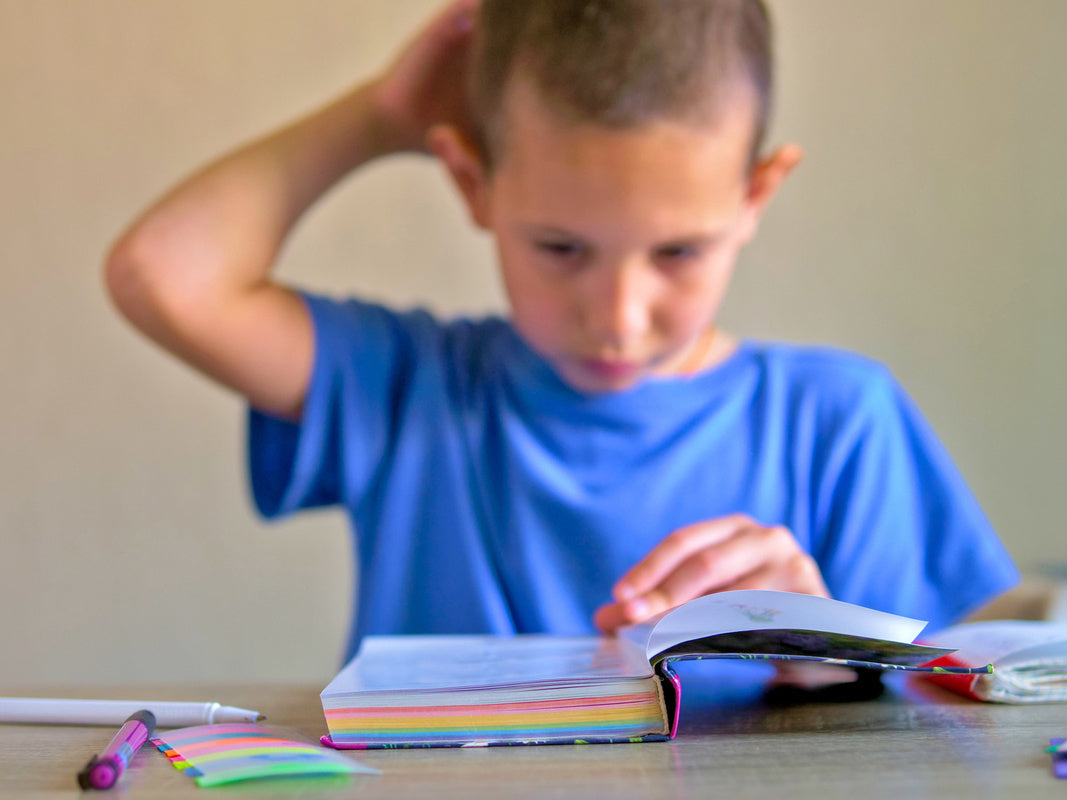
Reading the words on the page is only half of book time. The other half is the conversation around it, and that’s the part that does the most for a child with a speech delay.
Stop every so often and talk about what you’re both looking at. Ask what the dog is doing. Point out a word your child hasn’t encountered. Link it back to your child’s week, like “we saw a dog at the park.” Each of those hands your child a turn to speak, which gives them a chance to practice saying words they might have trouble with.
Let your child hold the book, turn the pages, and pick the same one every night if they want to (Horst, Parsons, & Bryan, 2011). When your child already knows the story, they can predict what’s coming, which makes it much easier for them to say something about it.

Keep Practice Playful
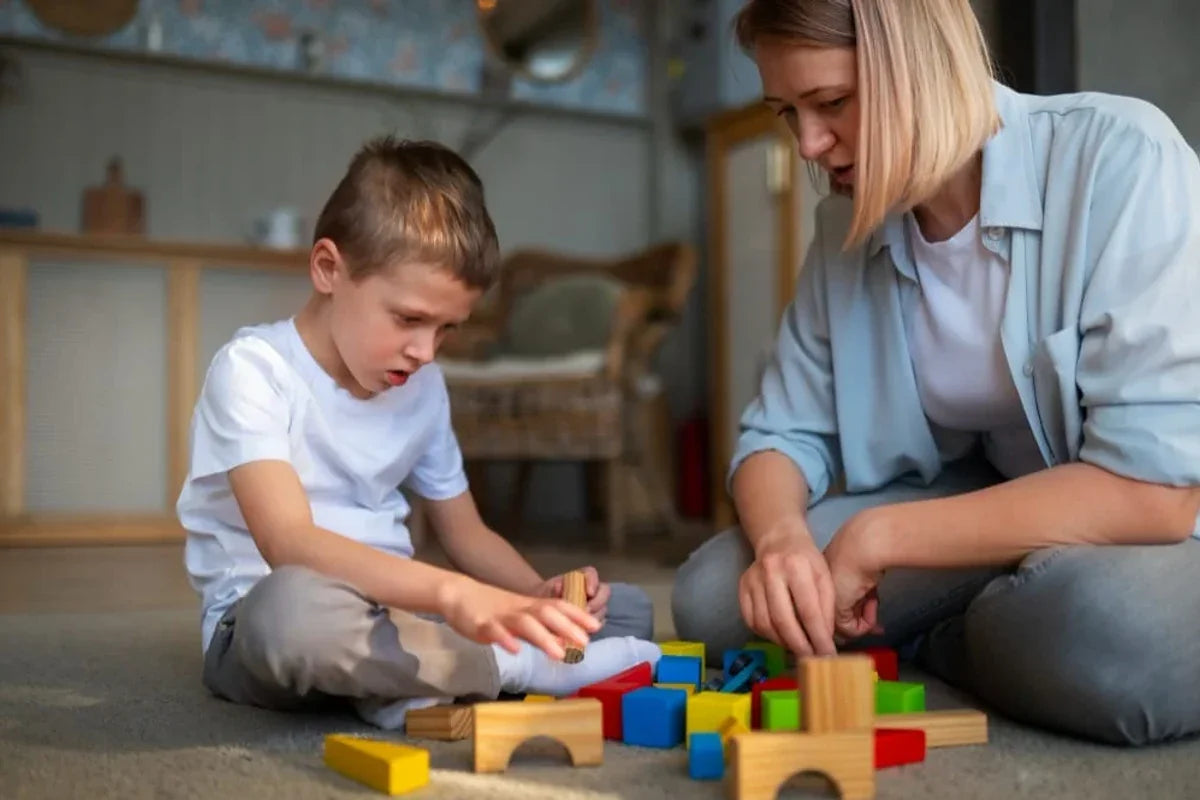
A toddler often can’t sit and drill words for twenty minutes, and if you try, they’ll start avoiding it altogether. You’ll get further with a few minutes at a time, several times a day, woven into whatever you’re already doing.
Turn it into a game wherever you can. Take turns naming what you see on speech therapy picture cards, make a silly sound, and see if your child makes it back, or hide a toy and talk about where it’s gone.
Keep the bar low on what counts as at-home speech therapy practice. A minute of back-and-forth in the car counts, and so does even one silly sound at bath time.

Know When to Bring in a Professional
Book a speech-language evaluation whenever you’re worried, at any age. There’s no minimum age for speech therapy, and early intervention is available from birth.
By 24 months, most children put two words together, like “more milk.” If your child isn’t doing that yet, or if they’ve lost words or social skills they used to have, the conversation is overdue. The same goes if you’ve mentioned it to your doctor and the worry hasn’t gone away. In that case, ask about a specialist evaluation and contact your state or territory’s early intervention program yourself.
You’ll know the signs your child needs speech therapy better than anyone, because you’re with them every day. An evaluation tells you exactly where your child is and what they need next, and a speech-language pathologist can show you which of these home activities will do your child the most good. So don’t wait - evaluate.
Special Situations to Know About
The advice above applies to many children with speech delays, but every child is different. These two situations can change what helps, so here’s what to know about each one.
Raising a Bilingual Child
Speaking two languages at home doesn’t cause a speech delay (Hambly, Wren, McLeod, & Roulstone, 2013), and nobody should tell you to drop one. If a professional suggests it, ask them what they’re basing that on. Carry on chatting away in whichever languages your family uses, and ask that the evaluation cover all of them, because your child might show skills in one that don’t turn up in the other.
Childhood Apraxia of Speech
Childhood apraxia of speech, or CAS, looks like a speech delay from the outside but works differently underneath. Your child knows exactly what they want to say, and the tricky part is planning the mouth movements to say it. CAS needs targeted therapy with a speech-language pathologist (Murray, McCabe, & Ballard, 2014), so the usual advice isn’t enough on its own here.
Your home practice still helps, though. Ask your pathologist which activities to focus on between sessions, and keep them short and playful, the same as you would for any other child. Apraxia toys and tools are a fun way to get that practice going.
Frequently asked questions
How long before I see any change?
It varies a lot from child to child. Some pick up new words within weeks of you changing how you talk with them, and others take months. Progress shows up in more places than word count, like more attempts to communicate, clearer sounds, new gestures, and other people understanding your child more often. If none of that is changing, book an evaluation, whatever your child’s age.
My child understands everything but barely talks. Is that still a delay?
That gap can still mean a delay. Understanding and talking develop separately, so a child can follow every instruction you give and still struggle to produce words. Mention both halves at the evaluation, because that gap is useful information.
Does a pacifier or thumb sucking cause a speech delay?
Not on its own. What a long pacifier habit can do is change how your child’s teeth and jaw sit, which affects how certain sounds come out (Barbosa et al., 2009). Having a pacifier in their mouth can also create fewer chances to practice talking.
Can I learn to do speech therapy activities myself?
Plenty of parents do. Speech-language pathologists regularly train parents to run activities at home, since you’re with your child far more than they are (Roberts et al., 2019). Ask what that would involve at your first appointment.
Sources:
- Barbosa, C., Vasquez, S., Parada, M. A., Gonzalez, J. C. V., Jackson, C., Yanez, N. D., Gelaye, B., & Fitzpatrick, A. L. (2009). The relationship of bottle feeding and other sucking behaviors with speech disorder in Patagonian preschoolers. BMC Pediatrics, 9, Article 66. https://doi.org/10.1186/1471-2431-9-66
- Cleave, P. L., Becker, S. D., Curran, M. K., Van Horne, A. J. O., & Fey, M. E. (2015). The efficacy of recasts in language intervention: A systematic review and meta-analysis. American Journal of Speech-Language Pathology, 24(2), 237 to 255. https://doi.org/10.1044/2015_AJSLP-14-0105
- Frizelle, P., Tolonen, A. K., Tulip, J., Murphy, C. A., Saldana, D., & McKean, C. (2021). The influence of quantitative intervention dosage on oral language outcomes for children with developmental language disorder: A systematic review and narrative synthesis. Language, Speech, and Hearing Services in Schools, 52(2), 738 to 754. https://doi.org/10.1044/2020_LSHSS-20-00058
- Hambly, H., Wren, Y., McLeod, S., & Roulstone, S. (2013). The influence of bilingualism on speech production: A systematic review. International Journal of Language & Communication Disorders, 48(1), 1 to 24. https://doi.org/10.1111/j.1460-6984.2012.00178.x
- Horst, J. S., Parsons, K. L., & Bryan, N. M. (2011). Get the story straight: Contextual repetition promotes word learning from storybooks. Frontiers in Psychology, 2, Article 17. https://doi.org/10.3389/fpsyg.2011.00017
- Millar, D. C., Light, J. C., & Schlosser, R. W. (2006). The impact of augmentative and alternative communication intervention on the speech production of individuals with developmental disabilities: A research review. Journal of Speech, Language, and Hearing Research, 49(2), 248 to 264. https://pubs.asha.org/doi/10.1044/1092-4388(2006/021)
- Murray, E., McCabe, P., & Ballard, K. J. (2014). A systematic review of treatment outcomes for children with childhood apraxia of speech. American Journal of Speech-Language Pathology, 23(3), 486 to 504. https://doi.org/10.1044/2014_AJSLP-13-0035
- Roberts, M. Y., Curtis, P. R., Sone, B. J., & Hampton, L. H. (2019). Association of parent training with child language development: A systematic review and meta-analysis. JAMA Pediatrics, 173(7), 671 to 680. https://doi.org/10.1001/jamapediatrics.2019.1197