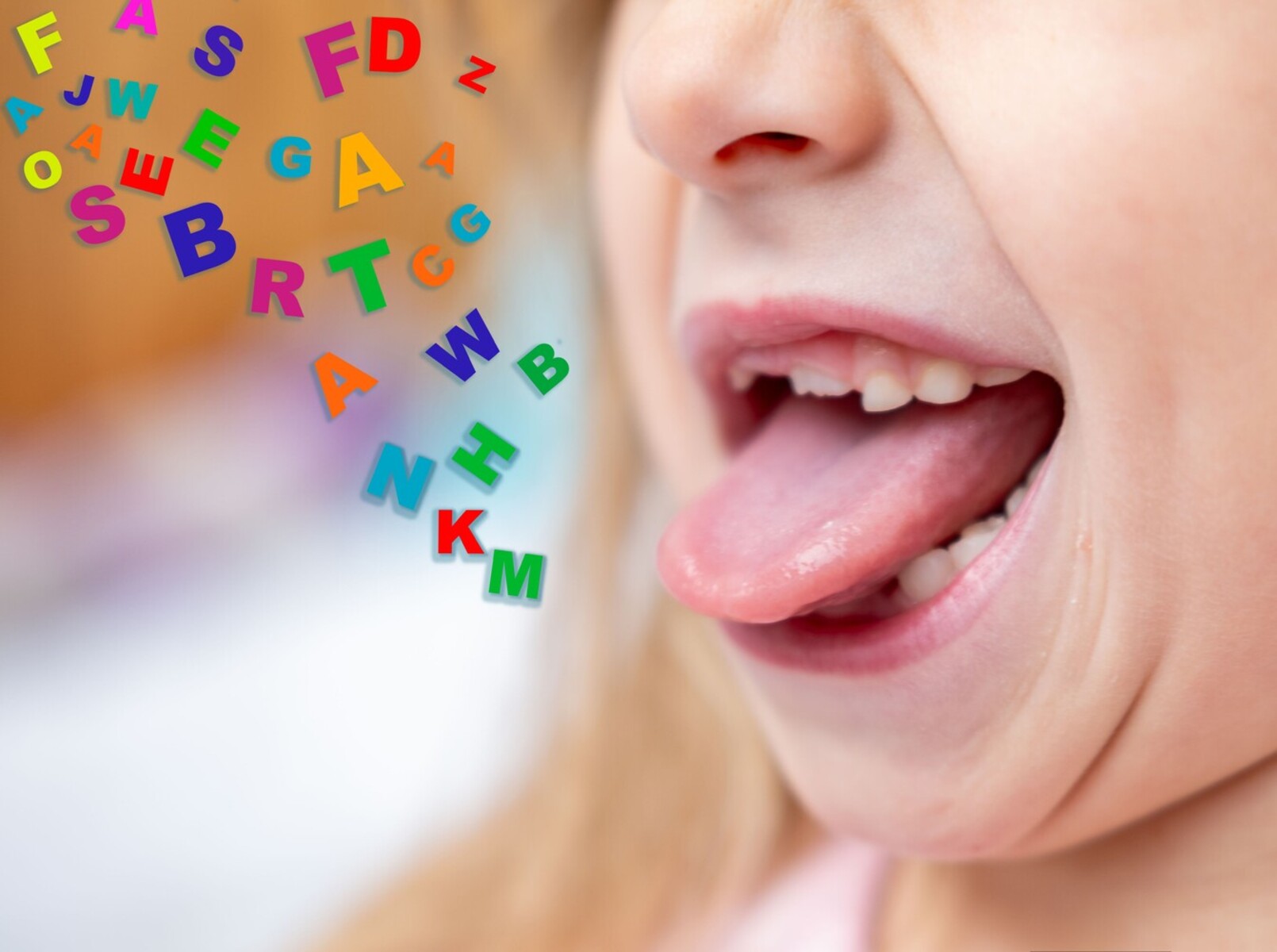
If you've watched your child open their mouth to say a word, watched their jaw and lips search for the right shape, and watched the word come out sounding nothing like what they meant, you already have a feel for what we're about to describe.
Apraxia of speech in children, often called CAS, is one of the more misunderstood speech disorders we see in our work. It's a wiring issue between a child's brain and their mouth, and understanding what's actually happening makes the whole situation far less scary.
We've spent years building tools for families navigating CAS, and we want to walk you through what it is, why it happens, how it gets diagnosed, and what real progress looks like.
What this article covers:
- What is Childhood Apraxia of Speech?
- How is Childhood Apraxia of Speech Diagnosed?
- How is Childhood Apraxia of Speech Treated?
What is Childhood Apraxia of Speech?
Childhood apraxia of speech is a speech sound disorder that makes it hard for a child to plan and coordinate the mouth movements needed for clear speech, even though the muscles themselves work just fine. Your child knows exactly what they want to say. The message simply gets scrambled between the brain and the mouth.
This matters because it separates CAS from other speech and language struggles. A child with CAS is not confused about language and is not choosing to mumble. Their brain has trouble directing the lips, jaw, and tongue in the right sequence to produce sounds correctly.
CAS is also called developmental apraxia of speech or developmental verbal dyspraxia. With focused, consistent speech therapy, most children make real progress.

Symptoms of Childhood Apraxia of Speech
Symptoms shift depending on a child's age, but there are some patterns we watch for closely. In children younger than 3, early signs of childhood apraxia of speech may include:
- Little to no babbling or cooing as an infant (Highman, Hennessey, Leitão, & Piek, 2013; Overby, Caspari, & Schreiber, 2019).
- Saying a first word much later than expected.
- Using only a small handful of consonant and vowel sounds.
- Saying the same word differently every time they attempt it (Shriberg, Aram, & Kwiatkowski, 1997; Iuzzini-Seigel, Hogan, & Green, 2017).
- Long pauses between sounds or syllables (Shriberg, Strand, Fourakis, et al., 2017).
- Trouble coordinating swallowing or eating alongside speech difficulties.
In older children and preschoolers, we tend to see:
- Attempting a word multiple times before landing on the correct sounds.
- Groping, meaning the mouth visibly searches and adjusts before a sound comes out (Iuzzini-Seigel, Allison, & Stoeckel, 2022; ASHA, 2007).
- Trouble stringing sounds together smoothly, especially in longer or more complex words (Highman, Overby, Leitão, Abbiati, & Velleman, 2024).
- Vowel distortions, which are less common in other speech disorders and often a red flag for CAS (Davis, Jakielski, & Marquardt, 1998).
- Unusual stress patterns, such as equal emphasis on every syllable of a word (Shriberg, Campbell, Karlsson, Brown, McSweeny, & Nadler, 2003).
- Speech that's harder to understand as sentences get longer.
- More noticeable struggles when a child is nervous, tired, or excited.
Causes of Childhood Apraxia of Speech
Here is something we tell parents often because it takes the guilt out of the room: nothing you did caused this. In most cases, doctors cannot pinpoint one clear cause. Known contributors include:
- Genetic factors, including changes to the FOXP2 gene, which helps the brain manage the muscle movements involved in speech (Turner, Hildebrand, Block, et al., 2013; Peter, Wijsman, Nato, et al., 2016).
- Larger chromosomal differences, such as a missing piece of chromosome 22q11.2 (Baylis & Shriberg, 2019).
- Genetic syndromes that affect the whole body, including galactosemia (Peter, Wijsman, Nato, et al., 2016).
- Brain injuries or conditions, such as a stroke, infection, or traumatic brain injury (ASHA, 2007).
- Interruptions in the neural pathways responsible for planning speech movements, even when no obvious brain difference shows up on imaging (ASHA, 2007).

How is Childhood Apraxia of Speech Diagnosed?
Childhood apraxia of speech is diagnosed by a speech-language pathologist through a detailed hands-on evaluation, not a single test or scan. There's no blood test or imaging scan that hands a family a tidy CAS diagnosis. Instead, an experienced SLP pieces together a picture from careful observation, since CAS shares symptoms with other speech sound disorders (Iuzzini-Seigel, Allison, & Stoeckel, 2022).
An evaluation typically includes a developmental history, listening to your child talk during play, checking oral motor skills, and comparing sounds in isolation versus in longer words and phrases. The SLP also watches how consistent errors are across repeated attempts, since inconsistency is one of the clearest signals of a motor planning issue (Shriberg, Aram, & Kwiatkowski, 1997), and screens hearing and language skills. If your child is very young, you may hear the term suspected CAS, meaning the pattern needs continued monitoring as speech develops.
How is Childhood Apraxia of Speech Treated?
Childhood apraxia of speech is treated with frequent, targeted speech therapy for apraxia that helps a child practice the motor planning needed to produce sounds, syllables, and words correctly.
This isn't a wait-and-see disorder. CAS often requires more intensive treatment than other speech sound conditions, with sessions several times a week, because a child's brain needs many reps to build a reliable motor pattern (Namasivayam, Pukonen, Goshulak, et al., 2015).
Therapy usually starts small, targeting individual sounds and simple syllables, then builds toward words, phrases, and full sentences. Consistency between sessions matters just as much as the sessions themselves, which is where home practice earns its keep (Murray, McCabe, & Ballard, 2014).
We build tools like our apraxia cards at Bjorem Speech around that principle, giving families and SLPs structured materials to use to help their children.
If you want more information on how to help a child with speech apraxia, then take a look at our guide on how to get speech therapy for my child.

Conclusion
Childhood apraxia of speech can feel overwhelming, especially when you're watching your child struggle to say something you know they understand perfectly well. But CAS is treatable, and the path forward is well understood. If you notice any of the signs your child needs speech therapy we covered here, don't wait - evaluate. A speech-language pathologist can point you toward the right plan, and early support makes a real difference.
We built Bjorem Speech to stand alongside families through exactly this kind of journey. Explore our tools and home practice materials designed by speech therapists to support your child's progress between sessions.
Sources:
- American Speech-Language-Hearing Association (ASHA). (2007). Childhood apraxia of speech [Technical report]. https://www.asha.org/policy/tr2007-00278/
- Baylis, A. L., & Shriberg, L. D. (2019). Estimates of the prevalence of speech and motor speech disorders in youth with 22q11.2 deletion syndrome. American Journal of Speech-Language Pathology, 28(1), 53 to 82. https://doi.org/10.1044/2018_AJSLP-18-0037
- Davis, B. L., Jakielski, K. J., & Marquardt, T. P. (1998). Developmental apraxia of speech: Determiners of differential diagnosis. Clinical Linguistics & Phonetics, 12(1), 25 to 45. https://doi.org/10.3109/02699209808985211
- Highman, C., Hennessey, N. W., Leitão, S., & Piek, J. P. (2013). Early development in infants at risk of childhood apraxia of speech: A longitudinal investigation. Developmental Neuropsychology, 38(3), 197 to 210. https://pubmed.ncbi.nlm.nih.gov/23573797/
- Highman, C., Overby, M., Leitão, S., Abbiati, C., & Velleman, S. (2024). Update on identification and treatment of infants and toddlers with suspected childhood apraxia of speech. Journal of Speech, Language, and Hearing Research, 67(9S), 3288 to 3308. https://doi.org/10.1044/2023_JSLHR-22-00639
- Iuzzini-Seigel, J., Allison, K. M., & Stoeckel, R. (2022). A tool for differential diagnosis of childhood apraxia of speech and dysarthria in children: A tutorial. Language, Speech, and Hearing Services in Schools, 53(4), 926 to 946. https://doi.org/10.1044/2022_LSHSS-21-00164
- Iuzzini-Seigel, J., Hogan, T. P., & Green, J. R. (2017). Speech inconsistency in children with childhood apraxia of speech, language impairment, and speech delay: Depends on the stimuli. Journal of Speech, Language, and Hearing Research, 60(5), 1194 to 1210. https://doi.org/10.1044/2016_jslhr-s-15-0184
- Murray, E., McCabe, P., & Ballard, K. J. (2014). A systematic review of treatment outcomes for children with childhood apraxia of speech. American Journal of Speech-Language Pathology, 23(3), 486 to 504. https://doi.org/10.1044/2014_AJSLP-13-0035
- Namasivayam, A. K., Pukonen, M., Goshulak, D., Hard, J., Rudzicz, F., Rietveld, T., Maassen, B., Kroll, R., & van Lieshout, P. (2015). Treatment intensity and childhood apraxia of speech. International Journal of Language & Communication Disorders, 50(4), 529 to 546. https://doi.org/10.1111/1460-6984.12154
- Overby, M. S., Caspari, S. S., & Schreiber, J. (2019). Volubility, consonant emergence, and syllabic structure in infants and toddlers later diagnosed with childhood apraxia of speech, speech sound disorder, and typical development: A retrospective video analysis. Journal of Speech, Language, and Hearing Research, 62(6), 1657 to 1675. https://doi.org/10.1044/2019_JSLHR-S-18-0046
- Peter, B., Wijsman, E. M., Nato, A. Q., Jr., Matsushita, M. M., Chapman, K. L., Stanaway, I. B., Wolff, J., Oda, K., Gabo, V. B., & Raskind, W. H. (2016). Genetic candidate variants in two multigenerational families with childhood apraxia of speech. PLoS ONE, 11(4), e0153864. https://doi.org/10.1371/journal.pone.0153864
- Shriberg, L. D., Aram, D. M., & Kwiatkowski, J. (1997). Developmental apraxia of speech: I. Descriptive and theoretical perspectives. Journal of Speech, Language, and Hearing Research, 40(2), 273 to 285. https://pubmed.ncbi.nlm.nih.gov/9130199/
- Shriberg, L. D., Campbell, T. F., Karlsson, H. B., Brown, R. L., McSweeny, J. L., & Nadler, C. J. (2003). A diagnostic marker for childhood apraxia of speech: The lexical stress ratio. Clinical Linguistics & Phonetics, 17(7), 549 to 574. https://pubmed.ncbi.nlm.nih.gov/14608799/
- Shriberg, L. D., Strand, E. A., Fourakis, M., Jakielski, K. J., Hall, S. D., Karlsson, H. B., Mabie, H. L., McSweeny, J. L., Tilkens, C. M., & Wilson, D. L. (2017). A diagnostic marker to discriminate childhood apraxia of speech from speech delay: I. Development and description of the pause marker. Journal of Speech, Language, and Hearing Research, 60(4), S1096 to S1117. https://pubmed.ncbi.nlm.nih.gov/28384779/
- Turner, S. J., Hildebrand, M. S., Block, S., Damiano, J., Fahey, M., Reilly, S., Bahlo, M., Scheffer, I. E., & Morgan, A. T. (2013). Small intragenic deletion in FOXP2 associated with childhood apraxia of speech and dysarthria. American Journal of Medical Genetics Part A, 161A(9), 2321 to 2326. https://doi.org/10.1002/ajmg.a.36055