
When your child's speech feels a little behind, or a lot behind, that worry is real. So is the question that follows it: how do you actually find the best children's speech therapist for your family?
We build speech therapy tools for kids here at Bjorem Speech, and we've talked with countless parents who felt just as unsure as you do right now. This guide will help. We'll cover what speech therapy actually looks like, how to size up a therapist with confidence, and what kinds of challenges the right therapist can help your child work through.
What this article covers:
- What Is Children's Speech Therapy?
- How to Find the Best Children's Speech Therapist for Your Child
- What Is Children's Speech Therapy Good for?
What Is Children's Speech Therapy?
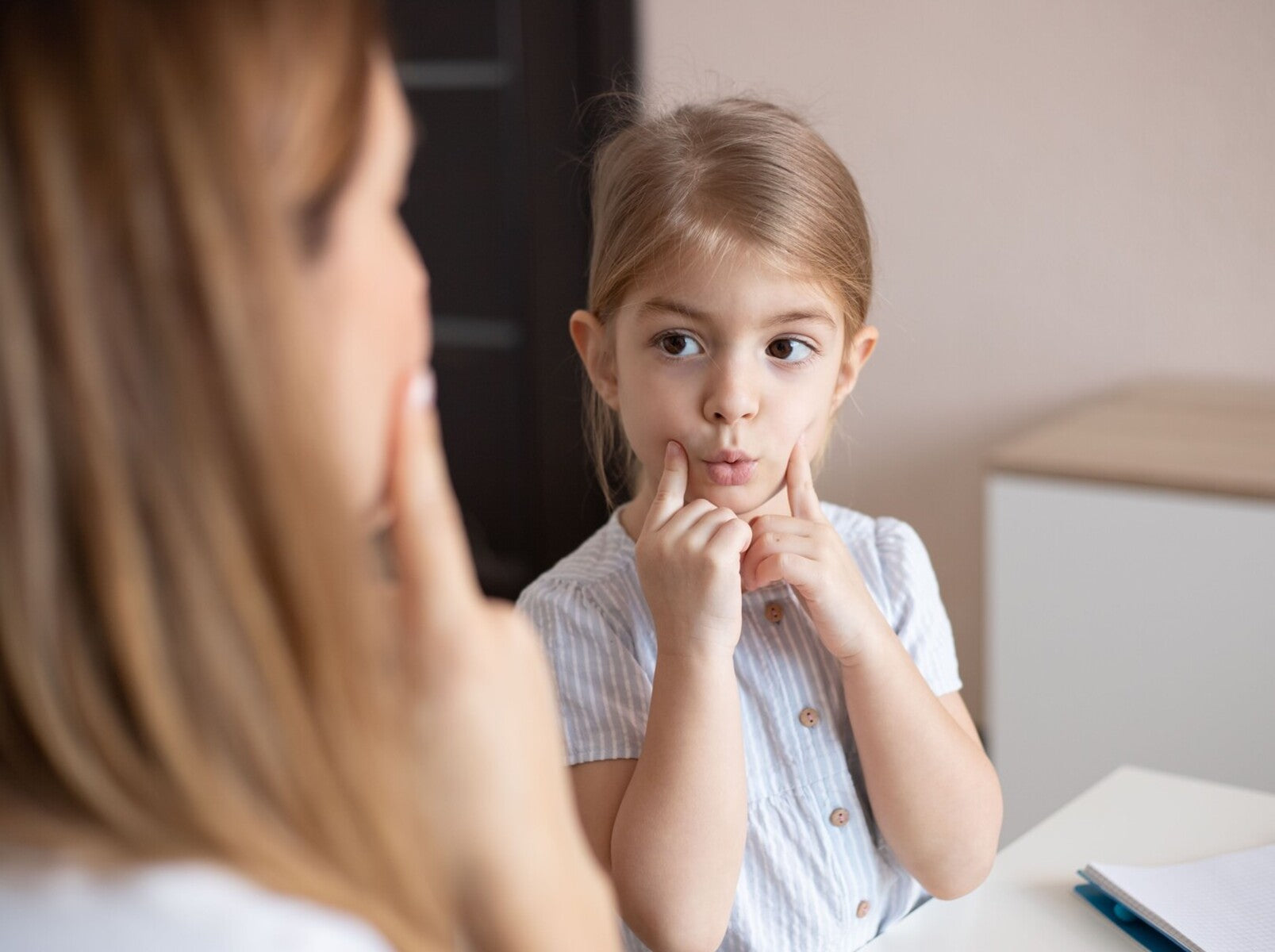
Children's speech therapy is a structured, individualized process led by a licensed speech-language pathologist to help kids understand and produce speech, language, and communication more clearly.
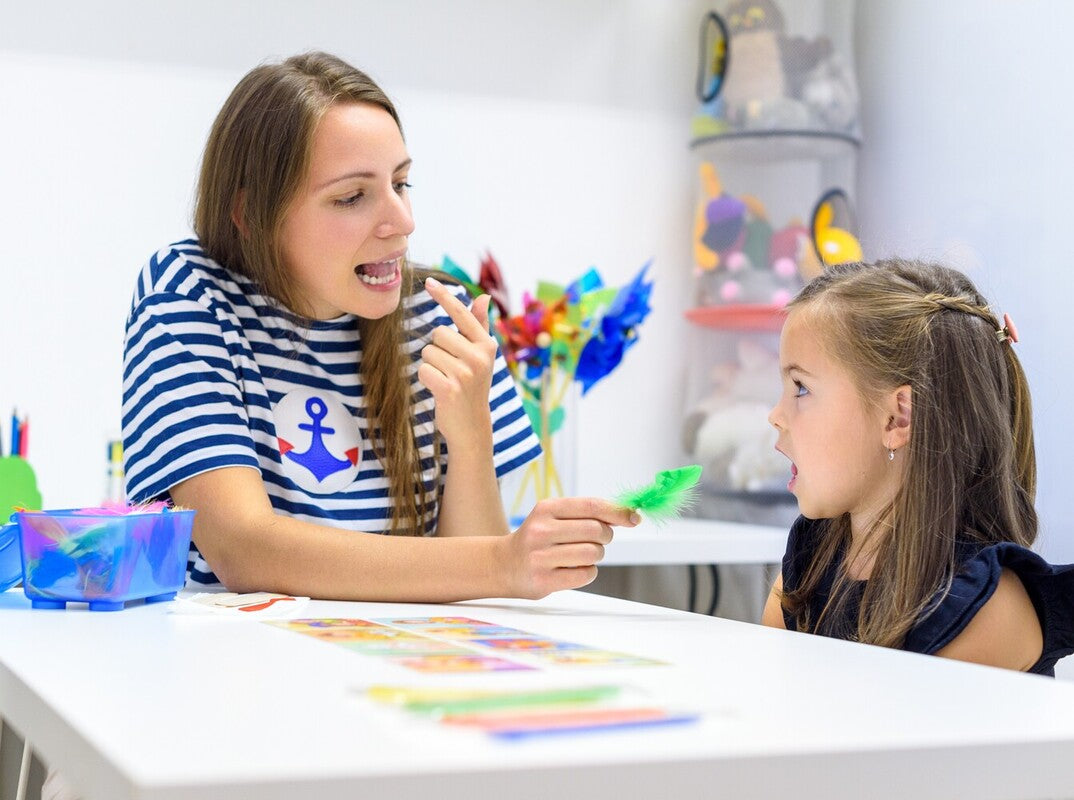
It's not a worksheet or a one-size-fits-all script. An SLP starts by figuring out exactly how your child makes sounds, builds sentences, and uses language to connect with others. From there, therapy targets your child's specific needs, whether that's a few tricky sounds, sentence structure, or the motor planning skills behind clear speech.
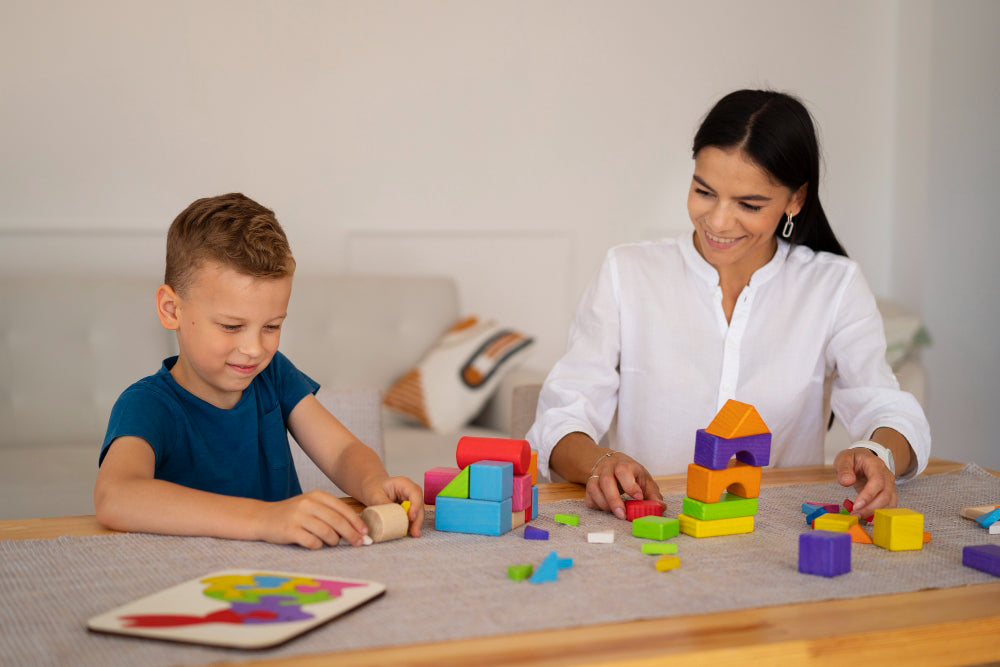
Sessions often look playful, and they should. Picture games, songs, favorite toys. But underneath the fun, a skilled SLP is tracking real goals and adjusting as your child grows. That mix of structure and warmth is what makes therapy work.

How to Find the Best Children's Speech Therapist for Your Child
Finding the right therapist takes a bit of research and a good gut check. Credentials matter. So does how a therapist talks to your child, and to you.
1. Check Licensing and Real Experience
Every speech-language pathologist should be licensed in your state and hold a certificate of clinical competence from ASHA. That's just the baseline.
Dig deeper into experience with your child's specific concern. A therapist who's spent years treating childhood apraxia of speech will run sessions very differently than one whose caseload is mostly articulation errors.
CAS is a motor planning issue, not a muscle weakness one (ASHA, 2007), and treating it well takes real specialized training. Ask how many kids with your child's diagnosis they've worked with and what kind of progress they've seen.
2. Ask How They Explain Their Approach
Different SLPs favor different methods and childhood apraxia of speech treatment ideas, and that's normal. Treatment approaches for CAS in particular have shifted quite a bit over the past few decades as new research comes in (Maas, 2024). What matters is whether they can explain their choice in plain language.
A good therapist will tell you why they picked a certain approach for your child and how they'll track progress. If their explanation leaves you more confused than you started, that's worth noting.
3. Look for a Therapist Who Talks With You
You're your child's biggest advocate and their steadiest practice partner outside of sessions. The best children's speech therapist treats you like part of the team.
They'll send home simple strategies you can use at dinner or bath time. They'll tell you what they're targeting each week. They'll welcome your questions instead of brushing them off. If updates feel like a locked door, keep looking.

4. Weigh the Logistics, Too
Consistency drives progress in speech therapy, so practical fit matters more than people expect. Think about session frequency, location, insurance, and whether teletherapy works for your family's schedule.
A great therapist you can only see once a month won't help as much as a strong therapist you can see every week. Research on CAS treatment backs this up, with more frequent, intensive sessions tending to produce stronger outcomes (Murray, McCabe, & Ballard, 2012). Be honest about what your family can actually sustain.
5. Start With a Trusted Directory
You don't have to build this search from zero. Bjorem & Bolles keeps a therapist directory built specifically to connect families with speech-language pathologists who have real experience in childhood apraxia of speech and other significant speech disorders. It's a solid starting point if you'd rather work from a shortlist than an endless search.
What Is Children's Speech Therapy Good for?
Children's speech therapy helps kids communicate clearly and confidently on a timeline that fits their development, and it covers a wide range of challenges along the way.
Some kids just need help with a handful of tricky sounds. Others are working through bigger hurdles, like childhood apraxia of speech examples, a motor planning disorder that makes it hard for the brain to direct clear, consistent speech even though the muscles work fine (Iuzzini-Seigel, Allison, & Stoeckel, 2022).
Speech therapy also helps with language delays, stuttering, and social communication skills. Early intervention makes a real difference (Highman, Overby, Leitão, Abbiati, & Velleman, 2024), and a skilled SLP builds each plan around your child's profile, not a generic checklist (Alduais & Alfadda, 2024).

Conclusion
You don't need to become a speech pathology expert overnight. You just need a clear sense of what good therapy looks like and a therapist who earns your trust through skill and communication.
Take your time checking credentials and specialized experience. Ask direct questions about the approach. Pay attention to how a therapist treats your family, not just your child.
When you find the right fit, speech therapists become an incredible partner in your child's growth, one word at a time.
And once therapy is underway, the right tools at home can make just as much of a difference. Our flash cards, toys, and games at Bjorem Speech are designed by speech therapists, so you can keep the momentum going between sessions.
Sources:
- Alduais, A., & Alfadda, H. (2024). Childhood Apraxia of Speech: A Descriptive and Prescriptive Model of Assessment and Diagnosis. Brain Sciences, 14(6), 540. https://doi.org/10.3390/brainsci14060540
- American Speech-Language-Hearing Association (ASHA). Childhood Apraxia of Speech. Practice Portal, drawing on the 2007 Technical Report. https://www.asha.org/practice-portal/clinical-topics/childhood-apraxia-of-speech/
- Highman, C., Overby, M., Leitão, S., Abbiati, C., & Velleman, S. (2024). Update on identification and treatment of infants and toddlers with suspected childhood apraxia of speech. Journal of Speech, Language, and Hearing Research, 67(9S), 3288 to 3308. https://doi.org/10.1044/2023_JSLHR-22-00639
- Iuzzini-Seigel, J., Allison, K. M., & Stoeckel, R. (2022). A tool for differential diagnosis of childhood apraxia of speech and dysarthria in children: A tutorial. Language, Speech, and Hearing Services in Schools, 53(4), 926 to 946. https://doi.org/10.1044/2022_LSHSS-21-00164
- Maas, E. (2024). Treatment for childhood apraxia of speech: Past, present, and future. Journal of Speech, Language, and Hearing Research. https://doi.org/10.1044/2024_JSLHR-23-00233
- Murray, E., McCabe, P., & Ballard, K. J. (2012). A comparison of two treatments for childhood apraxia of speech: Methods and treatment protocol for a parallel group randomised control trial. BMC Pediatrics, 12, 112. https://doi.org/10.1186/1471-2431-12-112