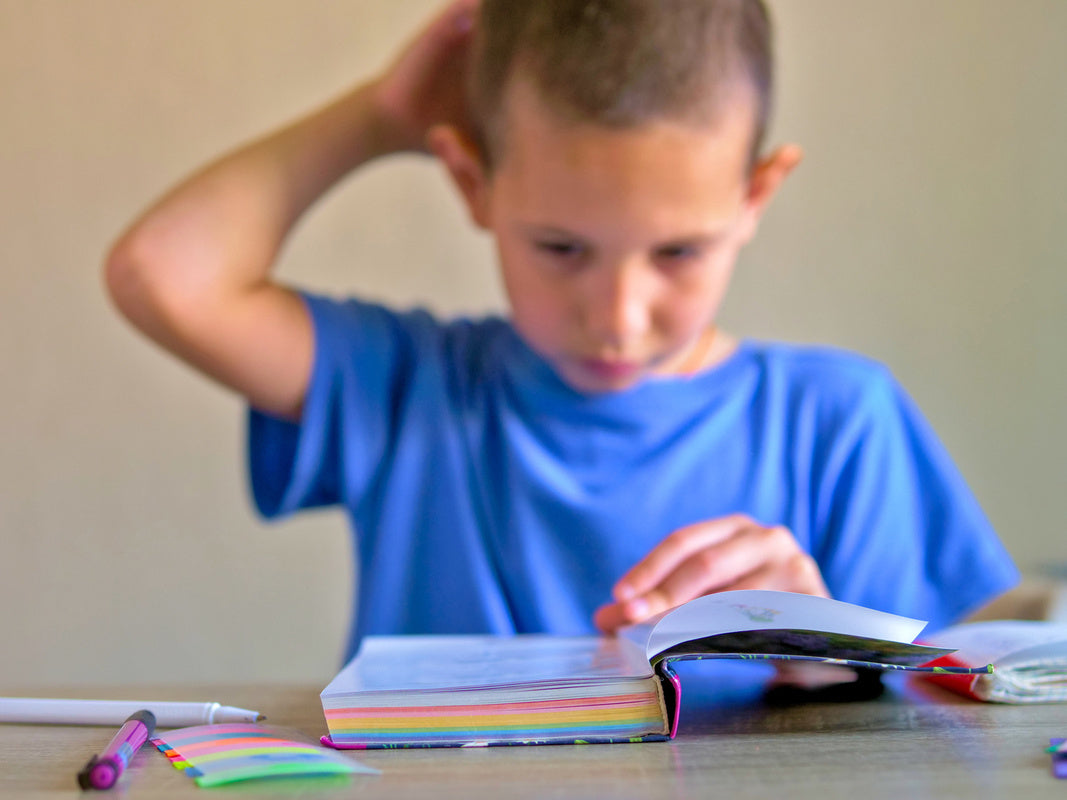
A seven-year-old walks into school each morning carrying a voice his teachers never hear. He talks freely at home, but at school, speaking feels nearly impossible. For two years, he has remained silent.
One clinician identifies selective mutism. Another sees characteristics of autism. Then the family is told that the autism diagnosis means it cannot be selective mutism.
The labels begin to compete with one another while the child’s actual experience gets lost in the debate. His anxiety around communication remains significant, his nervous system continues to respond to certain environments as unsafe, and he is still unable to access his voice when he needs it.
The overlap between autism and selective mutism is real—and understanding that intersection can change how we recognize, evaluate, and support these children.
Selective Mutism and Autism Are Two Different Diagnoses
Selective mutism (SM) is an anxiety disorder in which a child consistently does not speak in certain social situations where speaking is expected, such as school, even though they speak in other situations. The difficulty must last at least one month (not just the first month of school), interfere with school, work, or social communication, and cannot be better explained by lack of knowledge or comfort with the language being spoken.
Autism spectrum disorder (ASD) is a neurodevelopmental disorder characterized by persistent differences in social communication and social interaction across multiple settings, along with restricted or repetitive patterns of behavior, interests, or activities. These may include differences in routines and flexibility, highly focused interests, repetitive movements or speech, and differences in sensory processing. These characteristics begin during the developmental period and affect everyday functioning.
The distinction is important: SM primarily describes a situation-dependent inability to speak, while autism involves broader developmental differences in social communication, interaction, behavior, and sensory experiences across contexts.
So is selective mutism a form of autism?
No. Selective mutism is not a form of autism and is not part of the autism spectrum. In the DSM-5-TR, selective mutism is classified as an anxiety disorder, while autism spectrum disorder is classified as a neurodevelopmental disorder. Each has its own diagnostic criteria and underlying features.
The confusion is understandable because, from the outside, some behaviors can look very similar. An autistic child and a child with selective mutism may both be quiet at school, have difficulty responding to questions, avoid certain social interactions, or appear overwhelmed in busy environments. But similar outward behavior does not necessarily mean the same thing is happening underneath. Additionally, Selective Mutism is setting or person specific; Autism is present in every setting and with every communication partner.
The more important question is not whether SM is part of autism—it isn't—but whether an autistic child can also have selective mutism. And that answer is yes. The presence of autism should not automatically prevent clinicians from recognizing and treating significant, situation-specific anxiety around speaking.
Can You Have Selective Mutism and Autism Together?
Yes—and this is where the diagnostic picture becomes more complicated. The DSM-5-TR states that selective mutism should not be diagnosed when the difficulty speaking occurs exclusively during autism spectrum disorder or is better explained by another communication disorder. This does not necessarily mean that an autistic child cannot also have selective mutism. Rather, clinicians must determine whether there is a distinct, situation-specific pattern of mutism that cannot be adequately explained by autism alone.
The ICD-10 and ICD-11 have taken a more restrictive approach, historically listing autism/autism spectrum disorder among the conditions that exclude a diagnosis of selective mutism. This creates an important inconsistency across diagnostic frameworks: the same child may be conceptualized differently depending on which criteria a clinician or healthcare system follows.
That inconsistency can have real consequences. When a child’s inability to speak is automatically attributed to autism, significant anxiety surrounding speech may be overlooked. Instead of asking why this child can speak comfortably in some environments but cannot access speech in others, clinicians may simply conclude that the silence is part of being autistic. As a result, the child may never receive intervention specifically addressing the anxiety and nervous-system response associated with speaking.
Research examining selective mutism and autism co-occurrence suggests that the overlap is meaningful, although estimates vary considerably depending on the population studied and how diagnoses are established. A large Norwegian registry study of 1,682 children diagnosed with selective mutism found that approximately 12% also had an autism diagnosis, with higher rates among boys and older children. Clinic-referred samples have reported substantially higher rates.
The takeaway is not that selective mutism is part of autism—it is not. Rather, autistic children can also experience a distinct pattern of situation-specific mutism and significant anxiety around speaking. Whether a particular diagnostic framework allows both labels or not, clinicians should not automatically assume that an autistic child’s silence is simply “part of the autism.” When the characteristics of both are present, both deserve careful consideration—and appropriate support.
Autism vs Selective Mutism: What Distinguishes Them
The single most useful question in the selective mutism vs autism comparison is what happens when the child is completely comfortable.
A child with selective mutism alone speaks fluently and reciprocally at home, reads social cues, makes jokes, initiates conversation, and shows typical back-and-forth engagement once the anxiety is removed. Autistic social communication differences do not switch off in a safe setting. They are present across all environments, including the ones where the child is happiest.

Other markers clinicians weigh when working out the difference between selective mutism and autism:
- Restricted and repetitive behaviors, intense focused interests, and insistence on sameness point toward autism and are not features of selective mutism
- Selective mutism is situation-bound and predictable, while autistic communication differences are pervasive
- A child with selective mutism usually wants social connection and is blocked from it, though wanting connection is common among autistic children too and is not a differentiator on its own
- Language development history differs, since selective mutism does not always involve a delay in acquiring language
- Sensory sensitivities appear in both populations, so they cannot be used to separate the two
None of these is decisive alone. This is why the answer to can autism cause selective mutism is more nuanced than yes or no: autism does not cause it, but autistic children carry elevated rates of anxiety generally, and the demands of a neurotypical speaking environment can absolutely produce the conditions in which situational silence takes hold.
Selective Mutism in Adults and Autistic Adults
Selective mutism does not have an age limit, though it is diagnosed far less often past childhood. Many autistic adults describe episodes where speech becomes physically unavailable under stress, overwhelm, or emotional intensity, and a large portion of that community prefers the term situational mutism, since nothing about it is selective or chosen.
It is worth separating two things that get conflated. Selective mutism in autistic adults can reflect an untreated childhood anxiety disorder that persisted, or it can reflect autistic shutdown driven by sensory and cognitive load. The distinction matters because the first responds to anxiety-focused intervention and the second responds to reducing demand and building recovery time into daily life. Many adults experience both.
Selective Mutism Treatment for Adults and Children
For adults, treatment typically combines cognitive behavioral approaches with graded speaking practice, alongside accommodations that reduce the pressure of speech-dependent situations such as phone calls, meetings, and interviews. Augmentative and alternative communication, including text-based options, is a legitimate tool rather than a concession, and access to it during a shutdown episode often reduces the anxiety that prolongs it. Evidence specific to selective mutism treatment for adults is thinner than the pediatric literature, so expect a clinician to adapt child protocols rather than follow a dedicated manual.
For children, and especially for children where both selective mutism and autism are in the picture, a framework that addresses individual differences is essential. DIR®-SM: A Developmental Approach to Selective Mutism Intervention, created by Dr. Joleen Fernald, PhD, CCC-SLP, was built around this reality. The 73-card deck maps a child's current position on a hierarchy of functional emotional developmental capacities, then sequences intervention through regulation, engagement, purposeful two-way communication, the Systematic Sound Sequencing Strategy, and shared social problem solving. The sensory and motor activities can be adapted for adolescents and adults if needed as long as the speaking hierarchy is followed.

Because the framework explicitly accounts for sensory processing and speech and language differences alongside the anxiety, it holds up in exactly the cases where a generic exposure protocol stalls.
See also:
What Is Selective Mutism? Symptoms, Causes, and How to Help
How to Treat Selective Mutism: What Helps and What Does Not?
Selective Mutism Therapy: Treatment Options, Strategies, and Goals That Work
Frequently Asked Questions About Selective Mutism and Autism
Our clinician says we have to pick one diagnosis. How do we push back on that?
Ask directly which diagnostic framework they are working from, because that single question usually explains the position. Clinicians operating under ICD-10 or ICD-11 are following an exclusion rule that DSM-5-TR does not impose, and recent research has argued that this exclusion is empirically unjustified and delays appropriate help. Bring that framing to the conversation, request that both be assessed on their own merits, and if the answer is still that autism automatically rules out the anxiety diagnosis, a second opinion from a clinician experienced in both is worth the wait. Sometimes it comes down to access to services as well. Some insurance companies do not cover for Selective Mutism, but will cover autism supports.
If both are suspected, which evaluation should we ask for first?
Sequence matters more than most families realize, and the practical answer is usually to pursue both in parallel with a team that talks to each other rather than one after the other with unconnected providers. A standalone autism evaluation on a child who will not speak to the evaluator produces limited information, and a selective mutism evaluation that ignores developmental history can miss autism entirely. Ask for an assessment that includes parent and teacher report, observation across at least two settings, home video of your child communicating freely, and screening of speech, language, and hearing, since that combination gives clinicians the contrast they need to interpret the silence.
How is this different from our autistic child simply being minimally speaking?
The difference comes down to whether the speech exists somewhere. A minimally speaking autistic child has limited expressive language across all settings including the most comfortable ones, reflecting a genuine difference in language production rather than a barrier to accessing it. A child with co-occurring selective mutism has the language and demonstrably uses it, often at length, in at least one setting while producing none of it elsewhere. If you have video of your child speaking in full sentences at home and staff insist she cannot talk at school because of her autism, that recording is the most persuasive document you own.
Does an autism diagnosis change what we should be asking for at school?
It broadens what you can ask for rather than replacing anything, and the risk to watch for is a school treating the autism diagnosis as a complete explanation and dropping the speaking goals. Push for a plan that holds both: sensory and predictability supports and communication accommodations addressing the autism, plus a graded, explicitly documented plan for building speech in specific settings with named staff and a defined sequence. Vague language like "will be encouraged to participate" is where these plans quietly fail, so insist on steps specific enough that you could tell whether they happened. Strong accommodations as well as direct services are recommended for the most comprehensive support.
What should we actually do in the moment when our child goes nonverbal?
When a child is unable to access speech, the goal is to remove pressure while still supporting communication. More prompting, repeated questions, or reminders to “use your words” can increase the demand and make accessing speech even harder.
Instead, meet the child where they are and scaffold the interaction gradually. If an open-ended question feels too difficult, try offering a forced-choice question with two options, such as, “Do you want the red one or the blue one?” If that is still too much, move to a yes/no question that can be answered verbally or nonverbally through a nod, gesture, pointing, AAC, writing, or another comfortable communication method. And if even that feels like too much, remove the question altogether and simply stay engaged without requiring a response.
Most importantly, try to support the child through the interaction rather than speaking for them or answering on their behalf. It can be tempting to jump in when we see a child struggling, but consistently rescuing them can unintentionally take away opportunities to communicate in ways that are accessible to them. Give them time, tolerate the silence, and make it clear through your own calm presence that there is no urgency to speak.
For autistic teens and adults, ask them during a regulated, comfortable moment what helps when speech becomes difficult. They are often the best source of information about what makes communication feel more accessible—and what creates additional pressure.