
Therapy for childhood apraxia of speech can't feel like a boot camp drill and still hold a 3-year-old's attention. CAS is a motor speech disorder, and it calls for treatment built around repetition, patience, and a lot of play.
We've spent years building speech therapy tools for kids with CAS, and we know the right activity can turn a tough session into one a child looks forward to.
Below, we're sharing our favorite childhood apraxia of speech treatment ideas and how to bring them into your therapy room or your living room. Whether you're an SLP or a parent supporting a child at home, there's something here for you.
What this article covers:
- What Is Childhood Apraxia of Speech?
- How Is Childhood Apraxia of Speech Treated?
- Top 7 Childhood Apraxia of Speech Treatment Ideas
What Is Childhood Apraxia of Speech?
Childhood apraxia of speech, or CAS, is a motor speech disorder that makes it hard for a child's brain to plan and sequence the movements needed for speech, even though the muscles work just fine. The child knows what they want to say. The message just gets scrambled on the way out.
Kids with CAS often show inconsistent errors on the same word, groping movements while searching for a sound sequence, and choppy, robotic-sounding speech. This differs from a phonological disorder or an articulation error, so CAS calls for a motor learning approach, not just sound correction.
Want to learn more about CAS itself? Read our guide on childhood apraxia of speech examples.

How Is Childhood Apraxia of Speech Treated?
CAS is treated with frequent, correct, high-repetition practice with the best children's speech therapist, built on motor learning principles, paired with multisensory cueing that fades as speech becomes automatic. No single program fits every child.
Most approaches share a few ingredients: functional stimuli instead of random words, dozens of trials per session, layered visual, tactile, and auditory cues, and attention to rhythm from day one. Carryover practice at home often turns a skill into an automatic one.
Top 7 Childhood Apraxia of Speech Treatment Ideas
Each of these ideas is backed by published research on CAS, and each one earns a spot in our therapy toolkit for a different reason. Here's what the evidence says works, and how to put it into practice:
1. High-Frequency Practice Trials
CAS is a motor planning disorder, so the brain needs many attempts at a sequence before it feels automatic. We push for volume in every session, aiming for 70 to 100 productions of a target rather than a handful, because more correct reps genuinely means faster learning and better carryover to new words (Edeal and Gildersleeve-Neumann, 2011).
The vehicle matters far less than the number of accurate attempts, so pick whatever keeps the child talking.

2. Dynamic Temporal and Tactile Cueing
Kids with CAS often benefit from more than simply hearing a model. DTTC allows us to dynamically layer auditory, visual, and tactile cues…
DTTC is more than tactile cueing. It is a dynamic treatment hierarchy that changes based on what the child needs in the moment. You may begin with simultaneous production, where the child says the target with you, then move to direct imitation, delayed imitation, and eventually spontaneous production.
Cues can include auditory, visual, gestural, or tactile support, but the goal is always to provide just enough help for an accurate movement and then fade that support as quickly as possible. The hierarchy is not rigid. You move up or down based on the child's success so they get repeated practice with accurate speech movements.
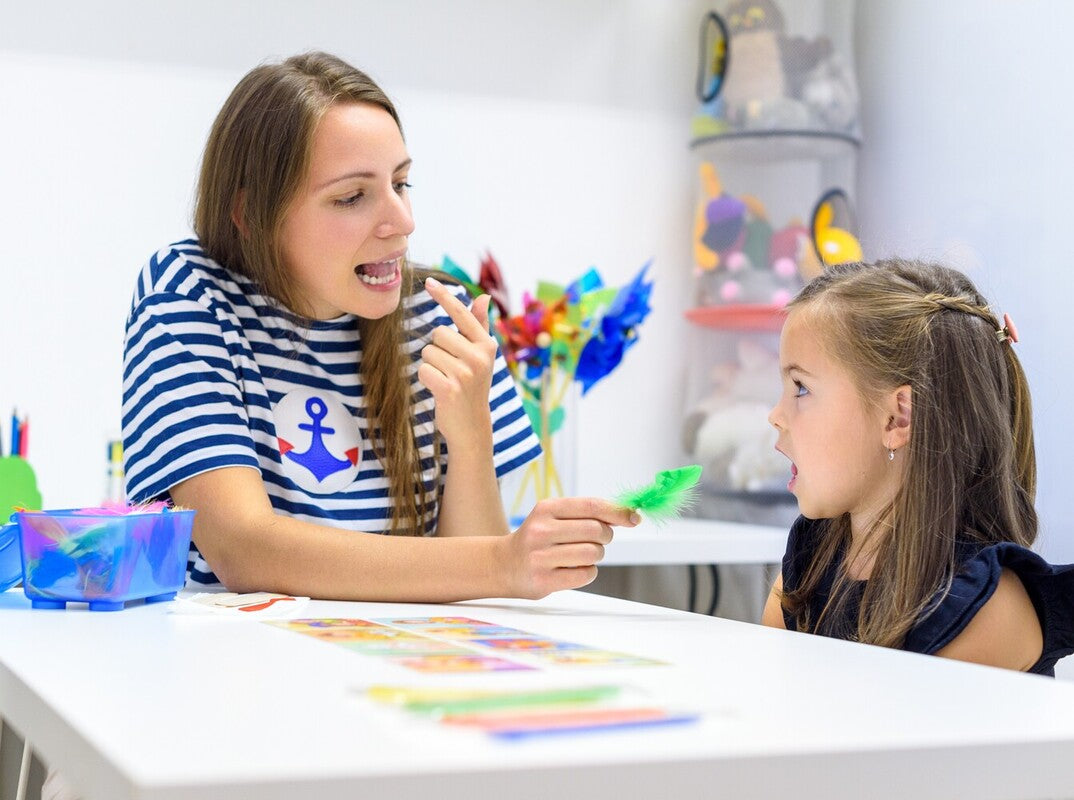
A light touch under the chin can cue jaw drop. Pair it with a visual model of your mouth, then pull the cue back as soon as the child can produce the movement on their own.
3. Target Selection Using VITAL
Choosing the right targets is a critical part of effective CAS treatment. I use VITAL to guide target selection: Variability, Inventory Based, Transitions, Appropriate Number of Targets, and Life Relevant.
Instead of choosing words based on one syllable shape or working through sounds in a traditional hierarchy, select a small number of meaningful words that use sounds the child can already produce while intentionally varying consonants, vowels, syllable shapes, and stress patterns.
Pay close attention to the movement transitions within each word because CAS is a disorder of speech motor planning and programming, not simply a disorder of producing individual sounds. Keep the target set small enough to allow for many accurate, supported repetitions, and always ask whether the child will actually want or need to use the word in everyday life.
The goal isn't to master a list of words. It is to build a more flexible speech motor system that can support new and untrained words over time (Maas et al., 2008; Strand, 2020).
Bjorem Speech's apraxia cards and apraxia toys are built around these same early word shapes, which makes them handy whether you're running a session or a family is practicing at home.
4. Rapid Syllable Transition Treatment
Structured, syllable-based programs give us a repeatable framework to build a session around, and Rapid Syllable Transition Treatment, or ReST, is one of our favorites. Head-to-head against another widely used program, ReST held up better over time, with children maintaining and generalizing their speech gains for months after treatment ended (Murray, McCabe, and Ballard, 2015).
ReST sessions use nonword targets and rapid, high-repetition trials, which makes the approach easy to adapt into short, game-like bursts of practice.

5. Prosody and Rhythm-Focused Treatment
CAS often flattens a child's natural speech rhythm, so we treat prosody as its own goal, not an afterthought once sounds are accurate. Targeted practice on syllable stress can move the needle surprisingly fast, with children improving their control of stress patterns in as little as three weeks of focused work (Ballard, Robin, McCabe, and McDonald, 2010).
Practice varying stress across simple words, exaggerating the difference between a stressed and unstressed beat, then layer in songs and rhymes that carry the same rhythm naturally.
6. AAC and Manual Sign to Support Communication
Children with CAS may know exactly what they want to say long before their speech motor system can reliably produce it. That is why I like to pair speech treatment with robust AAC and manual sign. AAC should presume competence and give the child access to a full language system, not just a few preferred items or basic requesting words.
A robust AAC system should allow the child to comment, ask questions, protest, connect socially, share ideas, and say things we may not have anticipated. Pair spoken targets with AAC, gestures, and signs so the child always has a reliable way to communicate while speech motor skills are developing.
We don't need to remove or fade AAC as speech improves. The goal is to give the child access to language now while continuing to build more accurate and independent speech. (Chenausky et al., 2022; Oommen & McCarthy, 2015)
7. Home Practice With Parent Training
Home practice can be incredibly valuable for children with CAS, but only when families know what to practice and how to practice it. I do not want to send a motor plan home while a child is still struggling to produce it accurately, because repeated inaccurate practice is not the goal.
First, establish a fairly accurate production in therapy and make sure the parent or caregiver understands the cues that help the child succeed. Whenever possible, have caregivers present during therapy so they can watch, practice with you, and understand why you are using specific cues and when those cues should be changed or faded.
Once the child can produce the target with good accuracy and the caregiver feels confident supporting it, brief practice opportunities can be built into routines throughout the day to increase successful repetitions.
If a caregiver can't attend therapy, send a brief video demonstrating exactly how you want the target practiced, including what successful productions look like, which cues work, and what to avoid. Home practice should be an extension of skilled treatment, not simply a list of words sent home. (Maas et al., 2008)
Bjorem Speech's apraxia cards and apraxia toys are built around exactly this kind of quick, repeatable home practice.
Conclusion
No single activity unlocks progress for every child with CAS. What moves the needle is consistency: frequent practice, well-chosen words, cues that fade on schedule, and enough play to keep the child showing up willing to try.
If your child is showing signs of CAS, working closely with speech therapists who specialize in motor speech disorders makes a real difference. Learn more about our tools designed by speech therapists at Bjorem Speech.
Sources:
- Ballard, K. J., Robin, D. A., McCabe, P., & McDonald, J. (2010). A treatment for dysprosody in childhood apraxia of speech. Journal of Speech, Language, and Hearing Research, 53(5), 1227–1245. https://doi.org/10.1044/1092-4388(2010/09-0130)
- Chenausky, K. V., Verdes, A., & Shield, A. (2022). Concurrent predictors of supplementary sign use in school-aged children with childhood apraxia of speech. Language, Speech, and Hearing Services in Schools, 53(4), 1149–1160. https://doi.org/10.1044/2022_LSHSS-22-00017
- Edeal, D. M., & Gildersleeve-Neumann, C. E. (2011). The importance of production frequency in therapy for childhood apraxia of speech. American Journal of Speech-Language Pathology, 20(2), 95–110. https://doi.org/10.1044/1058-0360(2011/09-0005)
- Iuzzini-Seigel, J., Case, J., Grigos, M. I., Velleman, S. L., Thomas, D., & Murray, E. (2023). Dose frequency randomized controlled trial for Dynamic Temporal and Tactile Cueing (DTTC) treatment for childhood apraxia of speech: Protocol paper. BMC Pediatrics, 23, 263. https://doi.org/10.1186/s12887-023-04066-2
- Maas, E., Gildersleeve-Neumann, C., Jakielski, K., Kovacs, N., Stoeckel, R., Vradelis, H., & Welsh, M. (2019). Bang for your buck: A single-case experimental design study of practice amount and distribution in treatment for childhood apraxia of speech. Journal of Speech, Language, and Hearing Research, 62(9), 3160–3182. https://doi.org/10.1044/2019_JSLHR-S-18-0212
- Maas, E., Robin, D. A., Austermann Hula, S. N., Freedman, S. E., Wulf, G., Ballard, K. J., & Schmidt, R. A. (2008). Principles of motor learning in treatment of motor speech disorders. American Journal of Speech-Language Pathology, 17(3), 277–298. https://doi.org/10.1044/1058-0360(2008/025)
- Murray, E., McCabe, P., & Ballard, K. J. (2015). A randomized controlled trial for children with childhood apraxia of speech comparing Rapid Syllable Transition Treatment and the Nuffield Dyspraxia Programme–Third Edition. Journal of Speech, Language, and Hearing Research, 58(3), 669–686. https://doi.org/10.1044/2015_JSLHR-S-13-0179
- Oommen, E. R., & McCarthy, J. W. (2015). Simultaneous natural speech and AAC interventions for children with childhood apraxia of speech: Lessons from a speech-language pathologist focus group. Augmentative and Alternative Communication, 31(1), 63–76. https://doi.org/10.3109/07434618.2014.1001520
- Strand, E. A. (2020). Dynamic Temporal and Tactile Cueing: A treatment strategy for childhood apraxia of speech. American Journal of Speech-Language Pathology, 29(1), 30–48. https://doi.org/10.1044/2019_AJSLP-19-0005