
Childhood apraxia of speech (CAS) makes it tough for your child’s brain to plan the movements of their lips, tongue, and jaw for speech, but apraxia treatments can help.
Three motor-based apraxia treatments with research behind them are Dynamic Temporal and Tactile Cueing (DTTC, practicing with cues that they can see, hear, and feel), Rapid Syllable Transition Treatment (ReST, practicing smooth syllable transitions) (Murray, McCabe, & Ballard, 2014), and Speech Motor Chaining (building a sound from syllables up to sentences) (Preston et al., 2024).
Don’t worry if those names are a bit of a mouthful! Many of us at Bjorem Publications are speech-language pathologists (SLPs) ourselves, and we know it can come as a surprise to watch your child say the same few words over and over in a session. We promise there’s a plan behind every one of those tries.
Common Apraxia Treatments With Research Behind Them
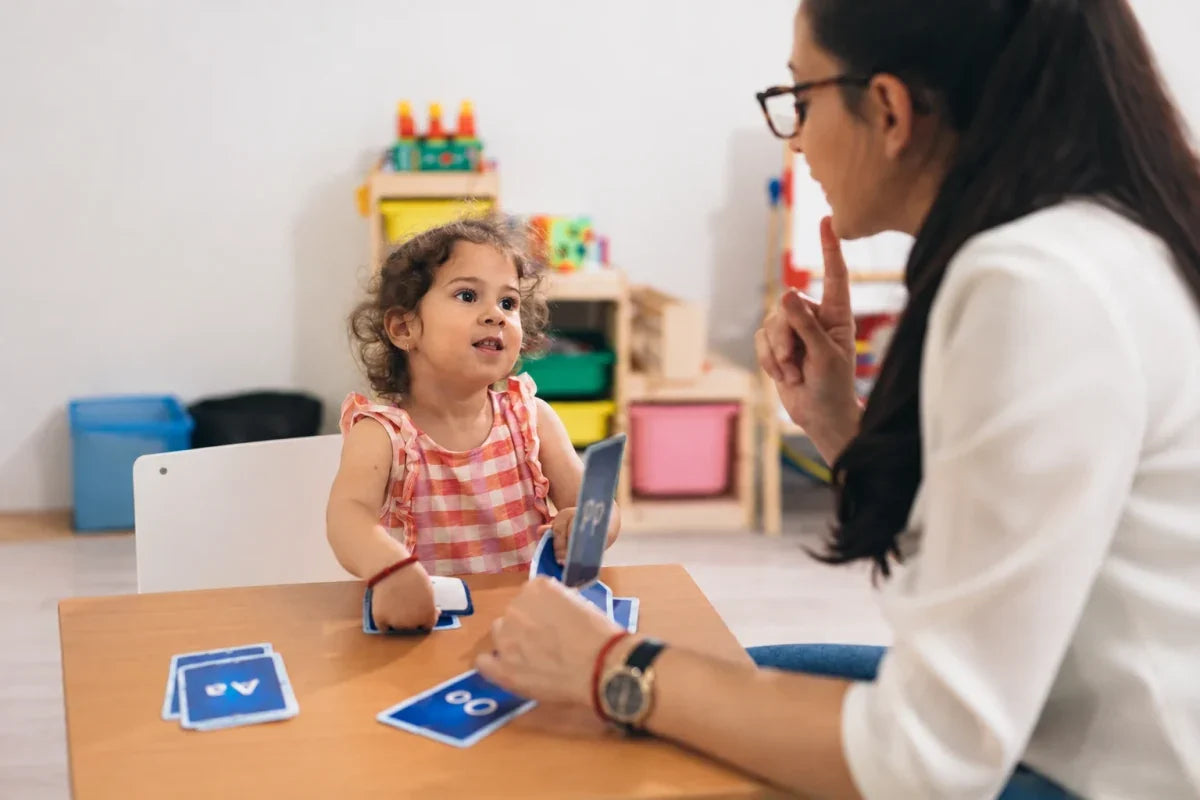
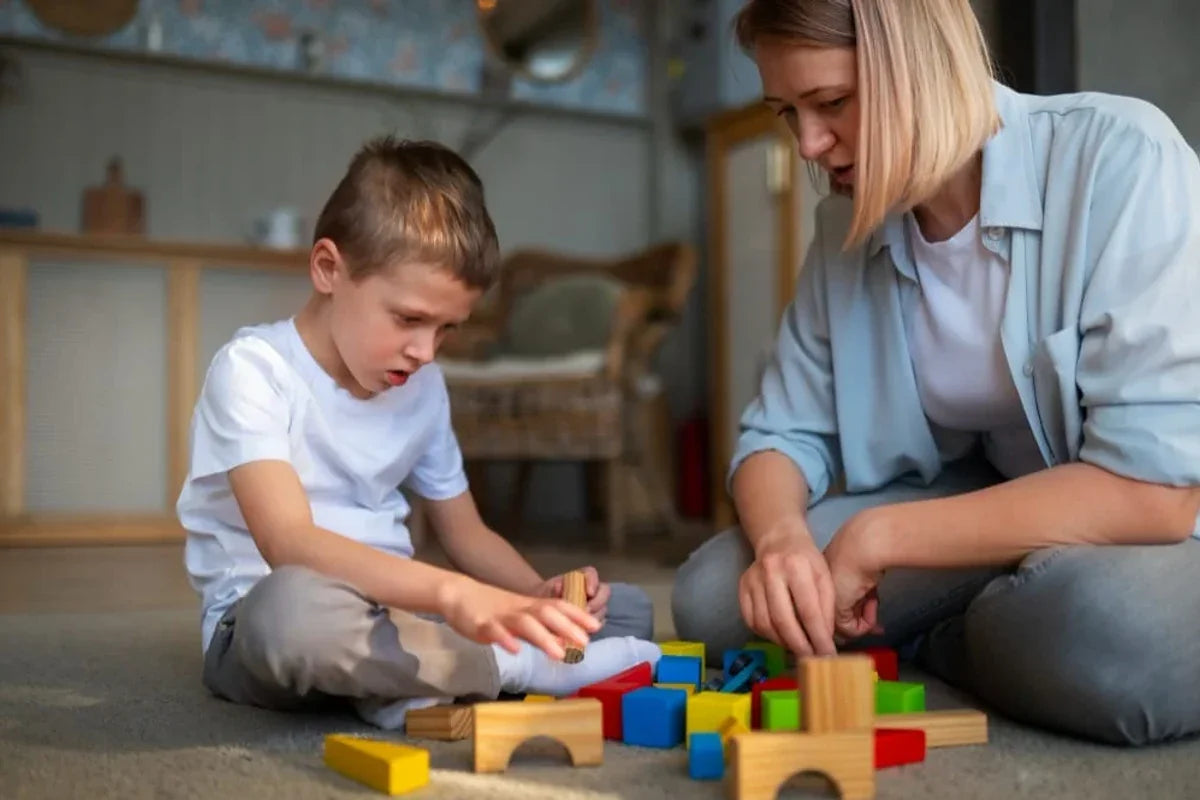
With all three treatments, your child gets plenty of speech practice, with feedback from their SLP after each try. Every child is different, though, so an approach that fits one child might not fit another. Here’s what practice looks like with each one, and which children it’s often a good fit for:
| Approach | What Practice Looks Like | Often a Good Fit For |
|---|---|---|
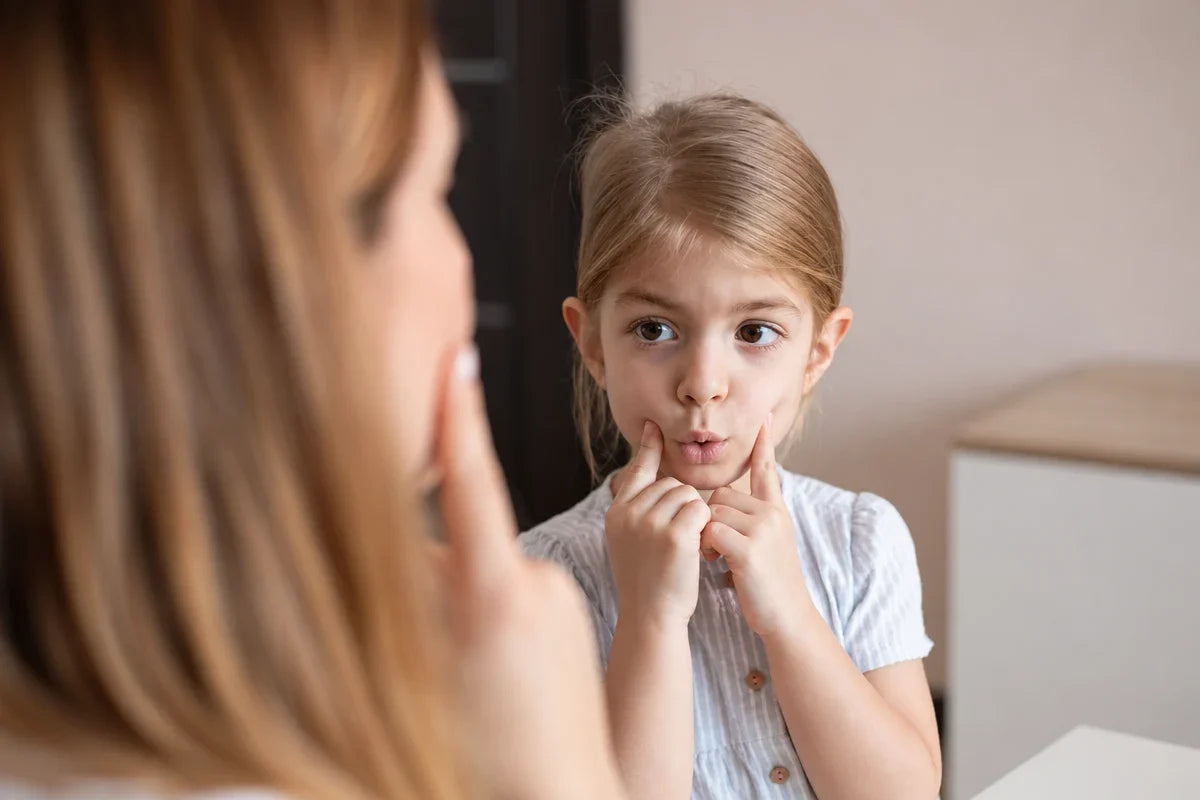
| Dynamic Temporal and Tactile Cueing (DTTC) | Your child says a word together with the SLP, then copies it, then says it after a short wait. The SLP adds touch, sight, and sound cues when your child needs them and fades them as your child gets more accurate. | Young children with moderate to severe CAS |
| Rapid Syllable Transition Treatment (ReST) | Your child says made-up words that switch which syllable gets the stress, practicing smooth movement from one syllable to the next (Thomas, McCabe, Ballard, & Lincoln, 2016). | Children with mild to moderate CAS |
| Speech Motor Chaining | Your child practices a sound in a short syllable first, then builds it into words, longer words, phrases, and finally their own sentences. They move up a step once they get it right most of the time. Some SLPs add ultrasound so your child can see their tongue move on a screen. | School-age children and teens with CAS who still have errors on certain sounds (Preston et al., 2024) |

How Your Child’s SLP Chooses Where to Start
Your child’s SLP picks a starting point based on how severe your child’s CAS is and how much they need to communicate right now. Alongside severity, they’ll look at:
- How your child communicates today: If your child can’t say everything they need to with speech yet, your SLP will add augmentative and alternative communication (AAC, any way of communicating besides speaking, including signs and picture boards). We’re big fans of AAC alongside speech, because your child can ask for a snack or tell you about their day while their spoken words keep developing.
- Your child’s age: CAS can look different in the same child as they grow. A toddler is often working on their very first words, while an older child can have lots of words but still trip over longer ones. Your SLP picks the approach that fits the stage your child is at now.
- When the apraxia started: If your child lost speech skills after an illness or injury, your SLP will factor in the type of apraxia they have, because therapy then starts from words your child could say before.
- The languages your family speaks: Every language has its own sounds and word shapes, so your SLP will choose practice words in each language your child uses and check their progress in all of them.
Your SLP doesn’t need to know what caused your child’s CAS before therapy starts, so don’t worry if you don’t know either. Many children with CAS have no known cause, and even genetic testing finds one for only about 1 in 3 (Morgan et al., 2024). The sooner therapy starts, the sooner your child gets to practice with a plan made just for them, so don’t wait - evaluate.

How Your Child’s Apraxia Plan Changes as They Grow
As your child says their practice words more accurately, your SLP will fade the cues and move on to more difficult targets. Practice usually starts with short syllables like “ma” and moves up to longer words, then sentences, and then everyday conversation. DTTC isn’t meant for long-term use, so when your child’s CAS becomes milder, a move to something like ReST is a sign of progress.
While your child is working on speech movements, your SLP will keep sessions one-on-one, because it’s hard to give each child enough repeated practice and attention in a group. Once your child can say their practice words with only a little help in sessions, their goals can grow to include:
- Using new words everywhere: Your child says their practice words clearly at home and at school, not only with their SLP.
- Language skills: Your child puts words together into longer sentences.
- Social communication: Your child takes turns in a conversation and joins in with other kids.
At this stage, your SLP can add group sessions alongside individual ones, so your child can practice talking with other children.
Home practice helps at every stage, and it works best when every adult in your child’s life uses the same cues. We can’t stress this one enough! If your child’s teacher uses one hand signal for a sound and their SLP uses another, your child has two signals to remember for the same movement. When everyone uses the same cue, every try at home or school adds to the practice your child does in sessions.
Ask your SLP which cues they use, so you can match them. Many SLPs use Bjorem Speech Sound Cues, which pair each speech sound with a kid-friendly picture of an everyday sound. Our founder, Jennie Bjorem, used these cues in her own therapy sessions for years before they became our very first product. You can use apraxia cards like these at home too, so your child sees the same picture for a sound in the kitchen as in the therapy room.

Signs Your Child’s Apraxia Treatment Is Working
You can watch for these signs at home and school, alongside the progress your SLP tracks in sessions:
- New words come out clearer: Your child says words they’ve never practiced more clearly, which shows they’re learning how to plan speech movements rather than memorizing a word list (Thomas, McCabe, et al., 2016).
- They need less help: Your child gets words right with fewer touch, sight, or sound cues. We love seeing this one, because it means that your child is doing more of the planning on their own.
- Longer words get easier: Your child tries longer words and short phrases more often, and gets more of them right.
- More people understand them: People outside your family, like your child’s teacher or their friends at the park, catch more of what your child says.
If you play with the same apraxia toys each week, like minis or a board book with play pieces, you’ll hear whether your child’s target words are getting clearer. If you’re not seeing these changes, talk to your SLP. Adjusting the goals or switching to a different apraxia treatment is a normal part of helping your child gain speech they can use anywhere.
Frequently asked questions
Can my child have apraxia therapy over video calls?
It can work, as long as your child can stay focused on a screen. In one study, five children aged 5 to 11 who had ReST by video call improved on their target words and on words they hadn’t practiced (Thomas, McCabe, et al., 2016).
Will AAC stop my child from learning to talk?
It won’t! Using AAC doesn’t slow down your child’s spoken words, and many people start saying more once they have it (Millar, Light, & Schlosser, 2006).
Can we start using cues at home before our SLP shows us how?
It’s best to ask for a quick demo first, so you can see exactly how your SLP shows each cue. Until then, keep talking and playing as usual, and let your child use any gestures or signs that get their message across.
Can older students still use apraxia cards?
They can. We make our cards for preschool through eighth grade, and students with significant delays can keep using them after that. The cards aren’t designed around the goals students usually work on in higher grades, though.
Sources:
- Millar, D. C., Light, J. C., & Schlosser, R. W. (2006). The impact of augmentative and alternative communication intervention on the speech production of individuals with developmental disabilities: A research review. Journal of Speech, Language, and Hearing Research, 49(2), 248 to 264. https://doi.org/10.1044/1092-4388(2006/021)
- Morgan, A. T., Amor, D. J., St John, M. D., Scheffer, I. E., & Hildebrand, M. S. (2024). Genetic architecture of childhood speech disorder: A review. Molecular Psychiatry, 29(5), 1281 to 1292. https://doi.org/10.1038/s41380-024-02409-8
- Murray, E., McCabe, P., & Ballard, K. J. (2014). A systematic review of treatment outcomes for children with childhood apraxia of speech. American Journal of Speech-Language Pathology, 23(3), 486 to 504. https://doi.org/10.1044/2014_AJSLP-13-0035
- Preston, J. L., Caballero, N. F., Leece, M. C., Wang, D., Herbst, B. M., & Benway, N. R. (2024). A randomized controlled trial of treatment distribution and biofeedback effects on speech production in school-age children with apraxia of speech. Journal of Speech, Language, and Hearing Research, 67(9S), 3414 to 3436. https://doi.org/10.1044/2023_JSLHR-22-00622
- Thomas, D. C., McCabe, P., Ballard, K. J., & Lincoln, M. (2016). Telehealth delivery of Rapid Syllable Transitions (ReST) treatment for childhood apraxia of speech. International Journal of Language & Communication Disorders, 51(6), 654 to 671. https://doi.org/10.1111/1460-6984.12238