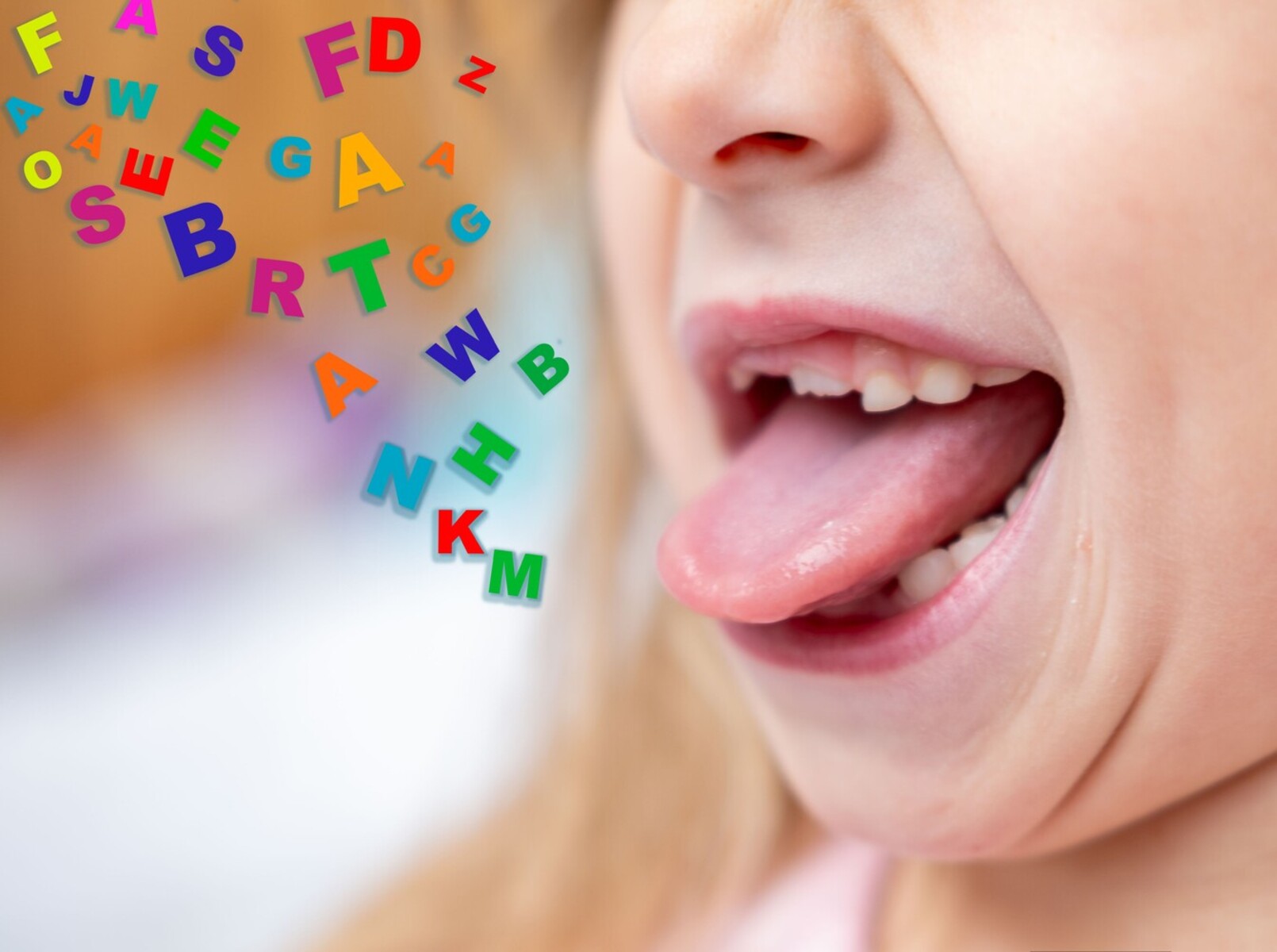

If you've ever watched your child struggle to say a word, repeat a sound over and over, or get frustrated when no one understands them, you know how hard it can be. At Bjorem Speech, we've spent years working with families exactly like yours, creating speech therapy tools designed to make communication accessible, engaging, and fun for kids.
But why do kids have speech impediments? It's one of the most common questions we hear from parents, and it deserves a real, thorough answer.
Speech impediments are more common than you might think. Approximately 1 in 14 U.S. children ages 3 to 17 have a voice, speech, or language disorder in any given 12-month period. You are absolutely not alone. So let's dig in.
What this article covers:
- What Is a Speech Impediment?
- Types of Speech Impediments in Children
- How Is a Speech Impediment Diagnosed?
What Is a Speech Impediment?
A speech impediment is a condition that affects a person's ability to produce sounds correctly, making it hard for others to understand what they're saying. Sometimes called a speech disorder or speech impairment, the terms are often used interchangeably.
The word "impediment" is actually considered obsolete in medicine, dating back to the 1600s, when it referred to something that temporarily hindered functioning. Modern professionals prefer "speech disorder" or "speech impairment," as those terms better reflect that something is changing or weakening a person's ability to communicate on a physical, psychological, or structural level.
Without treatment, children with speech impairments may have difficulty learning to read and write, and research suggests they may also develop mental health issues like anxiety and depression. Early identification matters enormously.

What Causes a Speech Impediment in a Child?
Speech impediments or disorders in children can stem from a wide range of causes, and sometimes there's no clear explanation at all. In general, though, causes tend to fall into a few key categories.
Congenital defects, which are abnormalities present at birth, can affect the mouth, vocal cords, tongue, and other structures involved in speech. Conditions such as cleft lip and palate, vocal cord paralysis, and tongue-tie can all interfere with a child's ability to produce sounds clearly.
Neurological disorders, including cerebral palsy, disrupt the way the brain sends signals to the muscles responsible for speech. Hearing loss is another significant factor. When a child cannot clearly hear the sounds around them, it becomes much harder to learn how to reproduce those sounds correctly.
Other causes include family history, premature birth, pregnancy complications, and neurodevelopmental conditions like autism spectrum disorder and ADHD. And then there are functional speech impediments, where no clear physical or neurological cause is found. These are especially common in young children and often improve with time and therapy.
Signs of a Speech Impediment
Knowing what to look for is half the battle. Here are some common signs that a child may have a speech impediment or disorder:
- Unintelligible speech: Others, including family members, consistently have difficulty understanding what the child is saying.
- Omitting sounds: The child drops parts of words, such as saying "buh" instead of "bus."
- Adding sounds: The child adds extra sounds to words, such as "buhlack" instead of "black," or repeats sounds within a word.
- Substituting sounds: The child swaps one sound for another, like saying "wabbit" instead of "rabbit."
- Stuttering or repetition: The child repeats syllables, sounds, or words, or seems to get "stuck" when starting a sentence.
- Using gestures instead of words: The child relies heavily on pointing or physical gestures rather than attempting to verbalize.
- Unusual pitch or volume: The child speaks with a pitch or volume that seems atypical or hard to control.
- Difficulty with specific sound groups: Children aged 1 to 2 should be producing sounds like p, m, b, w, and h, while children aged 2 to 3 should be adding sounds like k, f, g, d, n, and t. Consistent difficulty with age-appropriate sounds may signal a speech disorder.
Worried about a speech delay as well? Learn more with why do kids have speech delays.

Types of Speech Impediments in Children
Not all speech impediments and disorders look or sound the same, and understanding the differences can help you better advocate for your child. Here are the most common types you'll encounter, along with what causes them and how they show up in everyday speech:
1. Articulation Disorders
An articulation disorder involves a problem with the way the mouth, teeth, or tongue move to produce sounds. Children with articulation disorders may leave out parts of words, add sounds where they don't belong, or substitute one sound for another.
A classic example is a child who says "wabbit" for "rabbit" well past the age when that substitution would be developmentally typical. These disorders can be functional, with no clear physical cause, or can result from structural differences in the mouth or jaw.
2. Fluency Disorders
A fluency disorder is a problem with the flow of speech. Stuttering is the most well-known type, characterized by repetitions of sounds or syllables, prolonged sounds, or blocks where the child seems unable to get a word out.
Another type called cluttering involves speaking so rapidly that words get jumbled together. More than 80 million people worldwide stutter, and in the U.S., that number exceeds 3 million. Many children do outgrow stuttering, especially when it begins before age 5, though early therapy can make a significant difference.

3. Phonological Disorders
Where articulation disorders involve the physical production of a sound, phonological disorders involve the rules a child uses to organize sounds in language.
Common patterns include fronting, which means replacing sounds made in the back of the mouth with sounds made in the front; stopping, which means replacing continuous sounds with short stop sounds; and omitting final consonants from words.
A child with a phonological disorder isn't physically unable to make a sound; they simply don't yet understand the rule system that governs when and how to use it.
4. Voice Disorders
A voice disorder is a problem with the way the voice sounds. It can be caused by vocal cord damage, misuse of the voice, or structural issues, and children with voice disorders may speak with a hoarse, breathy, or strained quality. Vocal nodules, small callus-like growths on the vocal cords that often develop from excessive yelling, are a common culprit in children.
Voice disorders affect about 6.7% of children in the U.S. and are often very treatable with voice therapy.
5. Resonance Disorders and Orofacial Myofunctional Disorders
Resonance disorders are related to voice quality and are impacted by the shape of the nose, throat, and mouth. Hyponasality, for example, can give a child's speech a "stuffed up" quality even when they aren't sick. Orofacial myofunctional disorders, or OMDs, involve abnormal movement of the face, mouth, and tongue muscles.
These can affect a child's ability to make sounds like "s" and "sh" and are often connected to habits like tongue thrusting. Structural issues like cleft palate are a common cause of both types.

6. Childhood Apraxia of Speech
Childhood apraxia of speech, or CAS, is a motor speech disorder that results from disruptions in the neural pathways connecting the brain to the speech-producing muscles.
A child with CAS knows what they want to say but cannot coordinate the lips, tongue, and jaw to produce those sounds. They know the word, they intend to say it, but the brain-to-mouth signal breaks down. CAS requires intensive, specialized therapy and does not resolve on its own.
For more information, read our breakdown on what is apraxia in kids.
How Is a Speech Impediment Diagnosed?
Diagnosis begins with observation, usually from a parent, teacher, or pediatrician who notices something isn't quite right. Healthcare providers typically start with a comprehensive physical examination and may conduct a developmental evaluation before referring the child to a speech-language pathologist, or SLP.
The SLP evaluation may include an assessment of speech sounds in words and sentences, an evaluation of oral motor function, an orofacial examination, and a review of language comprehension.
From there, the SLP may recommend a more comprehensive speech sound or language assessment, an audiology evaluation to rule out hearing loss, or other medical referrals. The goal is always to get a clear, accurate picture of what is and isn't happening, because the right diagnosis leads to the right treatment.

When Should You Take Your Child to a Healthcare Professional?
Sooner than you think. If something feels off with your child's ability to speak, hear, or communicate, don't wait - evaluate. Trust your instincts, because you know your child better than anyone.
If a 2-year-old is not putting two words together, if a 3-year-old is largely unintelligible to strangers, or if a 4-year-old is still struggling with sounds that should be well-established by now, reach out to your pediatrician or request a referral to an SLP directly. Early intervention leads to better outcomes, and waiting often costs valuable developmental time.
How Are Speech Impediments Treated?
The cornerstone of care is speech pathology for kids, also known as speech therapy. Speech-language pathologists use evidence-based approaches that may focus on how a child physically forms sounds, on phonological patterns and language rules, or on building oral-motor strength and coordination.
In cases where a structural difference is the cause, such as a cleft palate or tongue-tie, surgery may also be part of the plan. For children with hearing-related speech difficulties, hearing aids or other assistive devices can be transformative.
At Bjorem Speech, we design tools like our Bjorem Speech Sound Cues specifically built to support the work that SLPs do in therapy. Our speech therapy tools give kids meaningful, engaging ways to practice sounds, patterns, and language at home and in the clinic. Because therapy is a team effort, the practice that happens between sessions is just as important as the session itself.

Conclusion
So, why do kids have speech impediments? The causes range from structural and neurological differences to developmental patterns that simply need more time and targeted support. What matters most is recognizing the signs early, seeking an evaluation, and connecting with the right professionals as soon as possible. Every child deserves the tools they need to find their voice.
Browse our full range of resources and materials at Bjorem Speech, created by speech therapists for educators and families, and take the next step toward helping your child communicate with confidence.