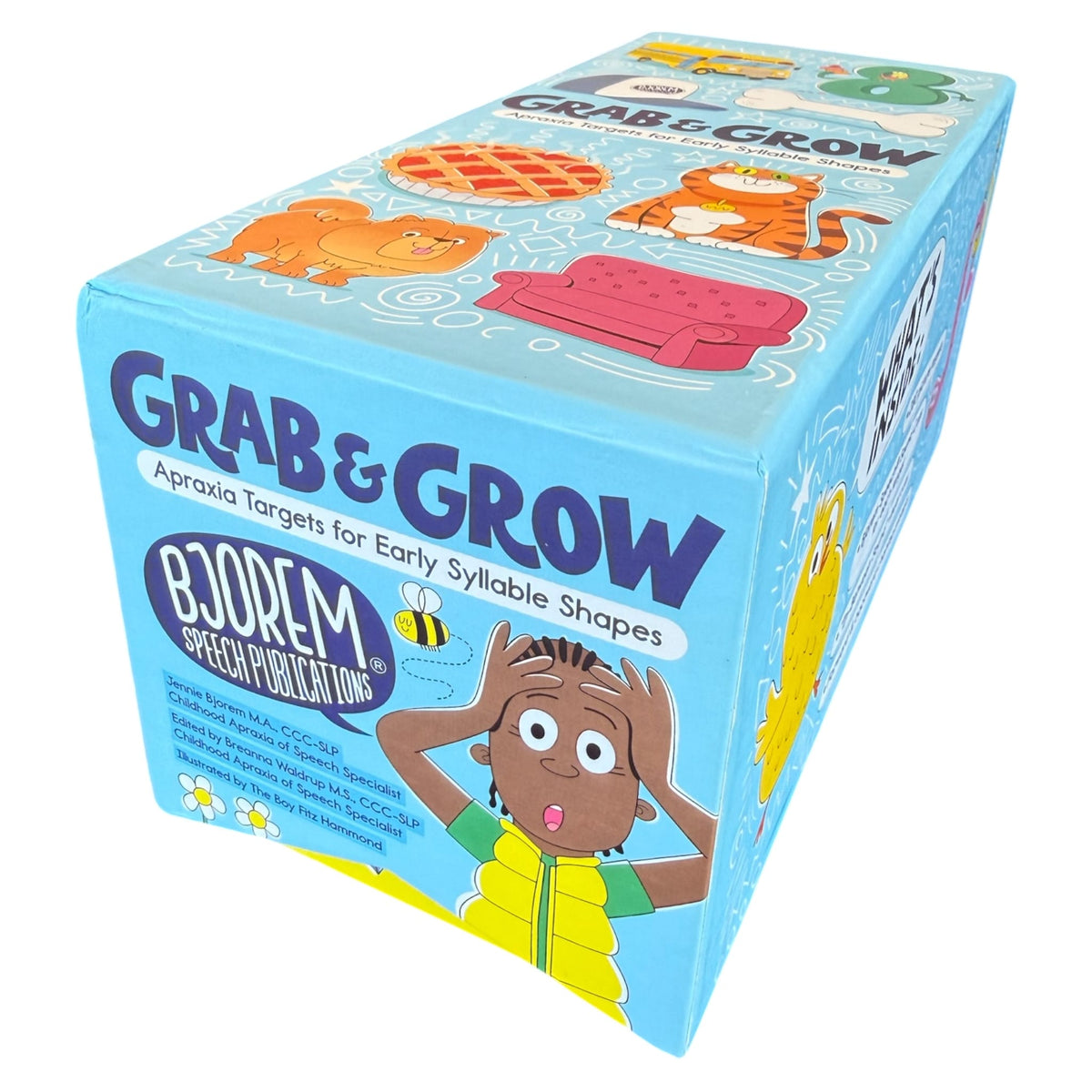
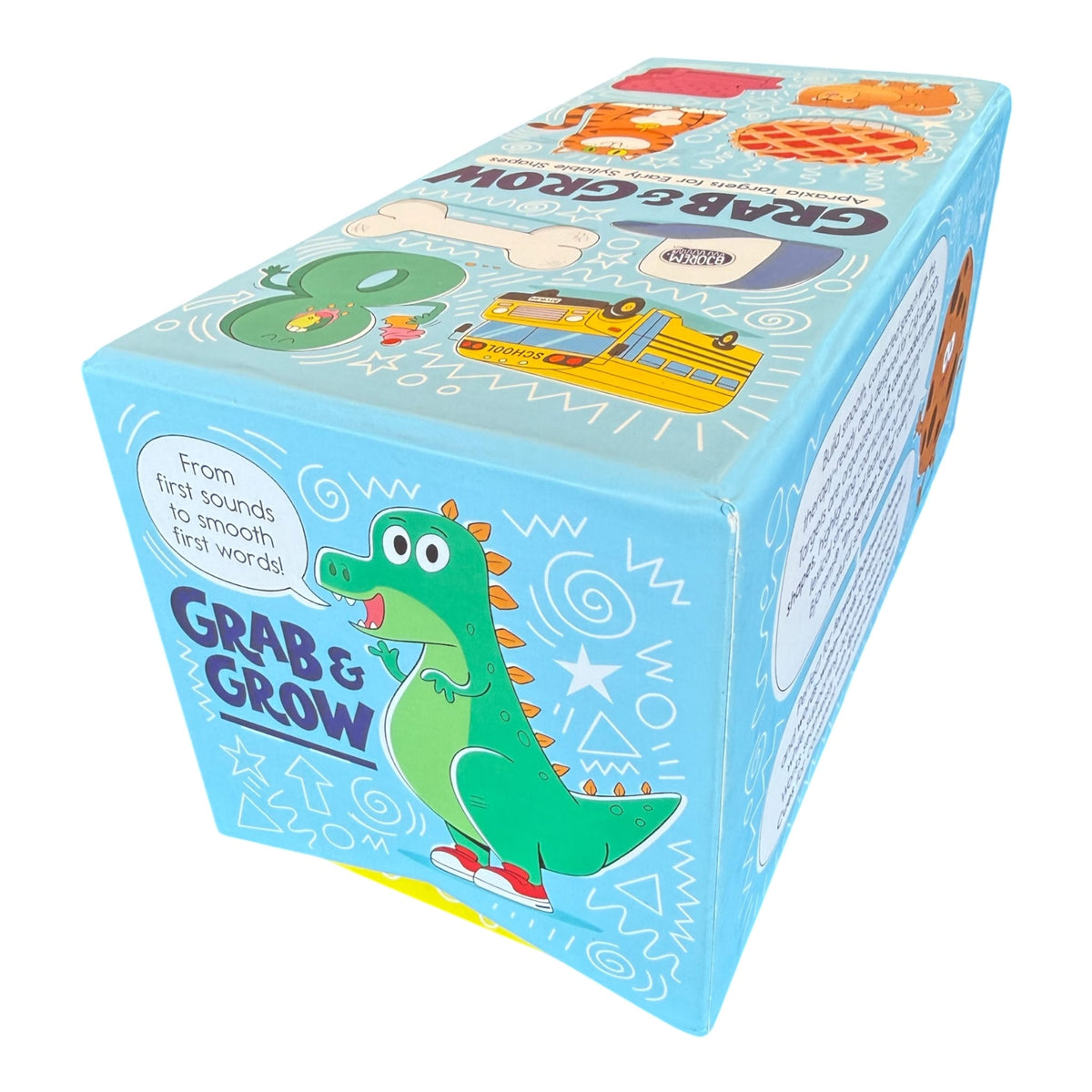
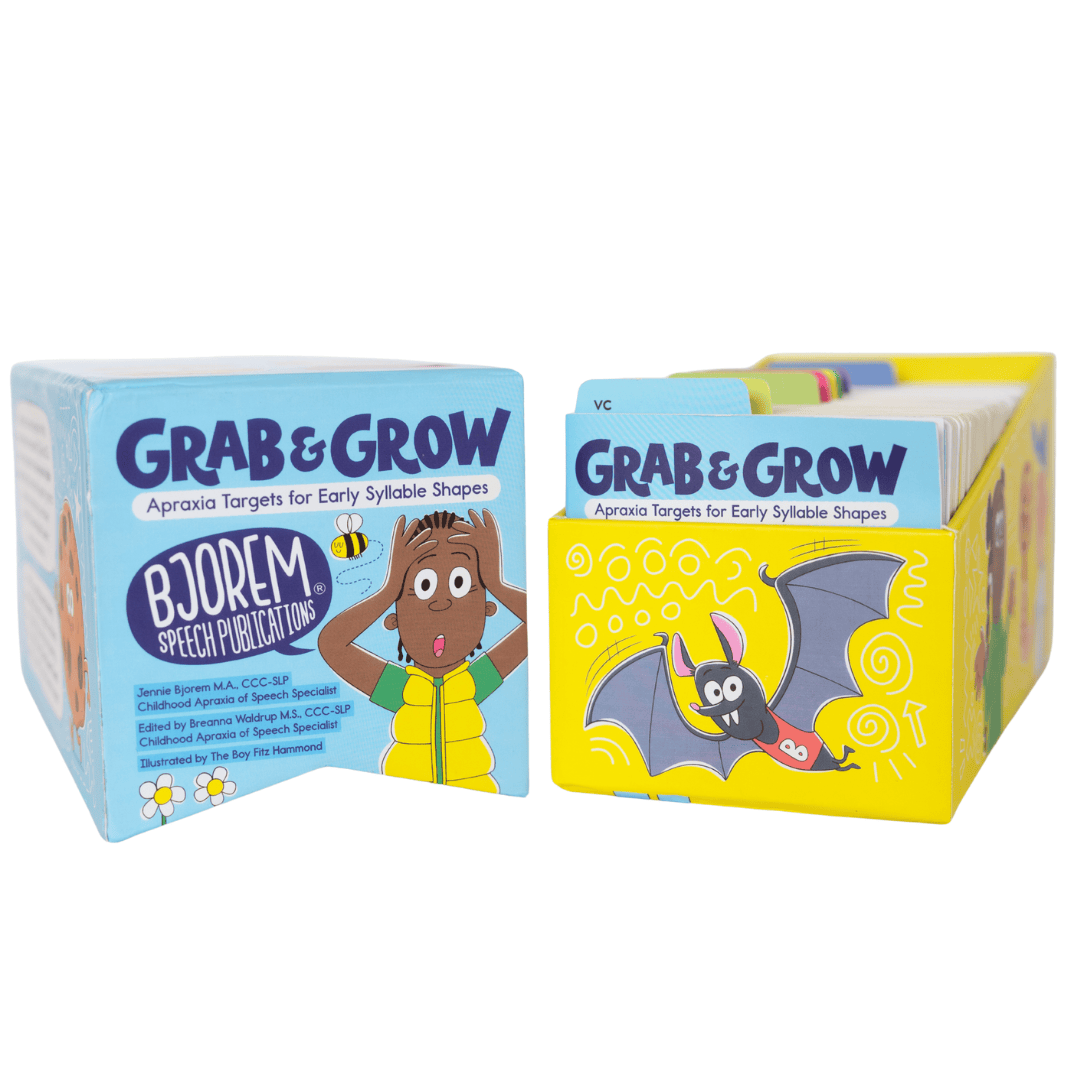
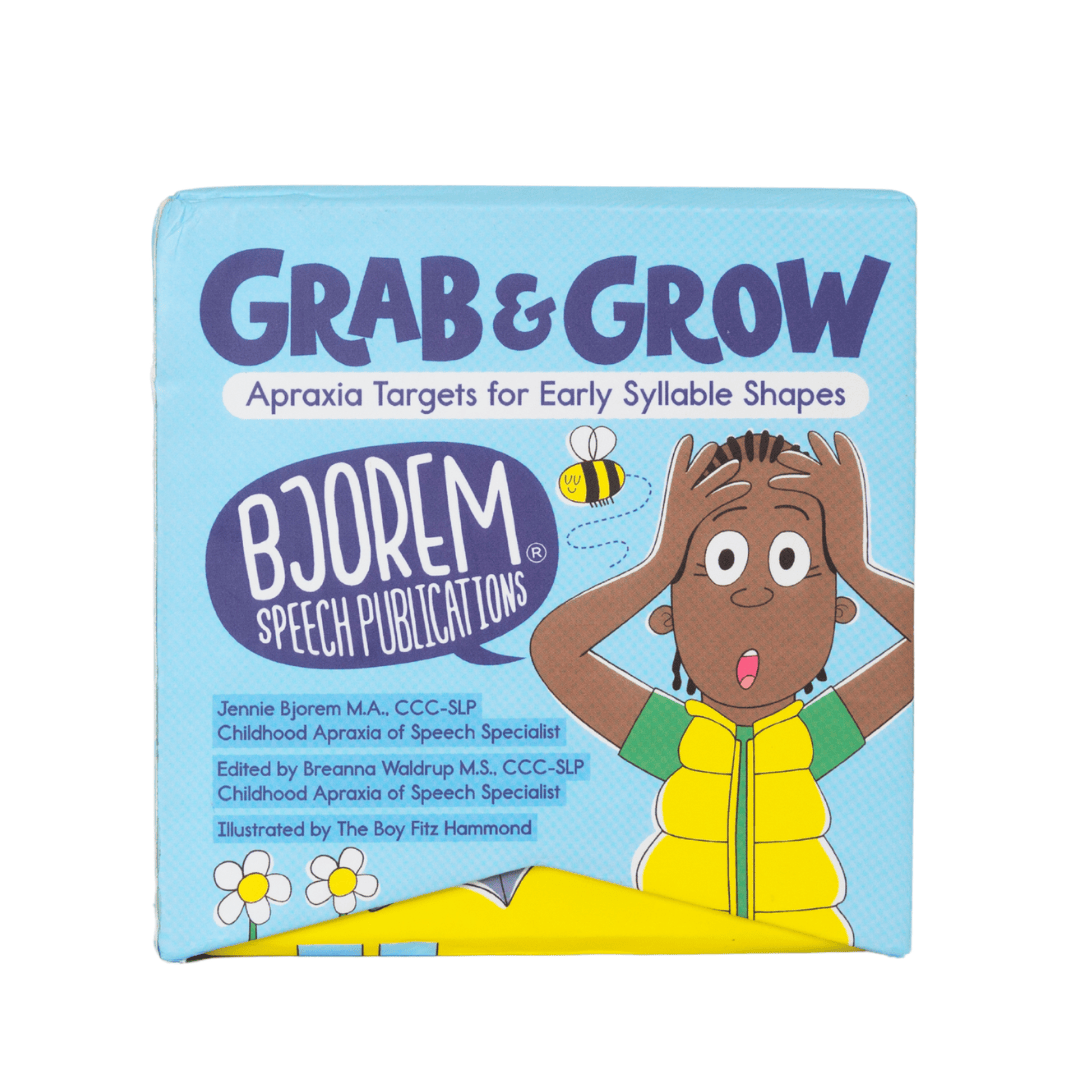
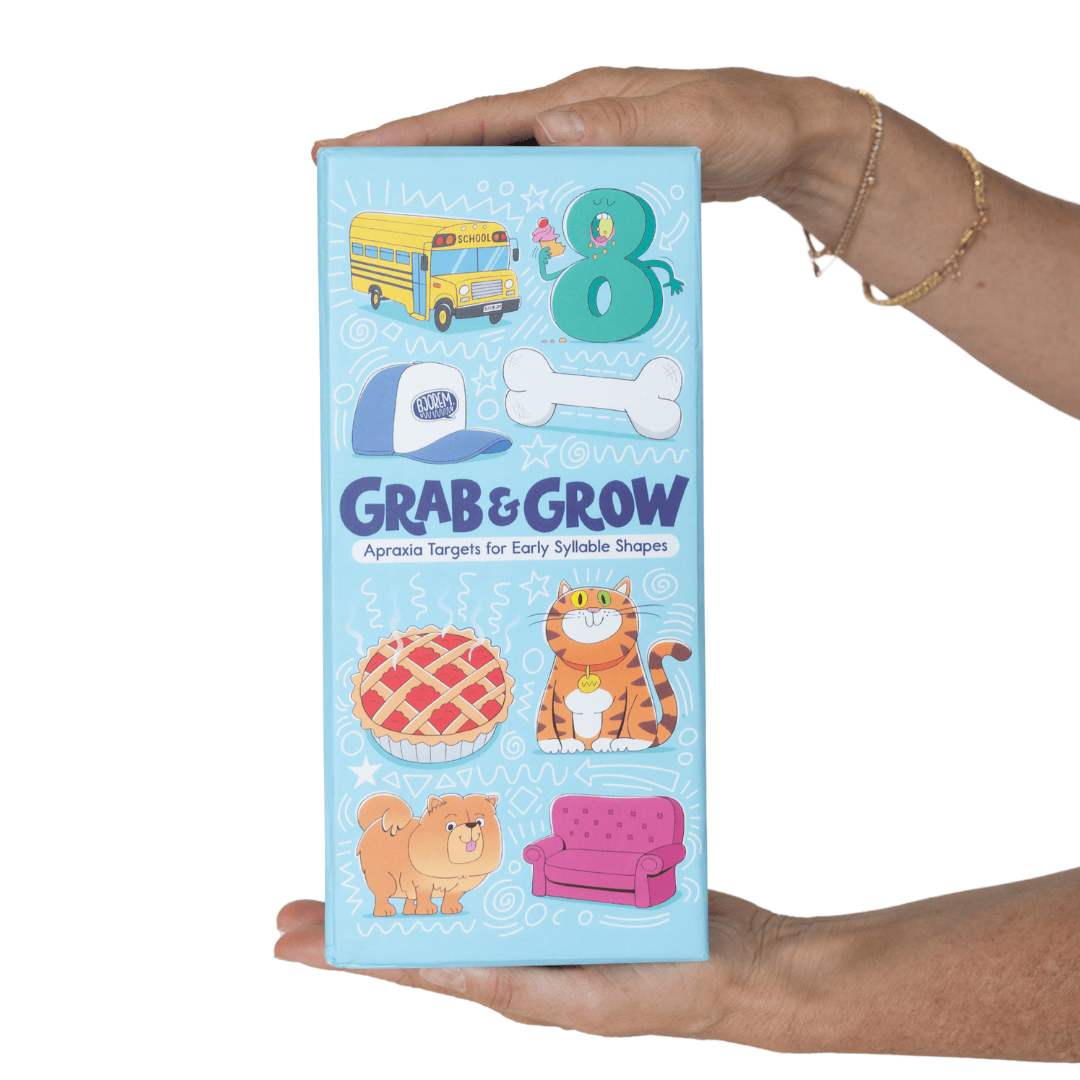
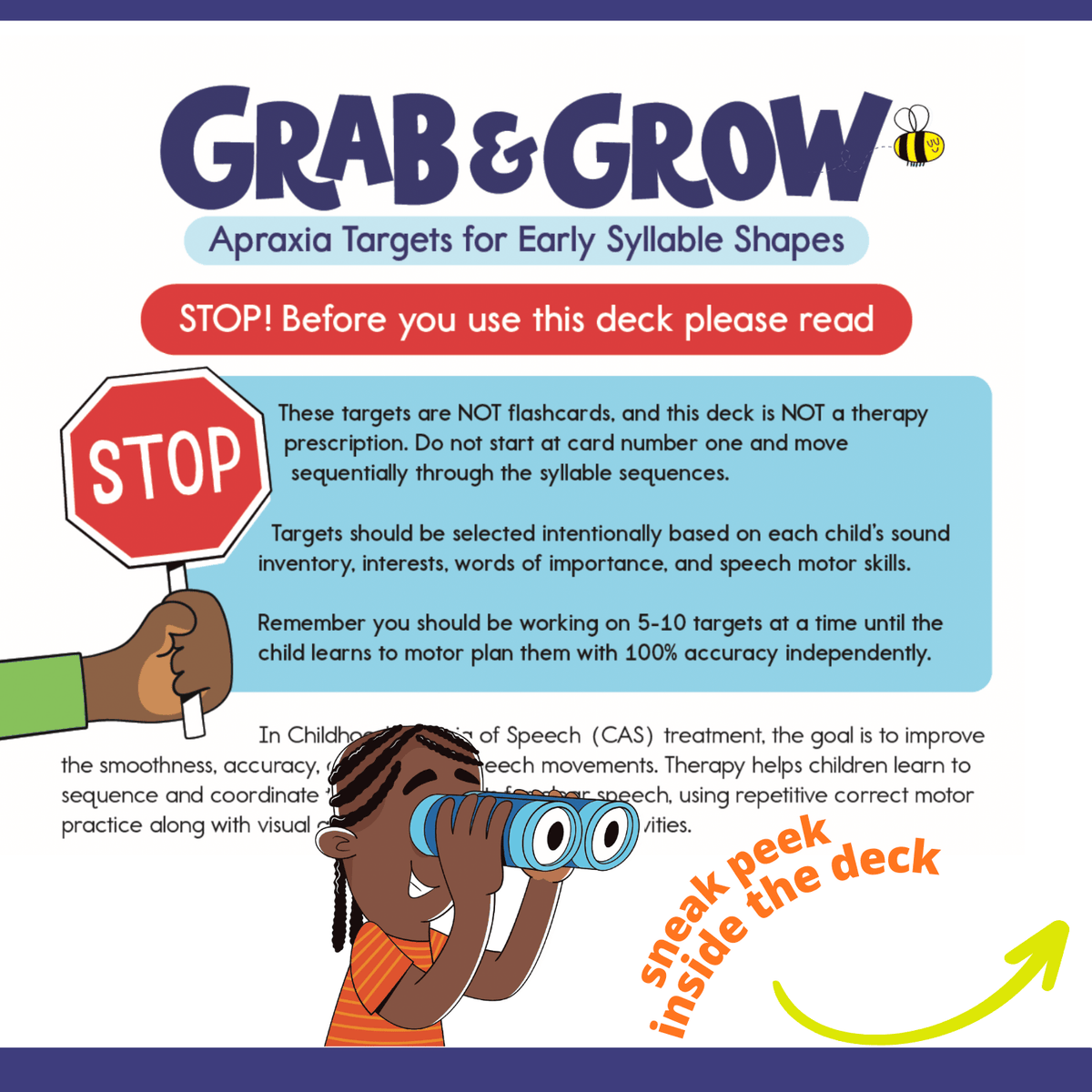
Grab & Grow: Apraxia Targets for Early Syllable Shapes is a thoughtfully designed target deck for young children with Childhood Apraxia of Speech (CAS) who are early in their speech journey. This deck is not a set of flashcards and not a therapy prescription. Instead, it is a clinical tool created to help therapists intentionally select meaningful, functional targets that support accurate motor planning and smooth speech transitions.

Grounded in both research and real-world clinical experience, this deck highlights coarticulation, movement between sounds, and prosody, which are core challenges in CAS. Each target includes cues on the back of the card to support speech movement, stress, chaining, and natural-sounding productions, keeping essential therapy decisions at your fingertips.
Key Features
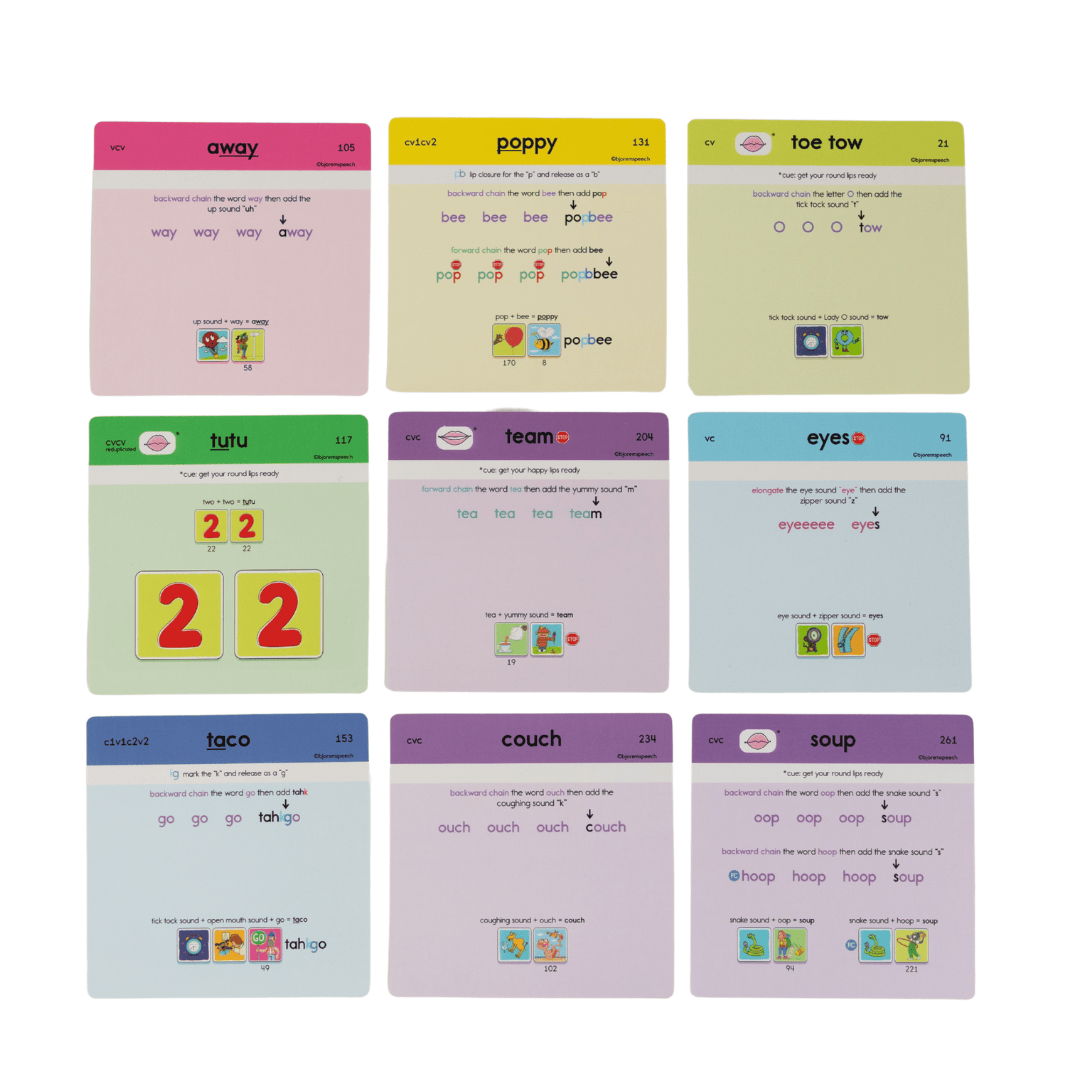
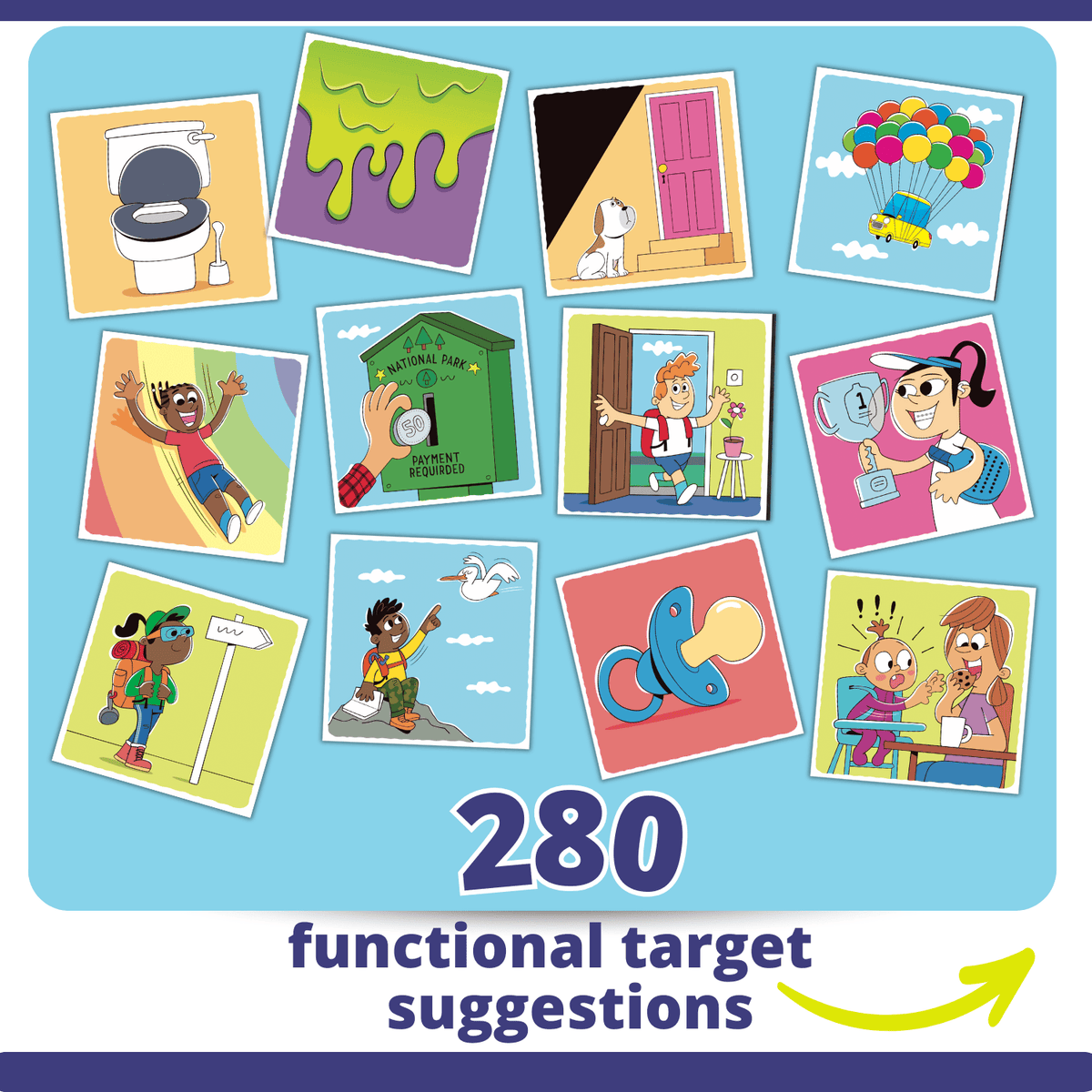
280 picture-based target words designed for early speech development
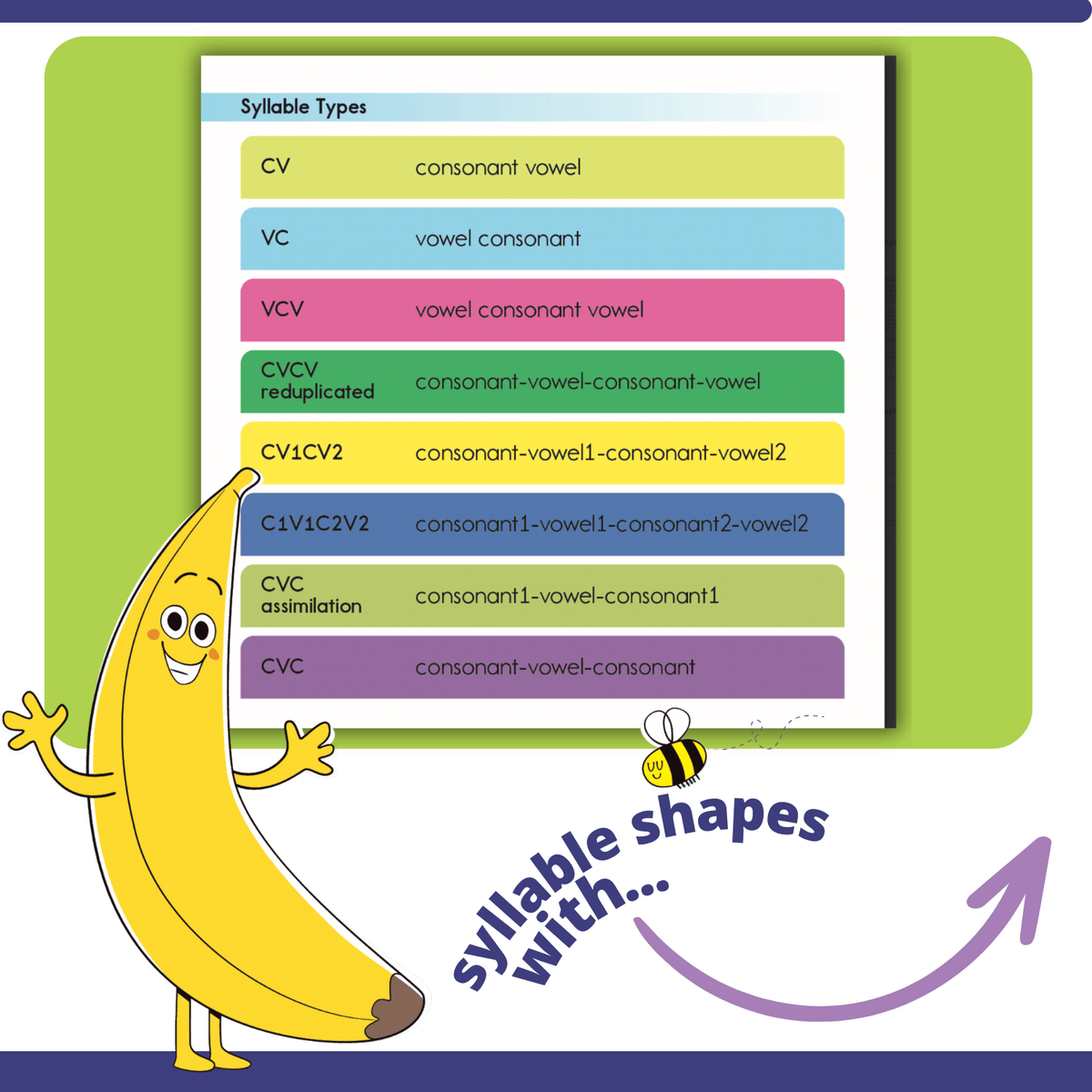
8 color-coded syllable shape categories to support flexible target selection
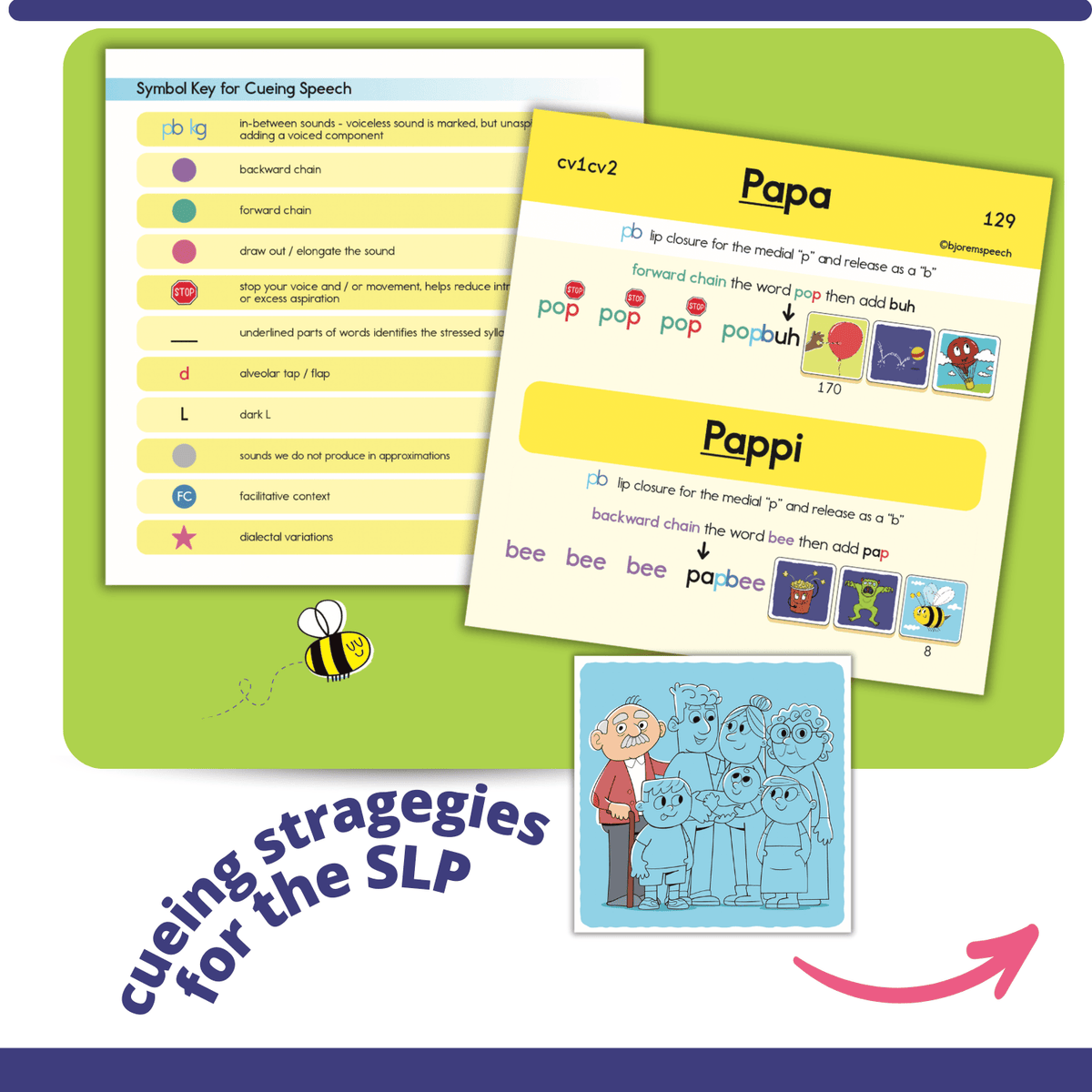
Back-of-card clinician cues, including:In-between sound cues for coarticulationForward and backward chaining promptsDialectal variation notesSuggestions for approximationsStop cues for final voiced sounds (to reduce intrusive schwa)Lexical stress supportWords-within-words cueingIntegration with Bjorem Speech Sound Cues
Visual symbol system to support quick clinical decision-making
Functional, child-friendly images to support engagement and early communication
Contents
280 illustrated target cards for early syllable shapes
8 color-coded syllable shape categories
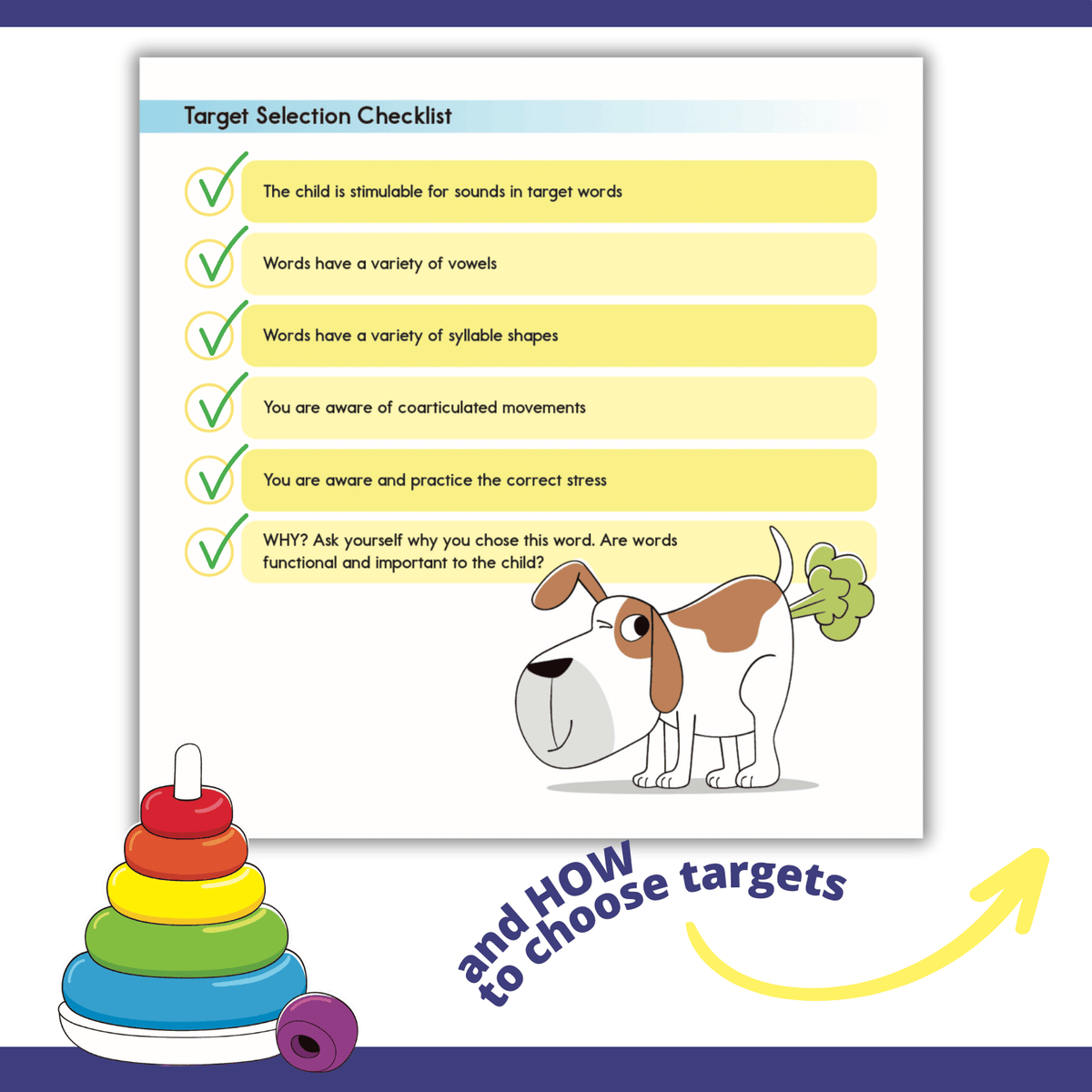
A comprehensive insert booklet covering:CAS and coarticulation explainedTarget selection guidelinesCueing system and symbol definitionsLip position reference guideProsody and stress supportForward and backward chaining strategiesTeaching approximations and reducing segmentation
Built-in support for Bjorem Speech Sound Cues integration
Benefits
Supports accurate motor planning rather than segmented or choppy speech
Helps clinicians choose intentional targets instead of working through cards sequentially
Encourages smooth transitions between sounds, a key area of difficulty in CAS
Reduces over-articulation and intrusive schwa through targeted cueing
Supports natural prosody and stress patterns early in therapy
Provides clear guidance for approximations, helping reduce frustration while building confidence
Connects therapy targets to functional, meaningful words and daily routines