We've all worked with the child who can name every picture you put in front of them.
Apple. Shoe. Scissors. Toothbrush.
But knowing a word is about much more than knowing its label. We want children to understand how words and concepts connect, and one of the most practical places to start building those connections is with object functions.
In object function speech therapy, understanding how objects are used is a key step in moving from simple labeling to meaningful language.
Why Are Object Functions Important?
Object functions describe what an object does or what we do with it: scissors cut, a broom sweeps, a cup holds drinks. This is why object functions for speech therapy are often introduced early to help children develop meaningful language skills.
The Language Processing Hierarchy (Richard, 2017) helps emphasize the importance and utility of object functions. They are developmentally an important step above labeling and lay a strong foundation for more complex language skills that require higher levels of abstraction and flexibility. They are a powerful skill and context for teaching meaningful conceptual relationships: the basis for vocabulary learning.

Think about it:
scissors → cut
broom → sweep
spoon → eat
These seemingly simple relationships help children build richer semantic networks by connecting nouns with verbs and expanding what they know about familiar concepts. They also support early subject–verb–object sentence development in speech therapy.
Object functions also provide a natural bridge to more complex language.
A child can move from:
"Spoon." → "Eat." → "Eat with a spoon." → "You use a spoon to eat cereal."
From there, the same semantic knowledge can support describing, categorizing, comparing, problem-solving, and other higher-level language skills. Many object function goals in speech therapy follow this exact progression.
That's why object functions can be such an important next step for children who have developed a vocabulary of nouns but need support moving beyond naming and into more connected, flexible language. Speech therapy object function activities help children generalize vocabulary into functional communication.
How Do You Target Object Functions in Speech Therapy? Try These 5 Ideas!
The good news? Targeting object functions doesn't have to mean drilling "What is it for?" over and over again. Using varied object function questions in speech therapy helps build flexible and meaningful understanding.
Here are a few ways to build object-function knowledge more intentionally (all while having fun):
1. Start With Explicit Teaching
If a child doesn't know an object's function, teach the relationship directly.
"This is a ruler. We use a ruler to measure things."
Use real objects, pictures, gestures, or demonstrations whenever possible. Many clinicians use speech therapy object cards to support this step visually. Then give the child multiple opportunities to hear and use the concepts.
2. Practice the Relationship in Both Directions
Don't always start with the object.
Ask:
"What do you do with scissors?"
But also:
"What do you use to cut paper?"
Practicing both directions helps children build a stronger connection between the object and its function rather than memorizing one specific question-and-answer pattern. This approach is especially helpful when targeting object identification in speech therapy.
3. Vary Your Questions
The goal is flexible knowledge—not learning how to answer "What is it for?"
Try:
-
What do you do with it?
-
What do you use to __?
-
Show me something that can __.
-
You need to __. What could you use?
-
Why would someone need this?
The underlying relationship stays the same while the language demands change.
4. Move From Receptive to Expressive
A child may be able to identify an object based on its function before they can independently explain that function.
Start with:
"Show me what you use to sweep."
Then move toward:
"What do you do with a broom?"
And eventually:
"Tell me about a broom."
This allows you to increase the expressive language demands while working from the same underlying semantic knowledge. This sequence aligns well with common object function goals in speech therapy.

5. Use Both Focused and Context-Rich Practice
Focused practice is useful for probing, explicitly teaching, and practicing object-function relationships.
But we also want children to apply that knowledge in meaningful contexts.
Instead of only asking:
"What is a ruler for?"
Show a picture and ask:
"They need to measure how tall he is. What could they use?"

Now the child has to recognize when their knowledge is relevant and apply it within a real-world situation.
From there, you can extend the language even further:
"What else could they use?"
"Why wouldn't a plate work?"
"What would happen if they used a hammer?"
One simple object-function target can become a jumping-off point for much more complex language. This is why many object function activities in speech therapy include scenes, problem-solving tasks, and open-ended questions.
Object Function Activities for Speech Therapy
Object function activities can include sorting objects by their use, matching pictures to actions, identifying tools needed in everyday scenes, or completing worksheets that ask questions such as “What do you use to…?”
Another effective activity is a “function scavenger hunt,” where children find objects in the room that match a described action. These activities help children apply their knowledge in both structured and naturalistic settings.
Moving Beyond Labeling With Object Functions
Object functions may seem like a simple language target, but that's exactly what makes them so useful. They provide a practical next step beyond labeling, helping children connect nouns with actions, strengthen semantic networks, and begin building the connections that support increasingly complex language.
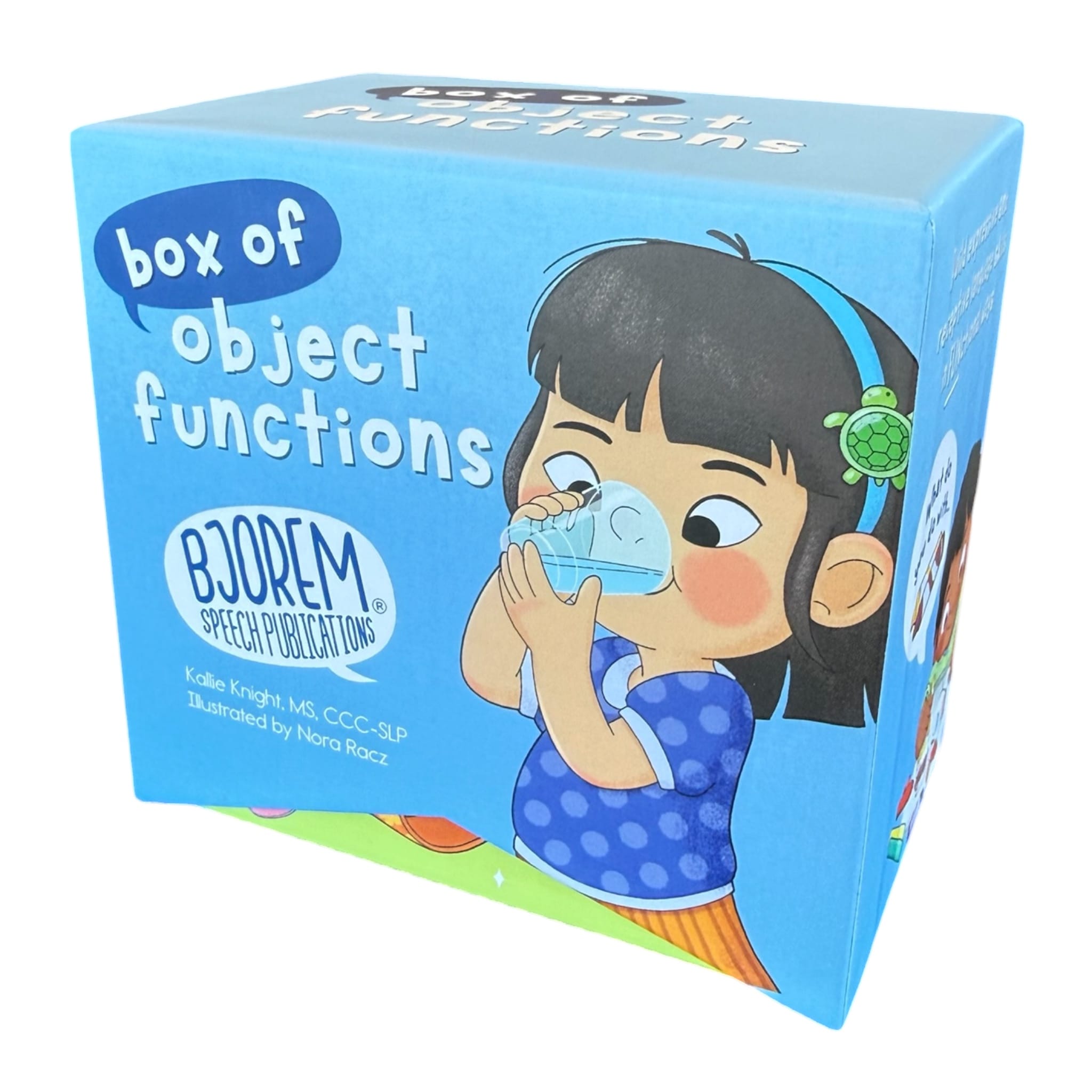
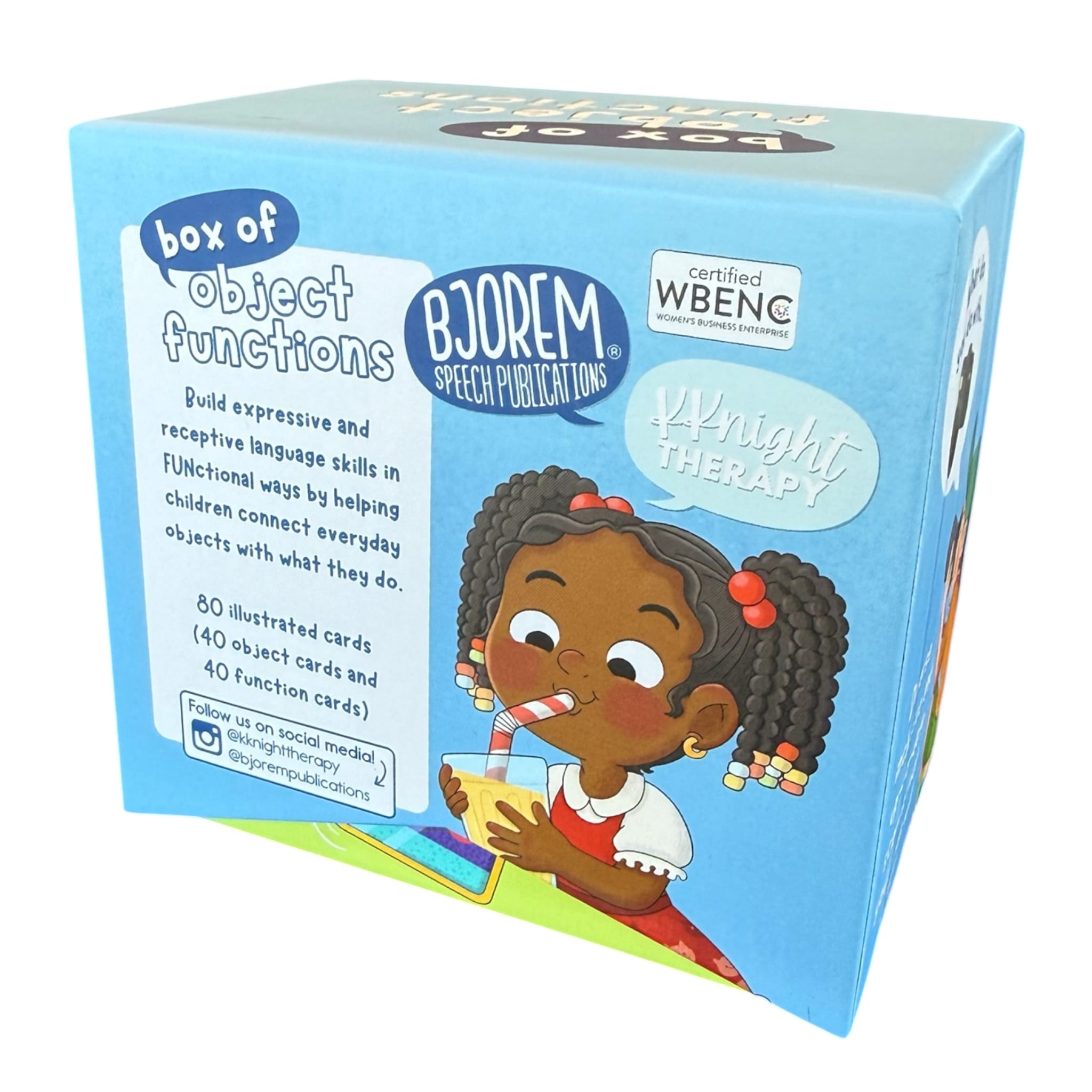
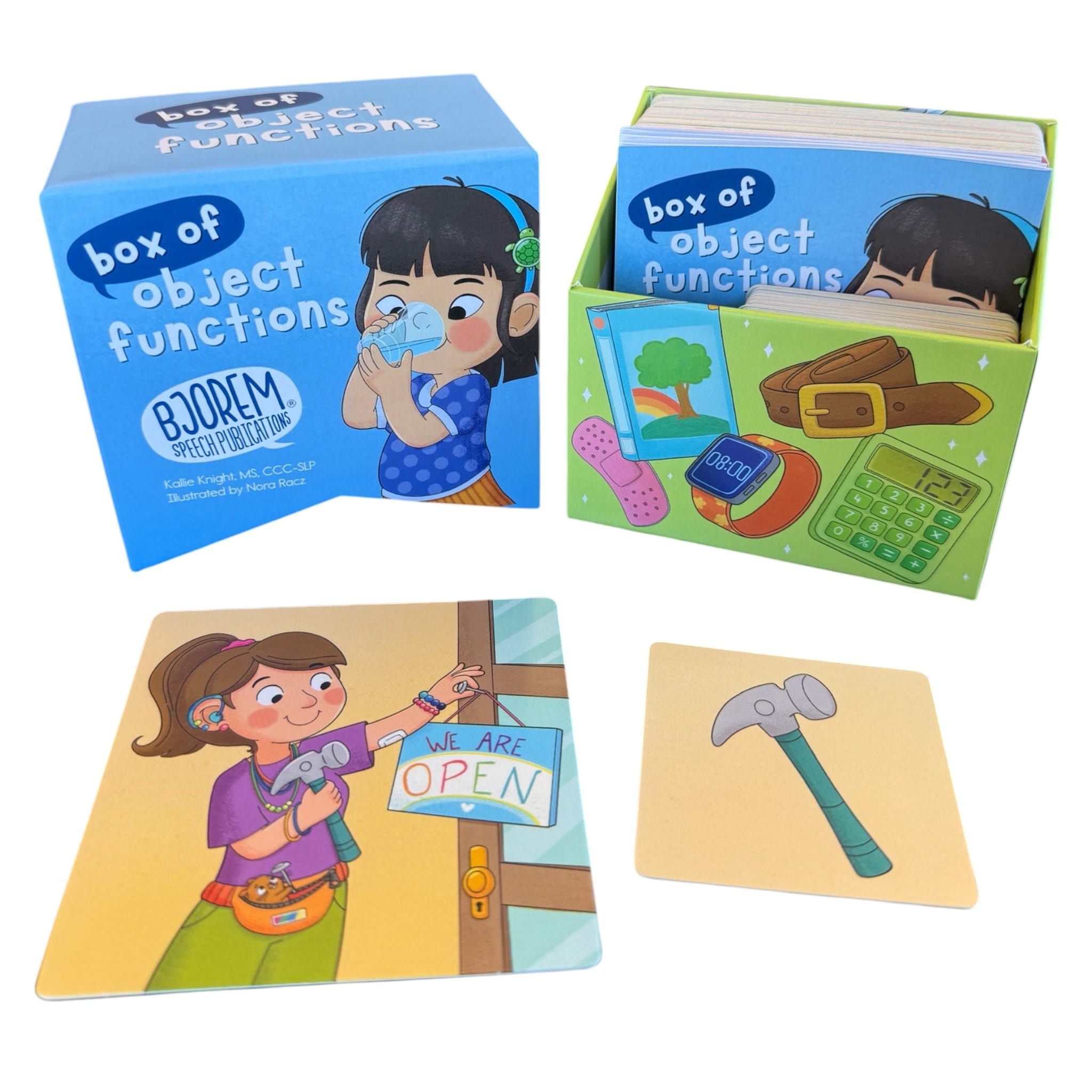
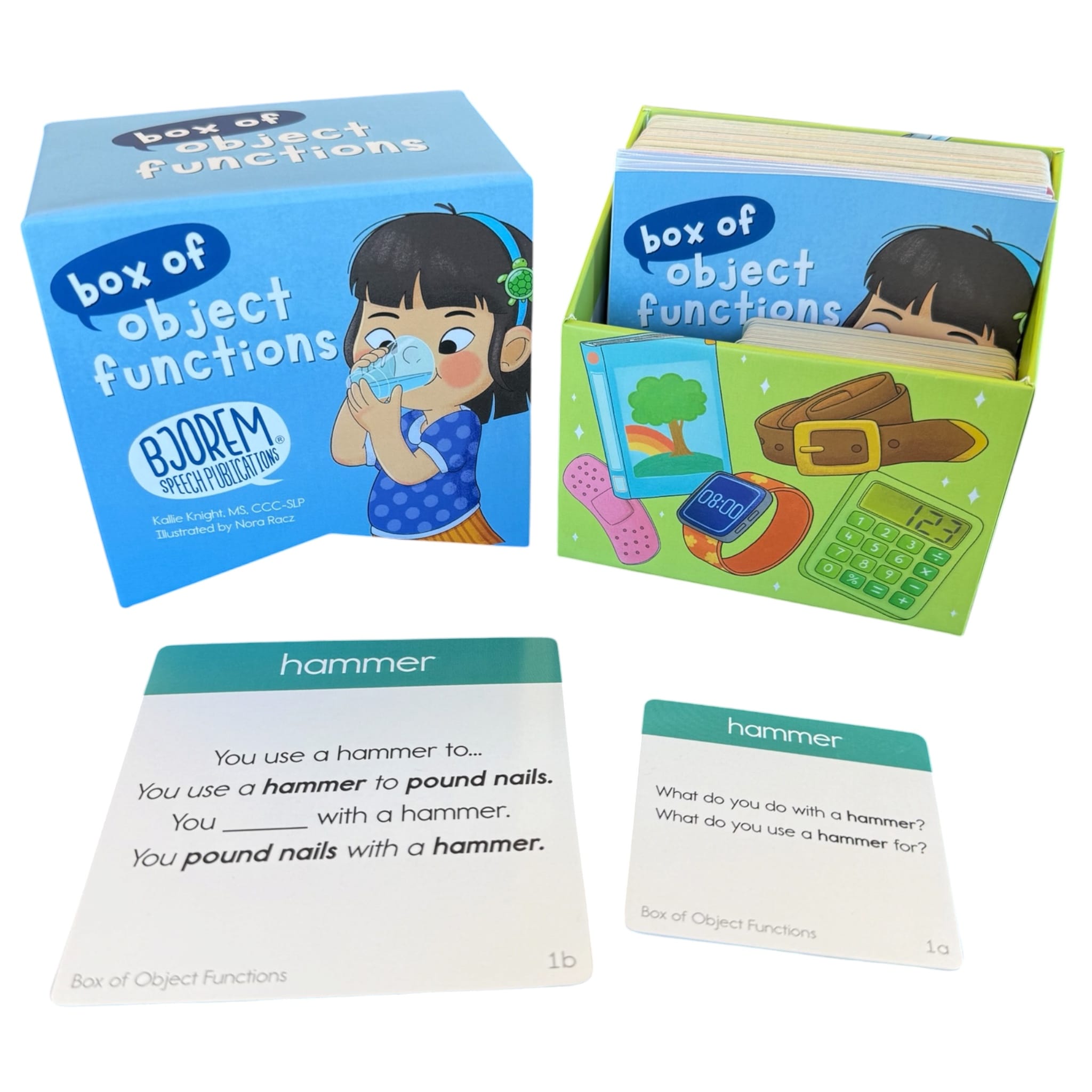
That's also the idea behind the Bjorem Speech Box of Object Functions. The deck was intentionally designed to help SLPs move beyond simple "What is it for?" drills with opportunities for both focused, context-void practice and meaningful, context-rich application.
Because the goal isn't just for a child to know that scissors are for cutting.
It's for them to build a deeper, more flexible understanding of the words they know—and use those connections to build bigger language skills. These types of cards are also commonly included in object function worksheets for speech therapy, combining structured practice with contextual application.

_____
Frequently Asked Questions About Object Functions in Speech Therapy
What are object functions in speech therapy?
Object functions refer to a child’s understanding of what an object does or how it is used. This knowledge helps children connect nouns with verbs and supports the development of meaningful, functional language. When children understand object functions, they are better able to describe actions, follow directions, and participate in everyday routines.
Why are object functions important?
Object functions are important because they form the foundation for semantic development. They help children understand relationships between words, categorize items, solve problems, and build early sentence structures. Without object function knowledge, children may struggle to use vocabulary flexibly or understand how different concepts relate to one another.
How do you teach object functions?
Object functions are taught through explicit modeling, real-life demonstrations, varied questioning, and opportunities for both receptive and expressive practice. Worksheets, picture cards, and everyday scenes can all support learning. The most effective approach combines structured teaching with naturalistic practice, allowing children to apply their knowledge in meaningful contexts.
What are examples of object function goals?
Object function goals often include identifying objects based on their function, naming the function of familiar objects, and using object-function knowledge to produce simple sentences. These goals help children move from basic labeling to more complex and functional communication.