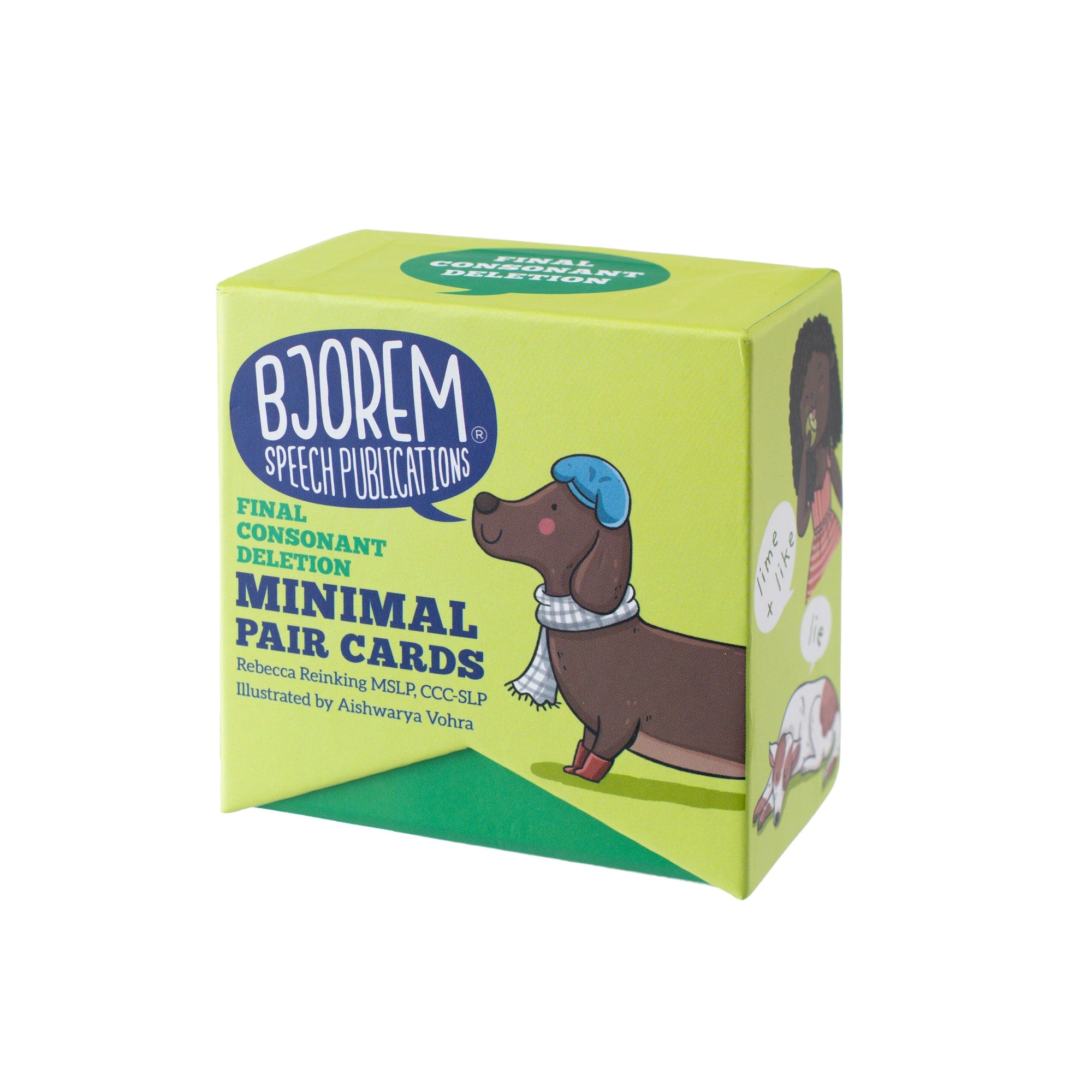
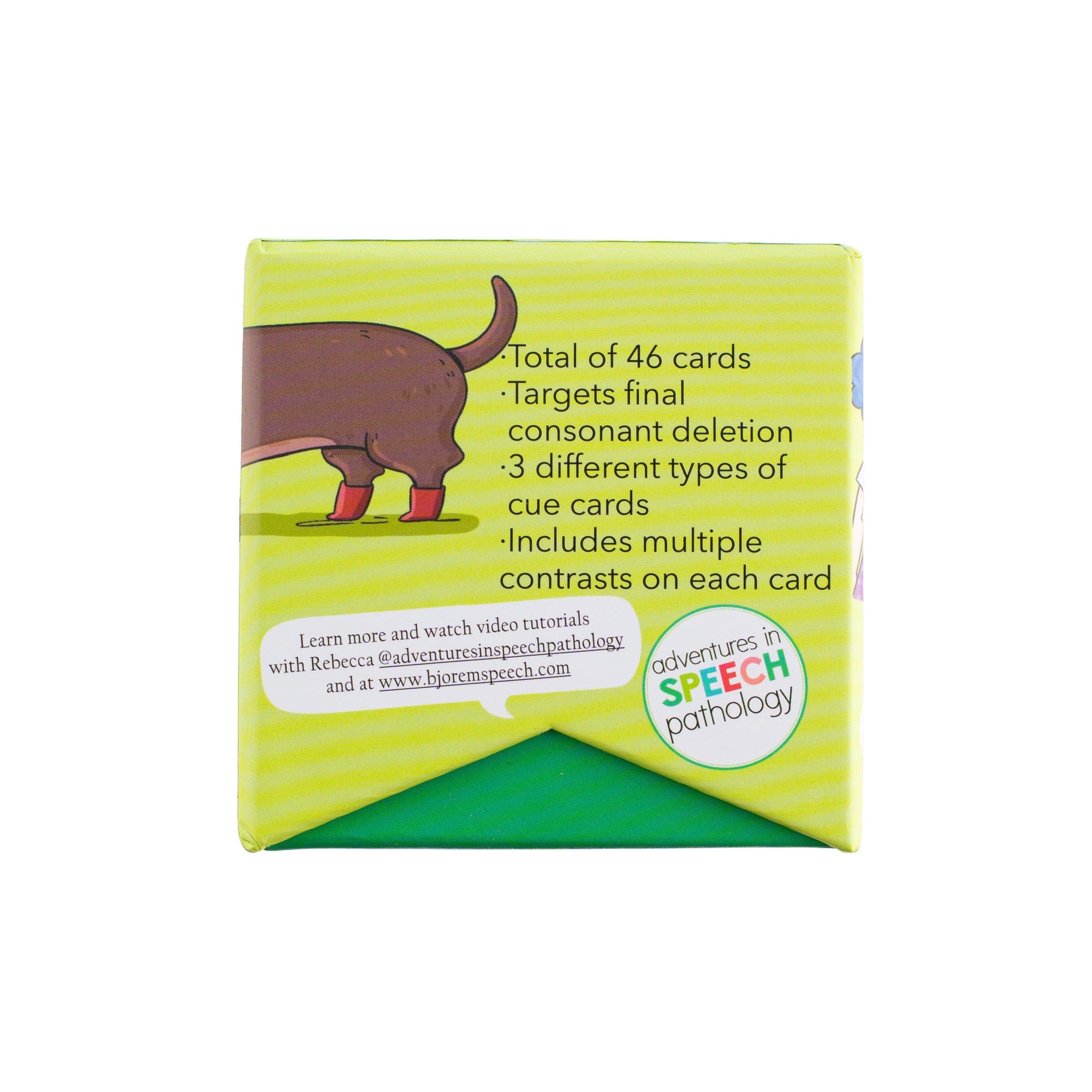
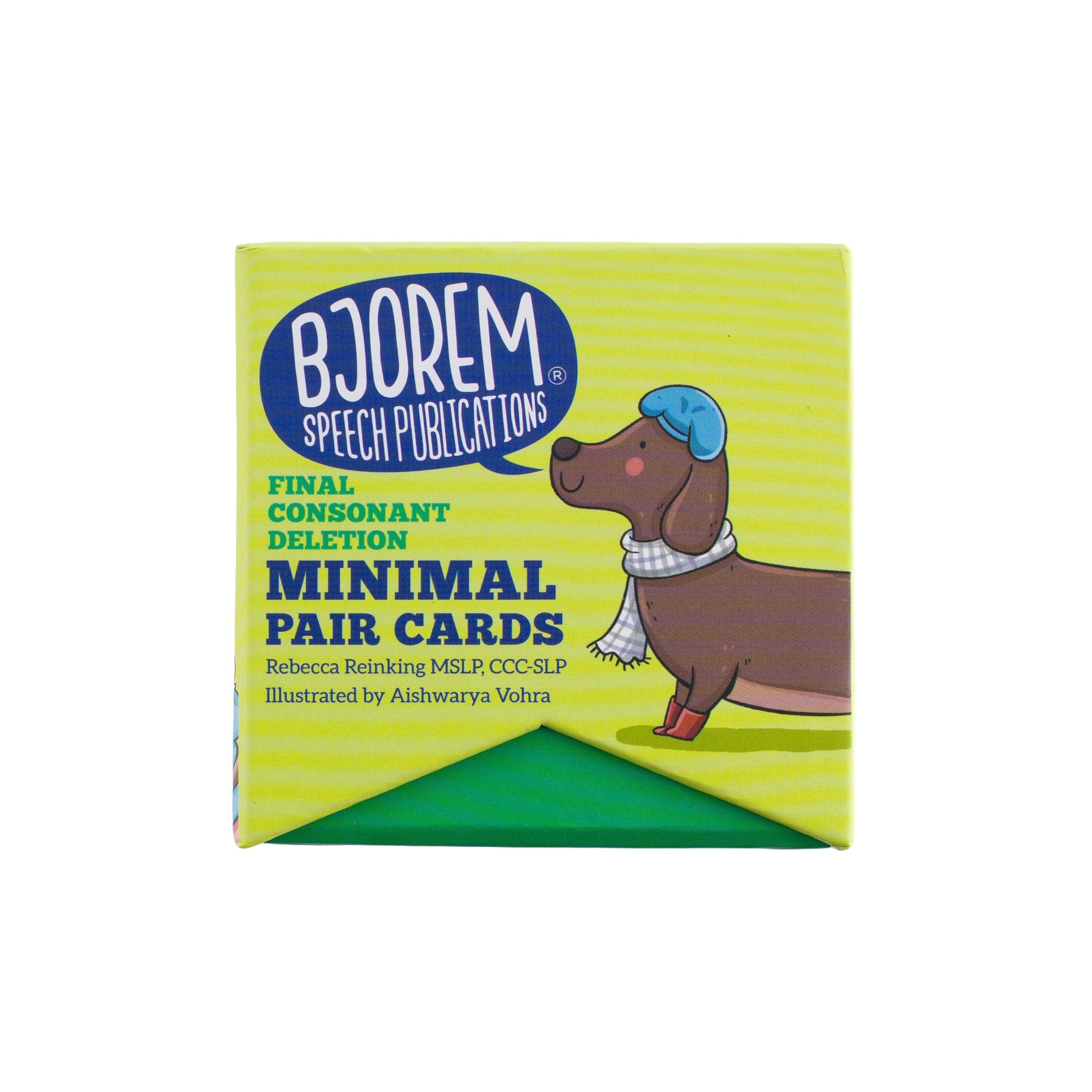
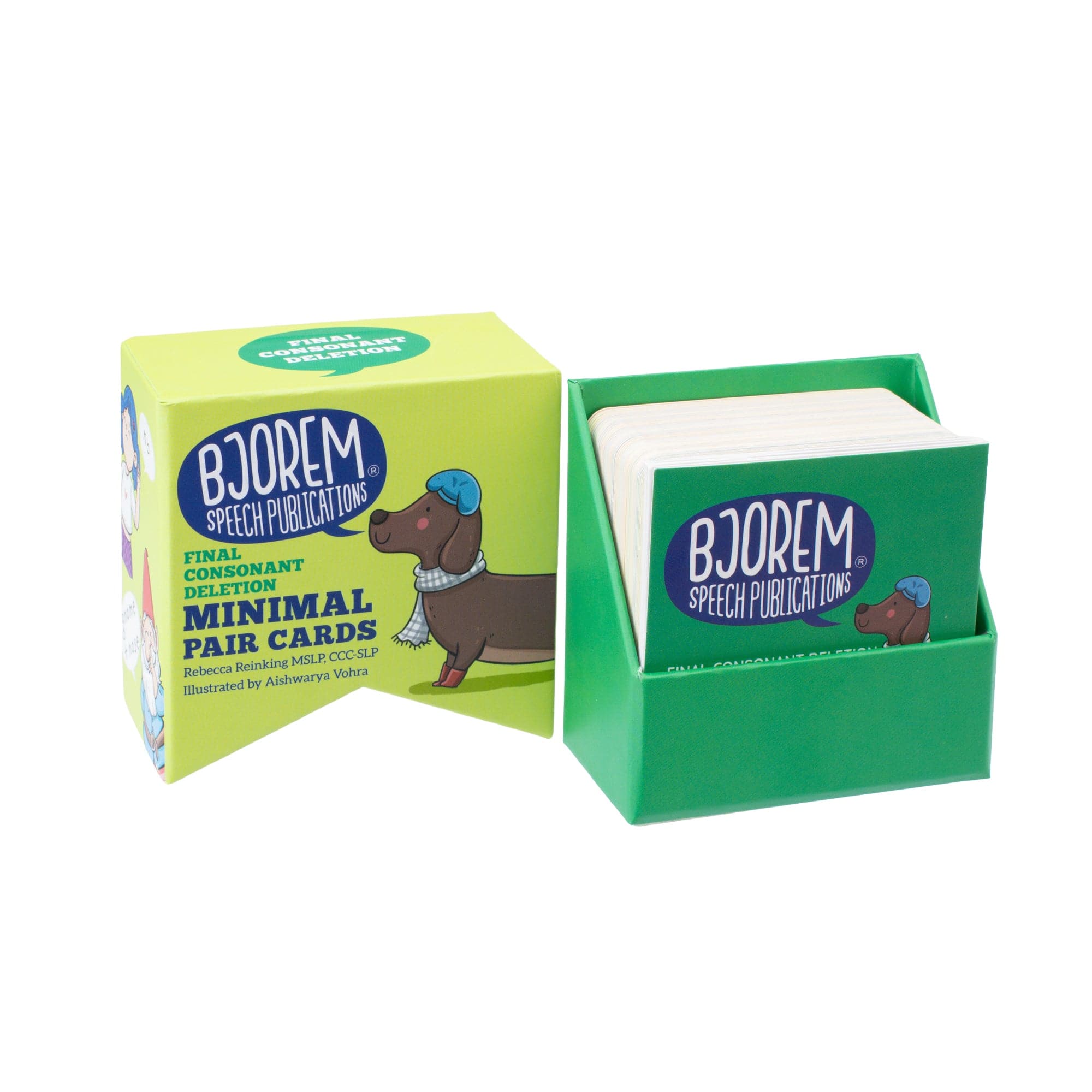
Final Consonant Deletion Improve Final Consonant Deletion with Minimal Pairs Best Speech Language Therapy Tools
Minimal Pairs Bundle - 6 Box Set Minimal Pairs Bundle - 6 Box Set for Phonological Errors Best Speech Language Therapy Tools
Image in .svg format (icon-star.svg)
Popular

Item

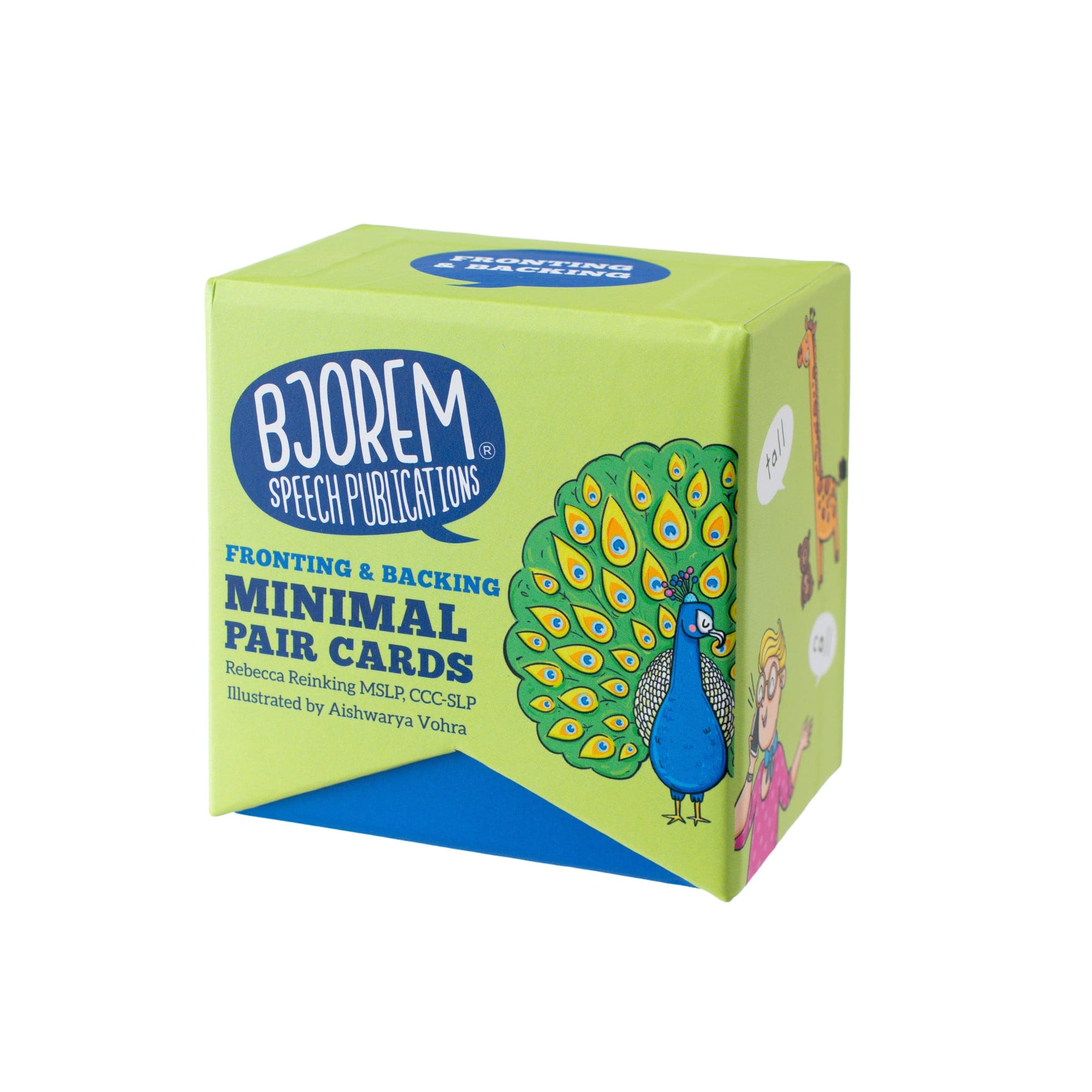
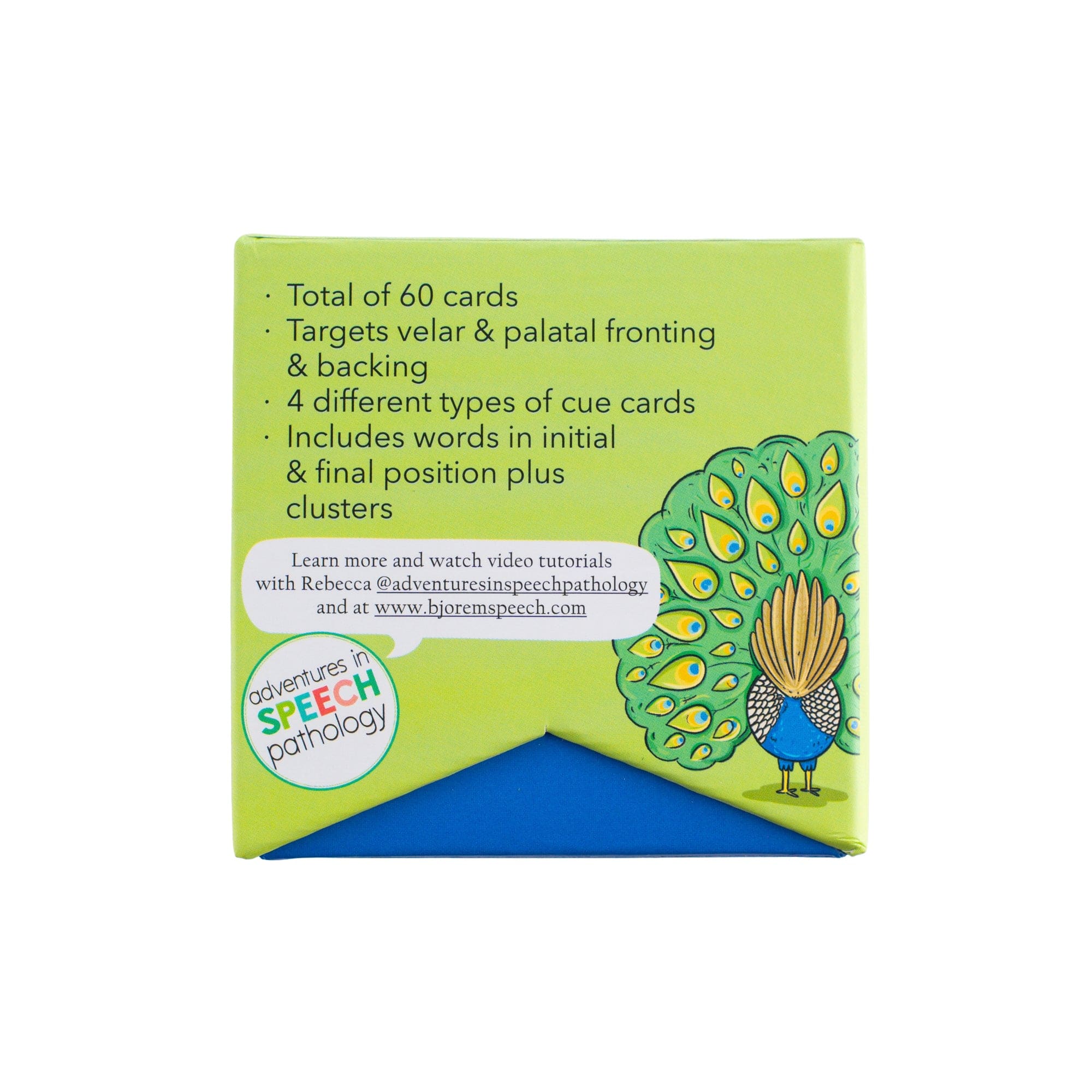
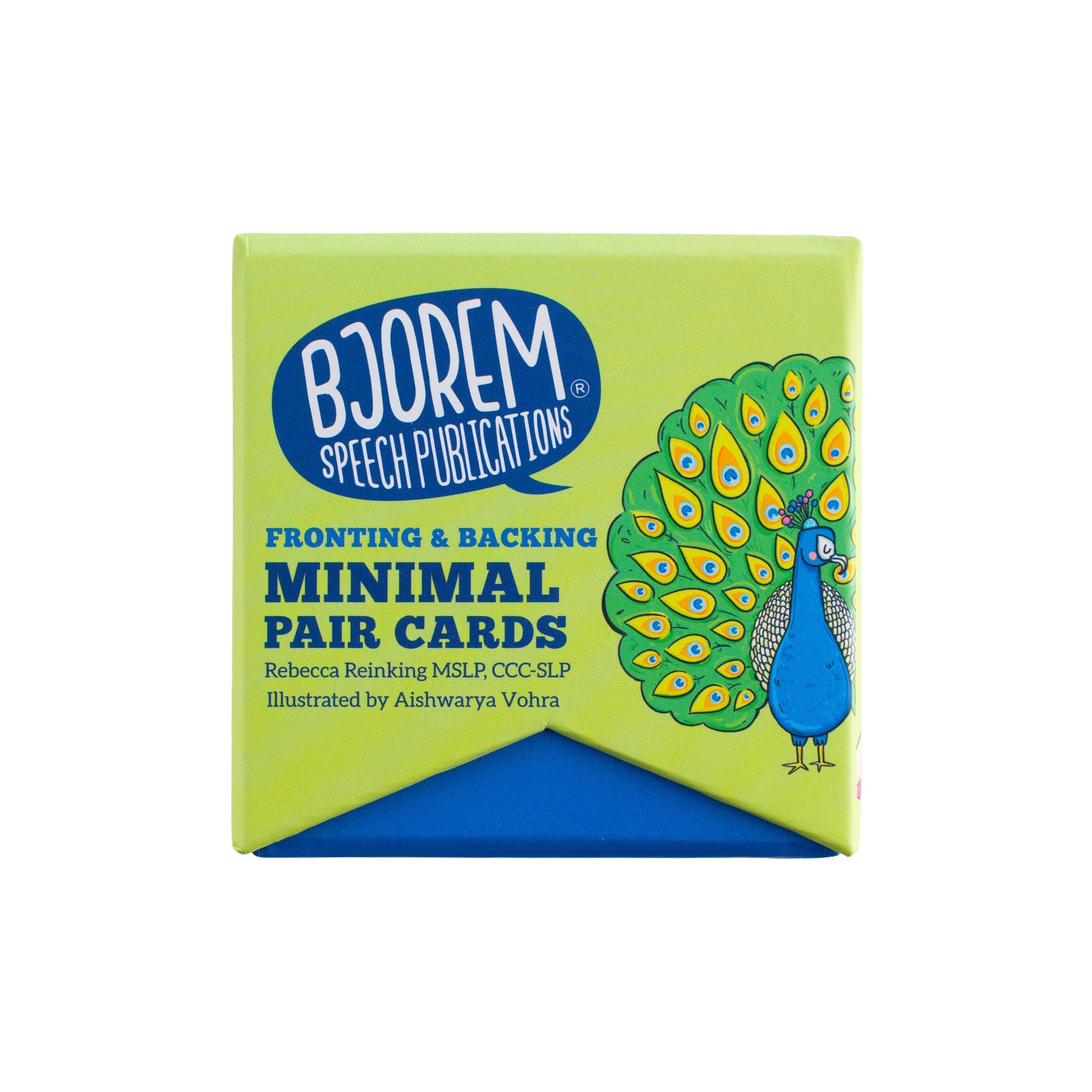
Minimal Pairs: Fronting & Backing Minimal Pairs: Fronting and Backing Speech Sessions Best Speech Language Therapy Tools
Image in .svg format (icon-star.svg)
Popular

Item

Minimal Pairs: Final Consonant Deletion Enhance Speech Therapy with Final Consonant Deletion Minimal Pairs Best Speech Language Therapy Tools
Image in .svg format (icon-star.svg)
Popular

Item

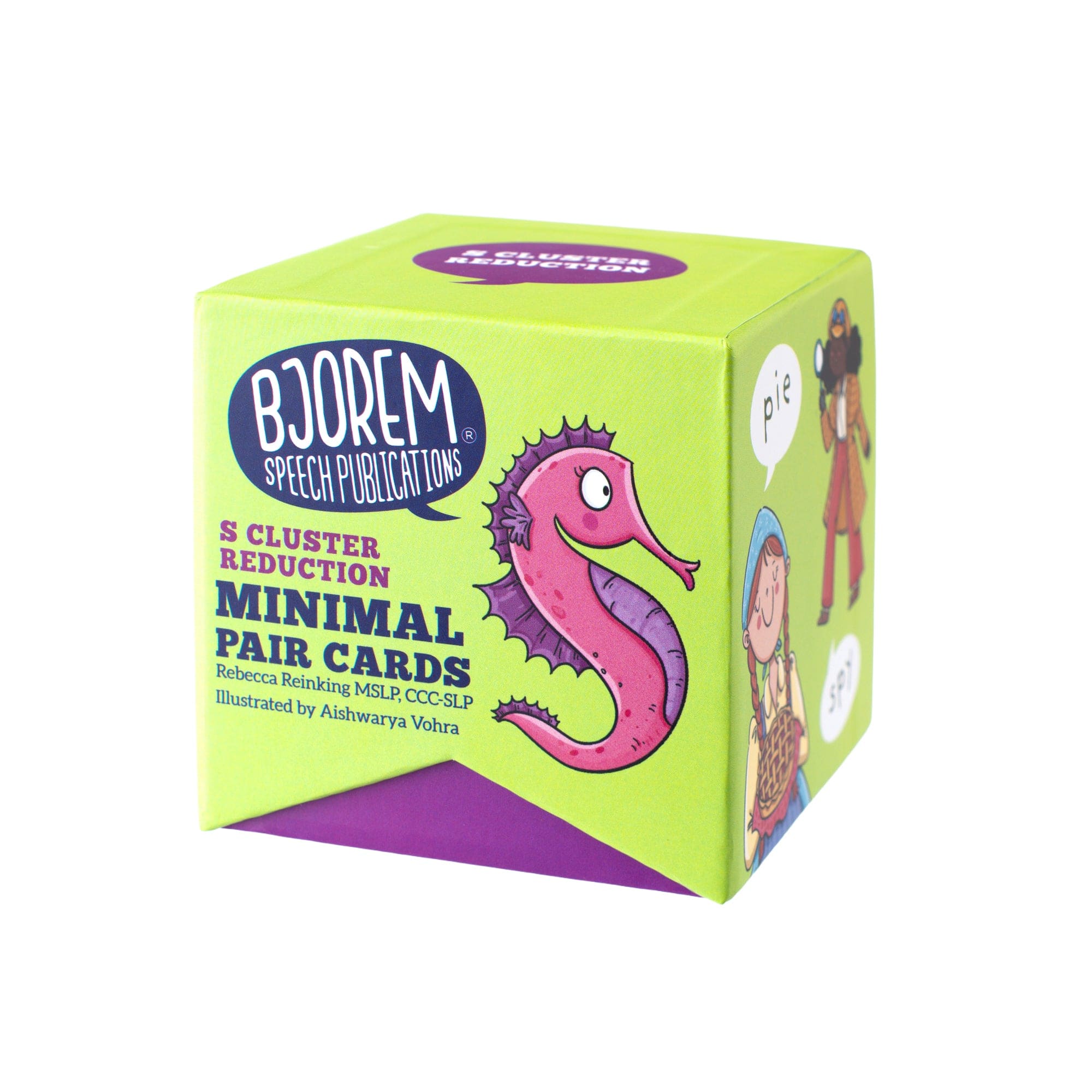
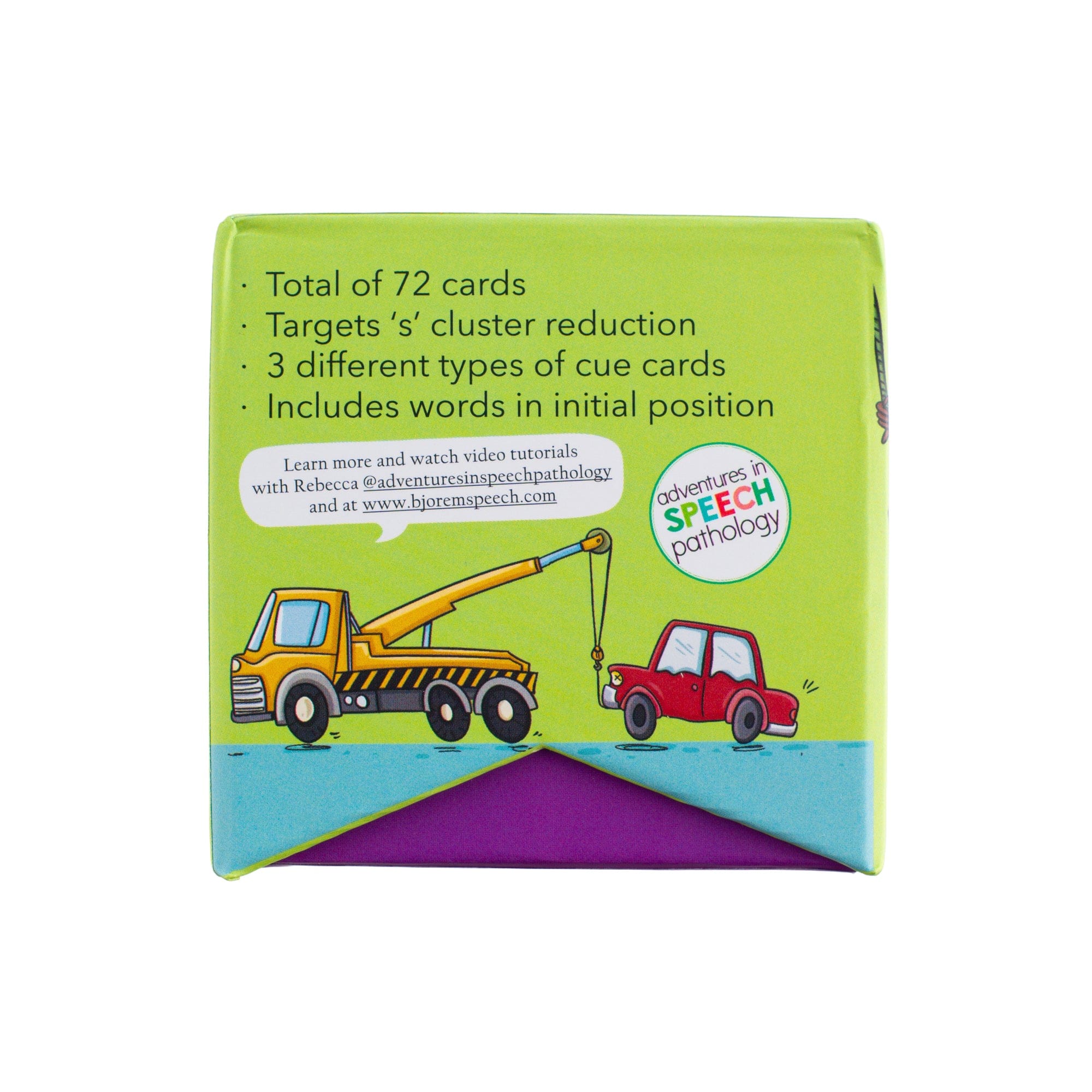
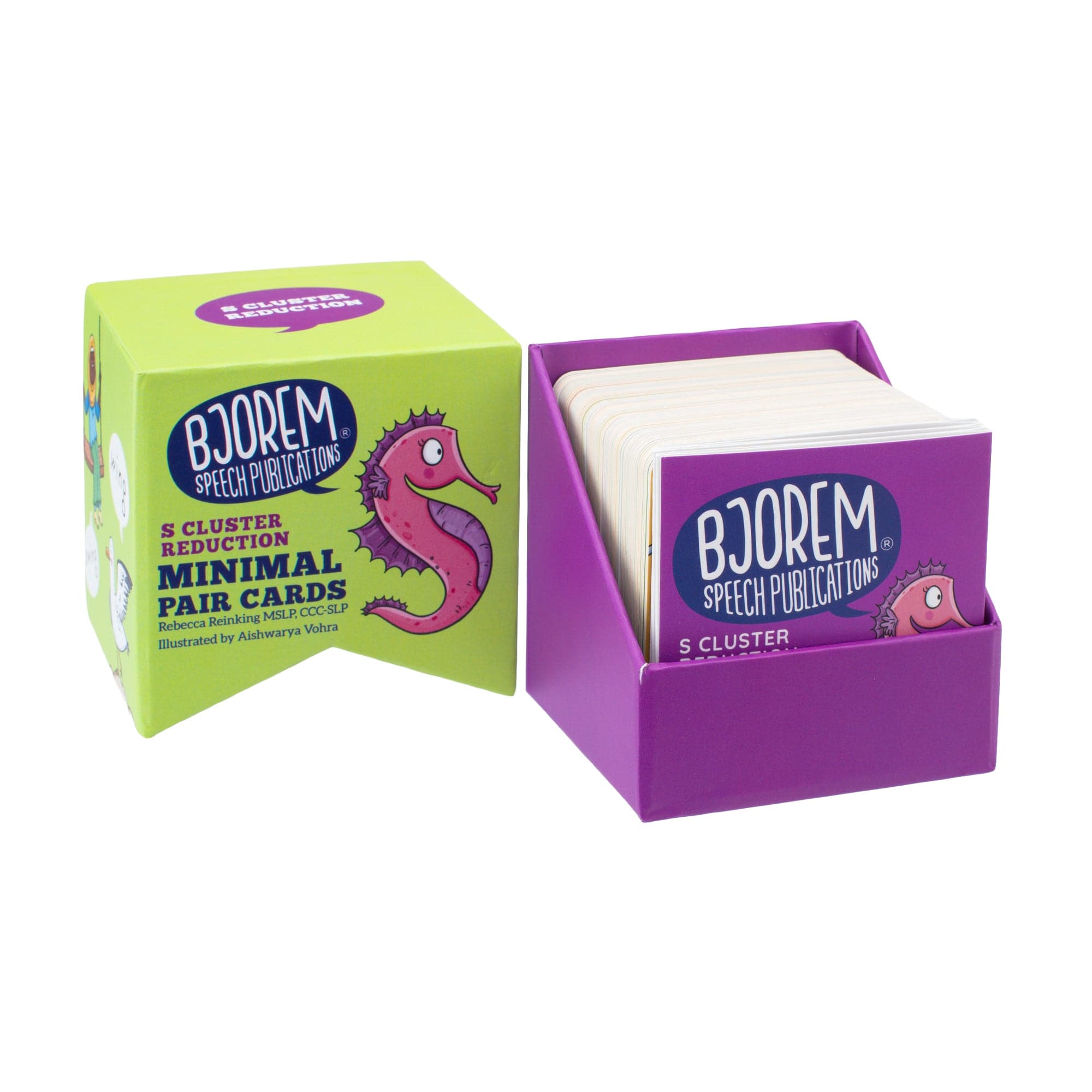
Minimal Pairs: S Cluster Reduction Minimal Pairs: S Cluster Reduction Cards for Speech Therapy Best Speech Language Therapy Tools
Image in .svg format (icon-star.svg)
Popular

Item

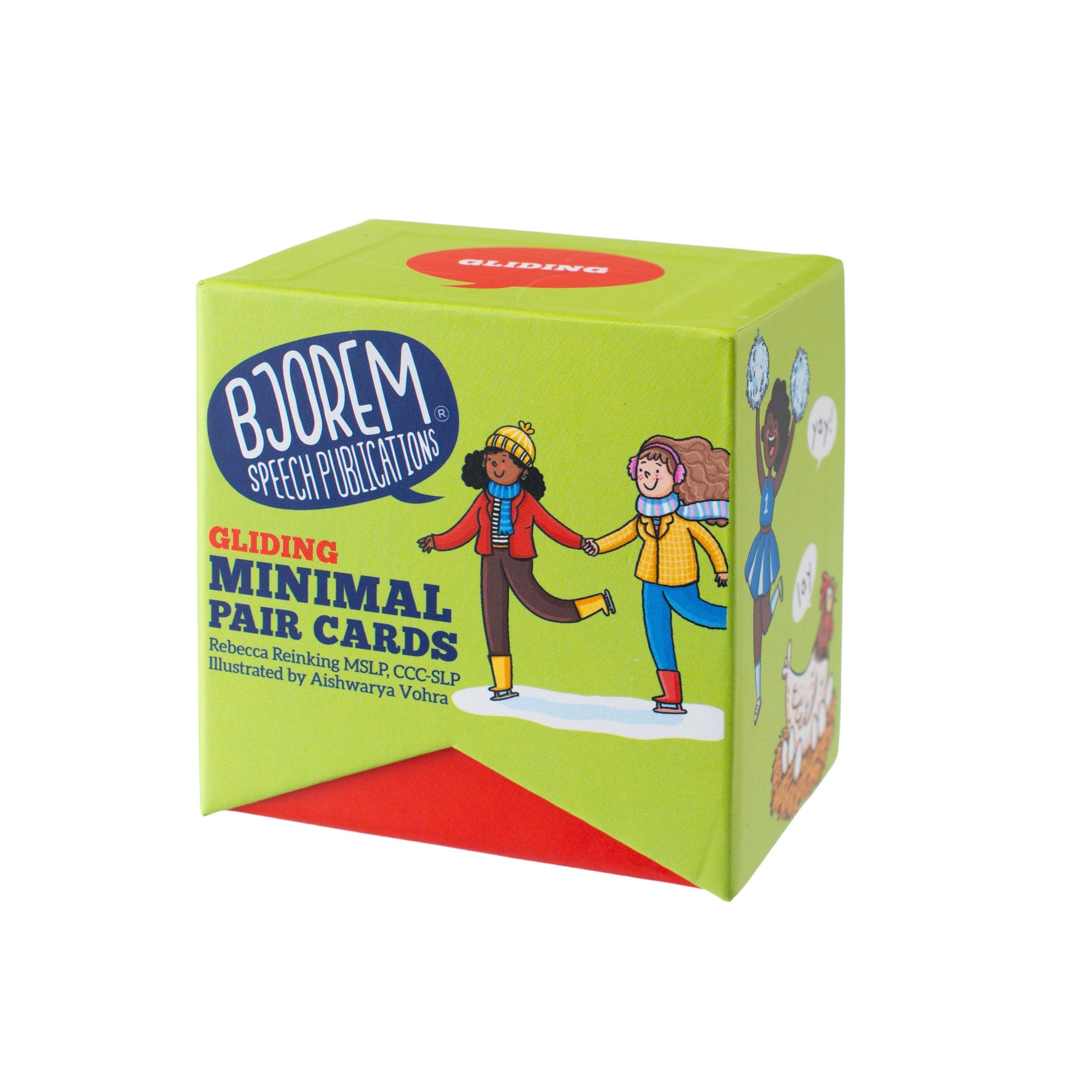
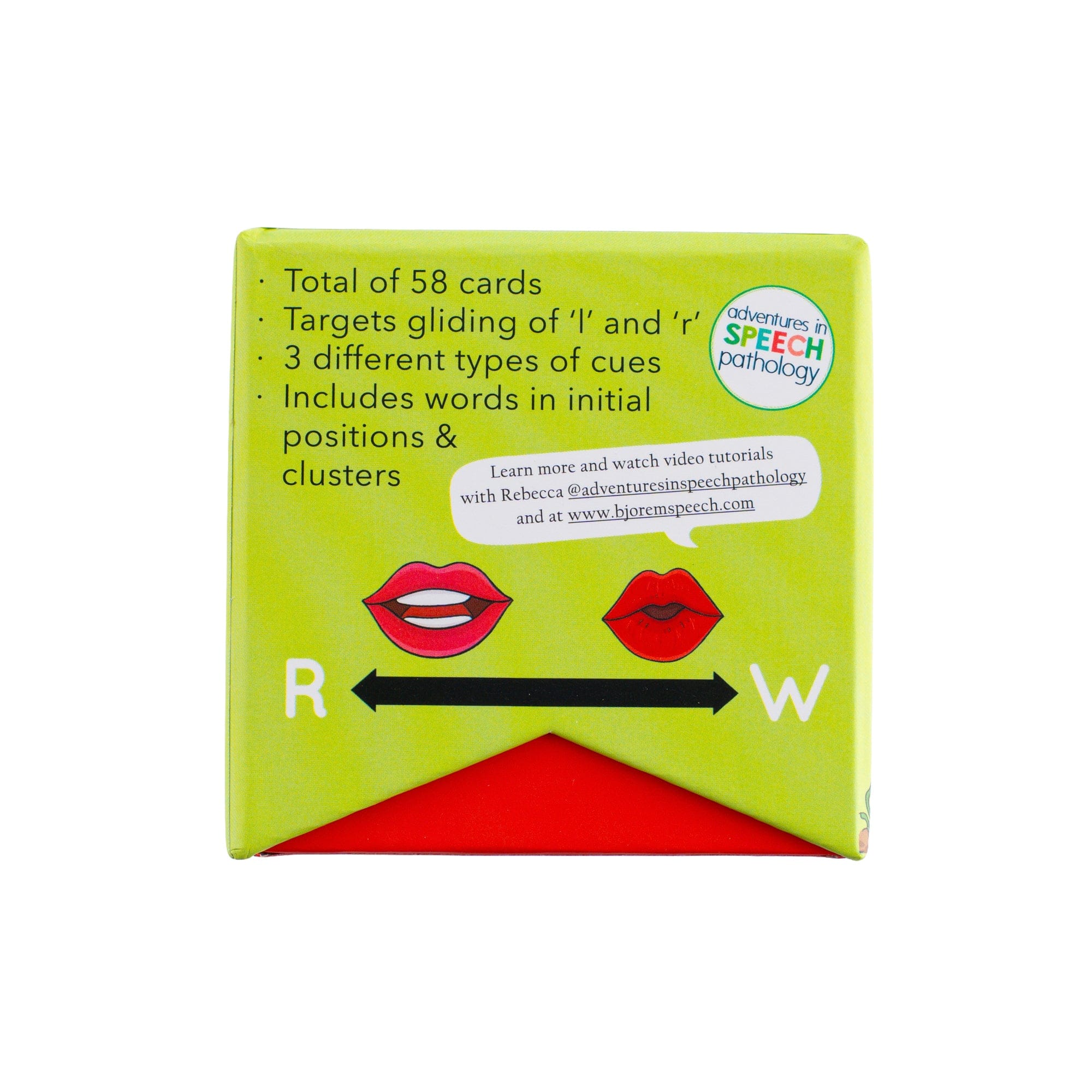
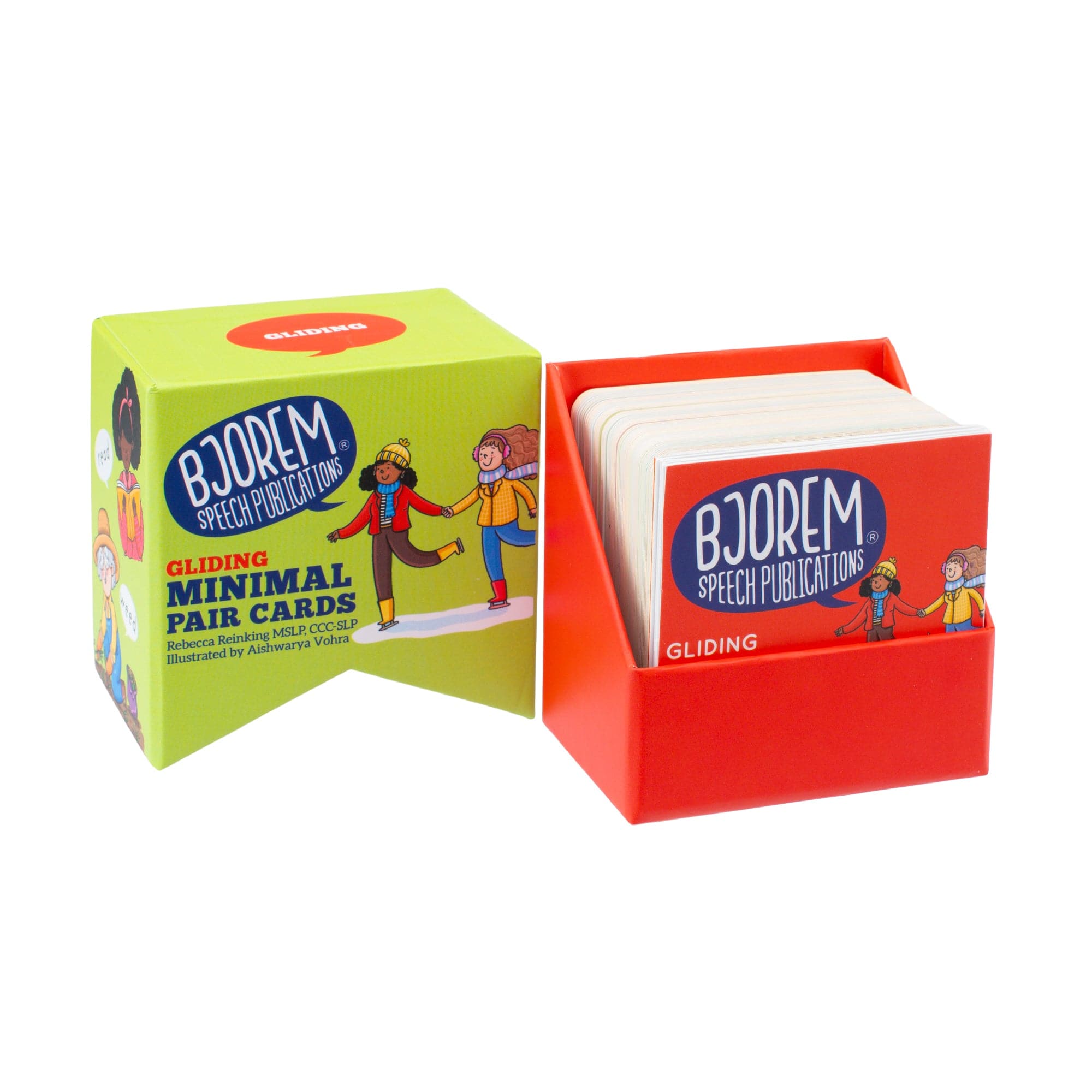
Minimal Pairs: Gliding Gliding Minimal Pairs for Effective Speech Therapy Best Speech Language Therapy Tools
Image in .svg format (icon-star.svg)
Popular

Item

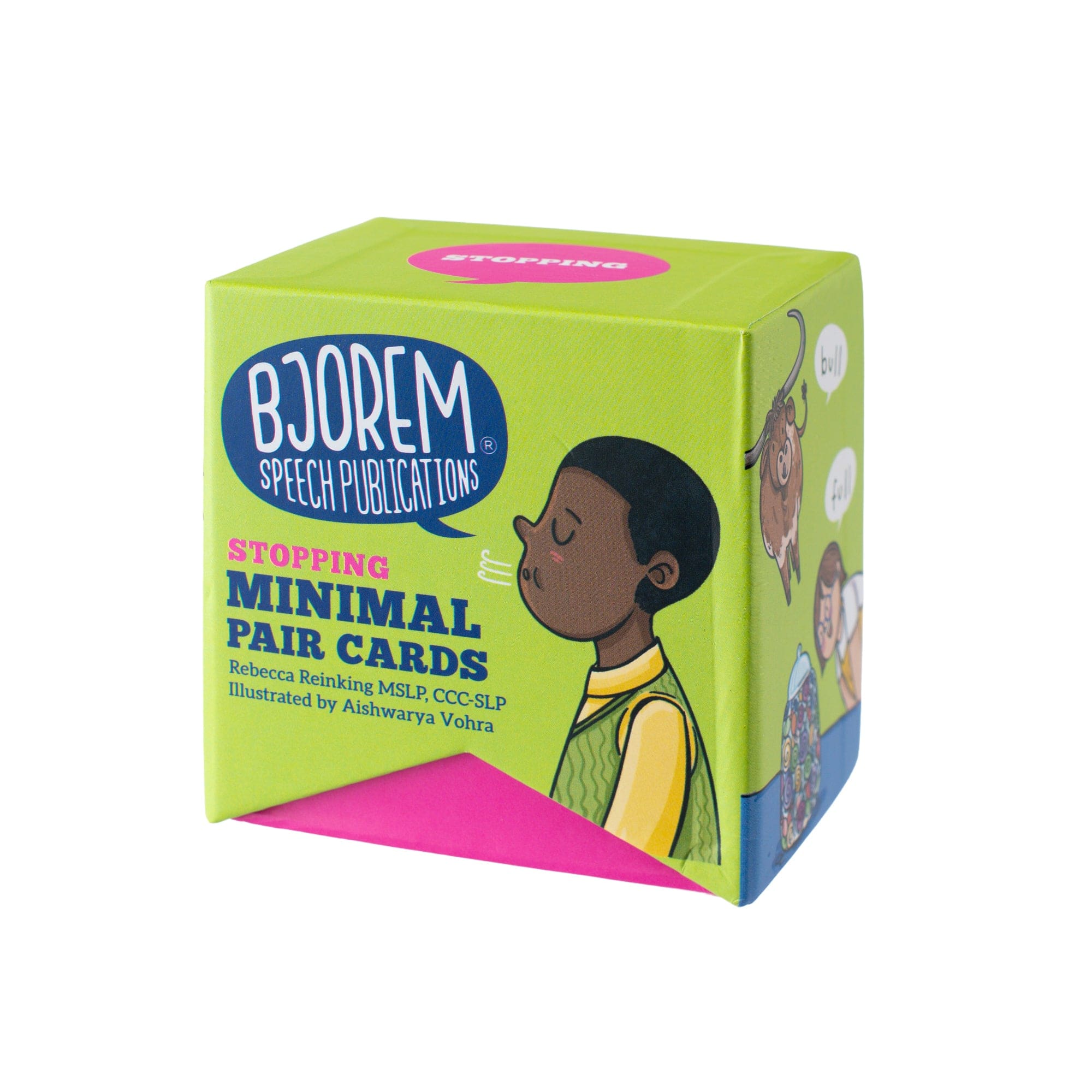
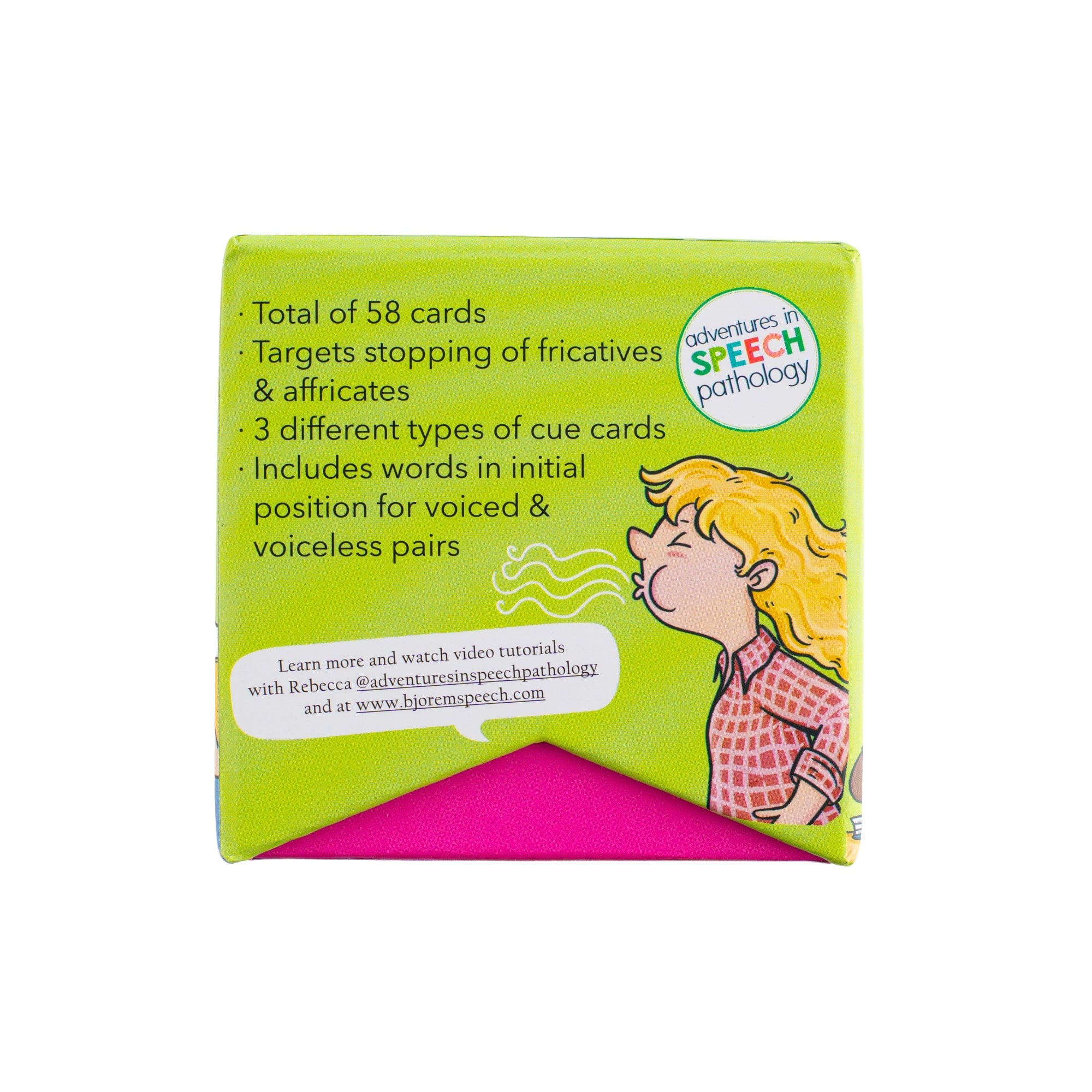
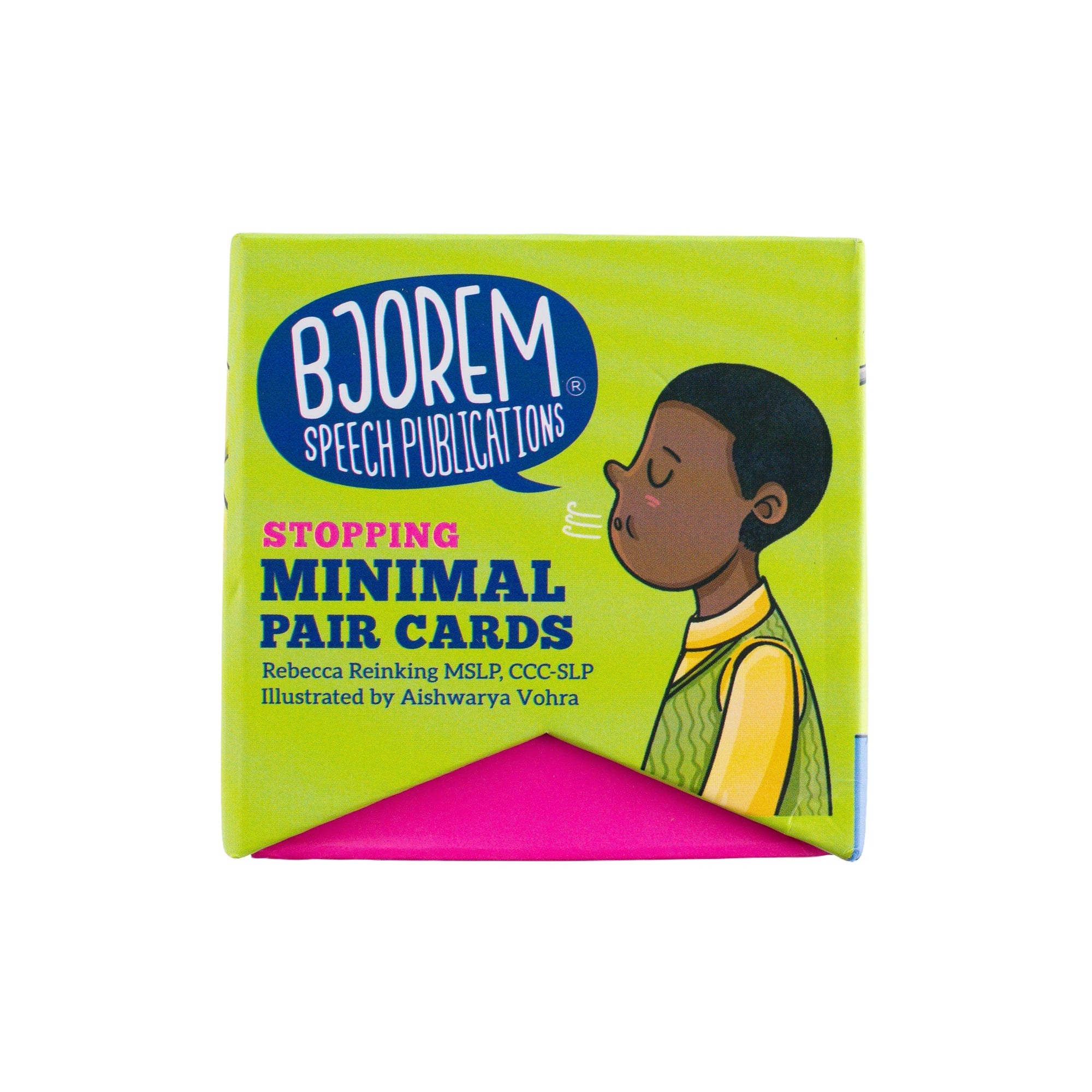
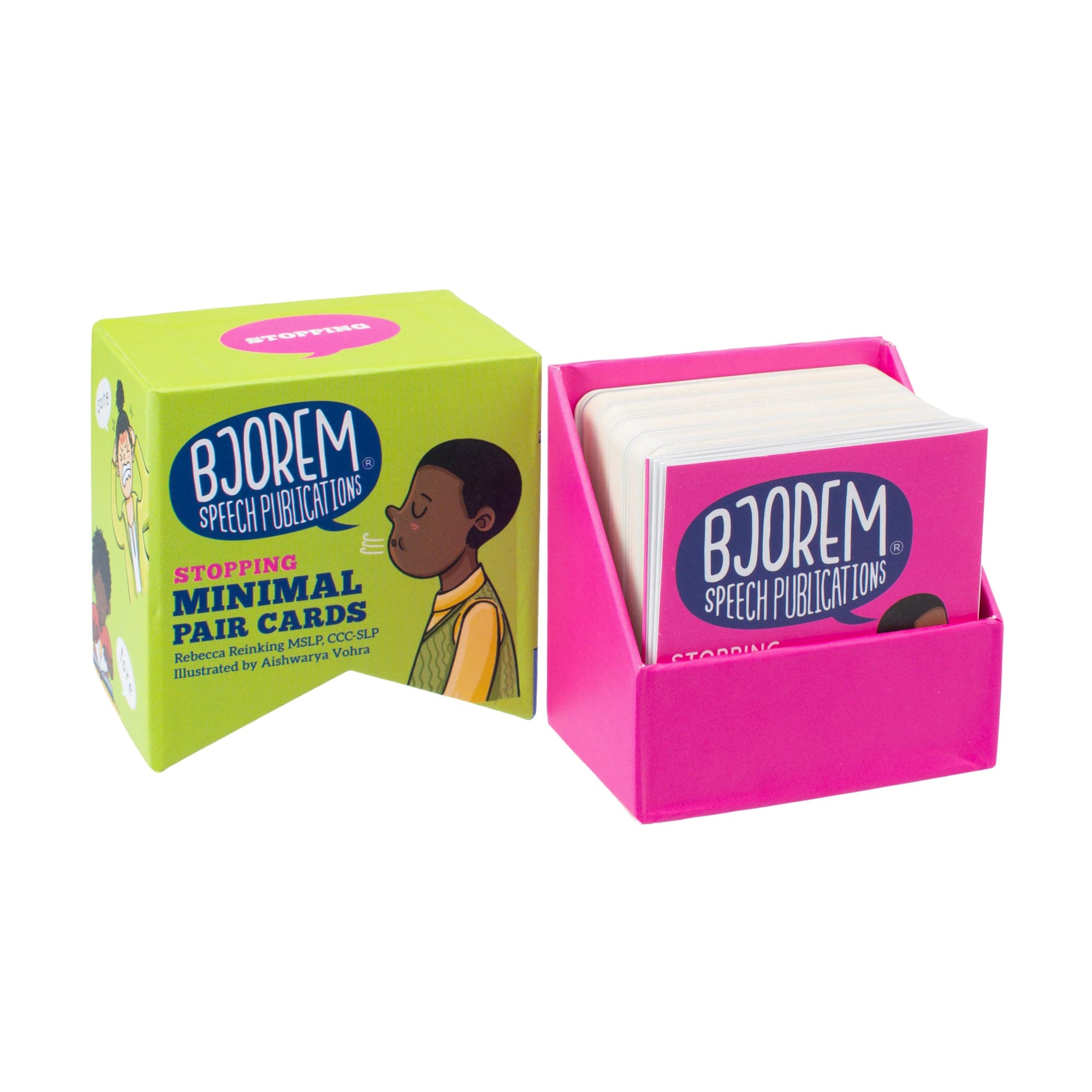
Minimal Pairs: Stopping Stopping Minimal Pairs Treatment Set for Speech Therapy Best Speech Language Therapy Tools
Image in .svg format (icon-star.svg)
Popular

Item

Minimal Pairs: Voicing Voicing Minimal Pairs Best Speech Language Therapy Tools
Image in .svg format (icon-star.svg)
Popular

Item

Tail Sounds Final Consonant Deletion Puzzles Final Consonant Deletion Puzzles for Engaging Learning Best Speech Language Therapy Tools
Image in .svg format (icon-new.svg)
New

Arrival

Minimal Pairs Approach

Watch Videos

Minimal Pairs
Bjorem Publications logo (purple)
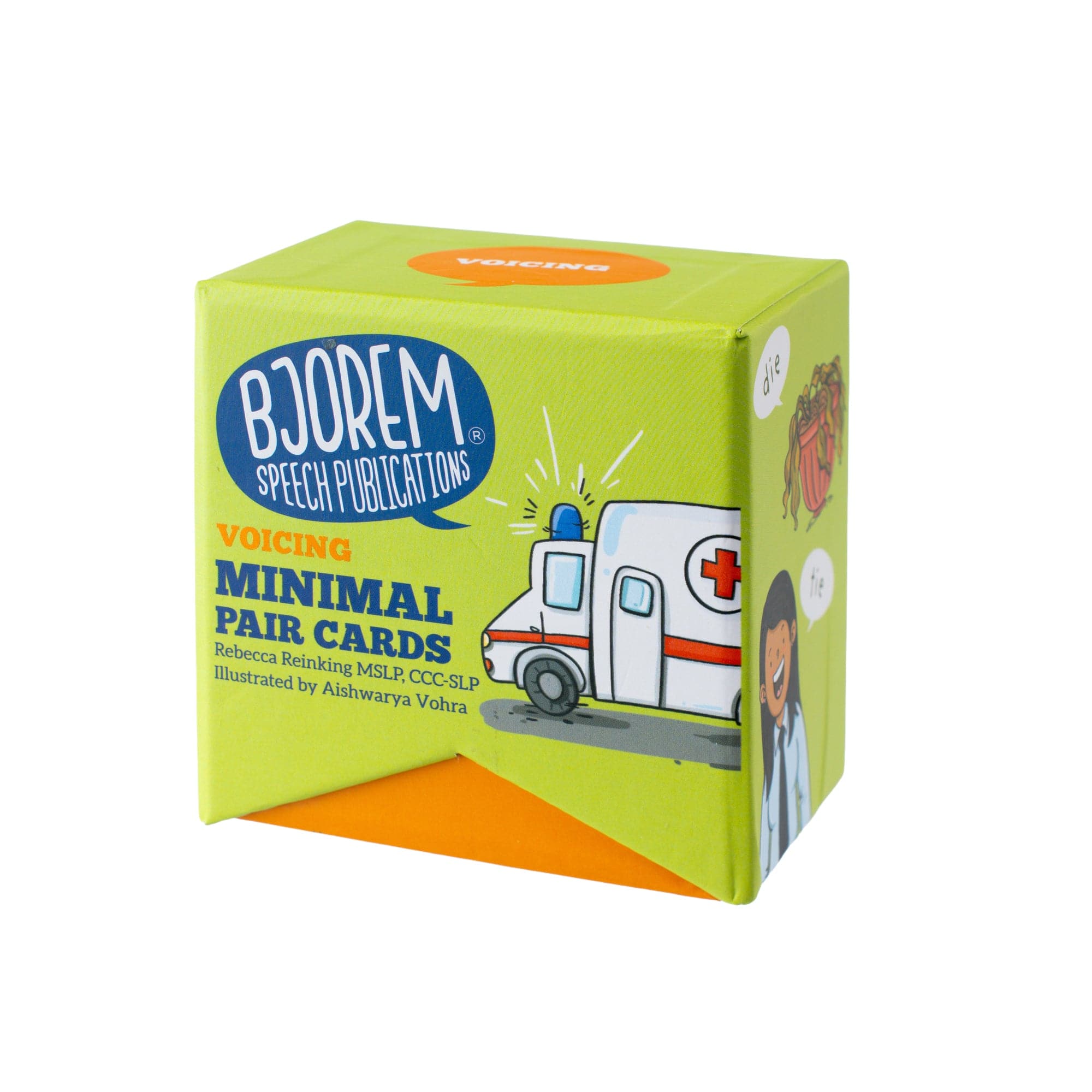
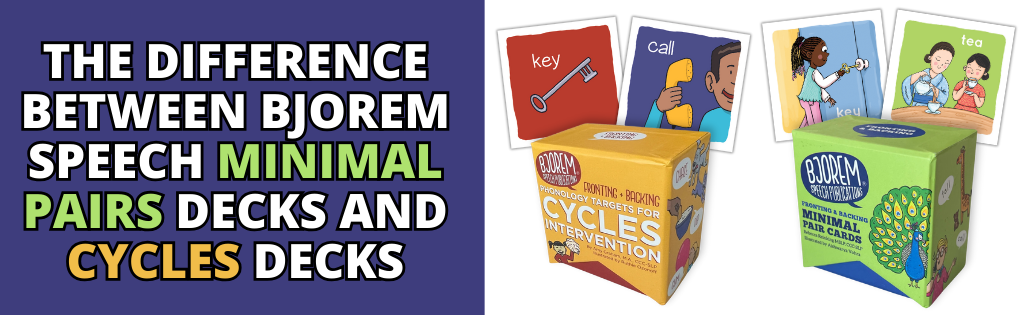
Bjorem Speech Publication Minimal Pair Cards set

What It Is

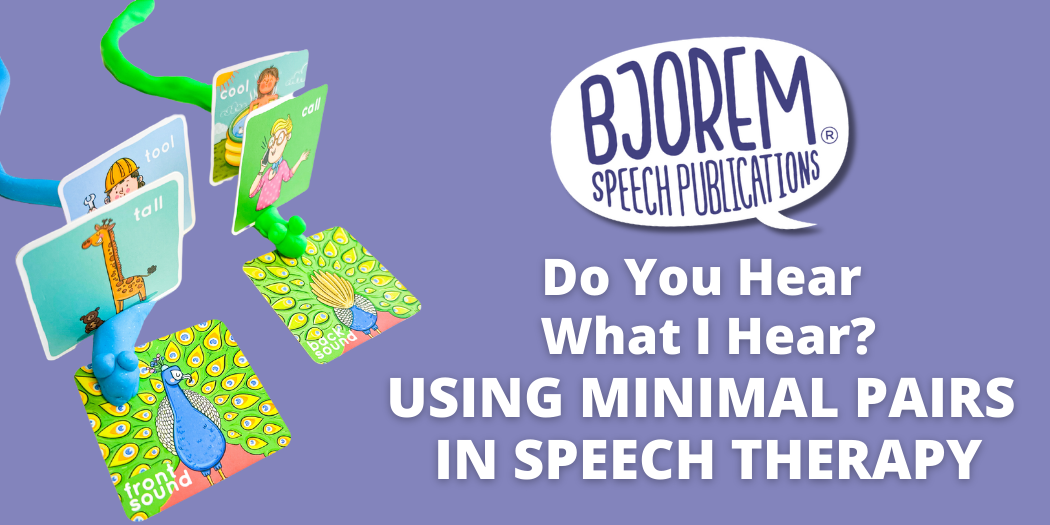
Minimal pairs are pairs of words that differ by just one sound, helping children understand how changing a single sound can change the meaning of a word. For example, “tea” vs. “key” or “pat” vs. “bat.” This approach is often used in speech therapy to improve sound awareness and clarity by showing that accurate sound production matters for communication.

Voicing Cue cards, noisy & quiet sounds.

How It Works

Minimal pairs therapy works by presenting children with pairs of words that differ by only one sound, such as “sip” and “ship” or “coat” and “goat.” By contrasting these similar-sounding words, children begin to understand how small changes in sounds can completely change a word’s meaning. This awareness helps them recognize when their own speech creates confusion and motivates them to adjust their sound production. Over time, the repeated practice with meaningful contrasts encourages more accurate and intentional speech patterns.

Bjorem Studio Back Sound peacock card

How We Can Help

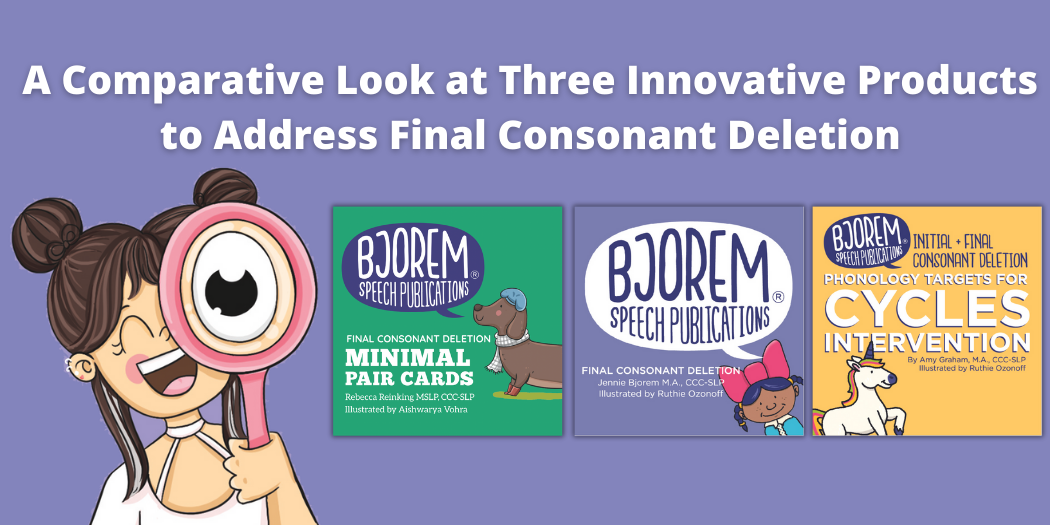
At Bjorem Speech®, we support minimal pairs therapy with a comprehensive collection of decks designed to target specific phonological patterns. Our Minimal Pairs line includes Fronting & Backing, Gliding, Voicing, Final Consonant Deletion, S Cluster Reduction, and Stopping, each thoughtfully created to address common error patterns in speech. Every deck features playful, kid-friendly illustrations paired with strategic cue cards to keep sessions engaging, meaningful, and effective. Whether you’re an SLP, educator, or parent, our materials make it easy to implement this evidence-based approach in a way that’s both fun and functional.

Start Shopping
Tail Sound

The Research

Evidence supports minimal pairs as an effective intervention for children with phonological disorders. Research by Weiner (1981) and Elbert & Gierut (1986) demonstrated significant improvement using minimal pair contrasts.

Research has shown that three to five word pairs can facilitate generalization in children (Elbert, Powell & Swartzlander, 1991). The authors also reported that some children might require more minimal pairs words.

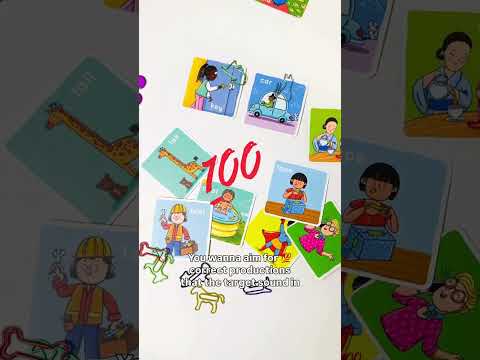
The SLP should aim for 100 practice trials of the target sounds per session (Sugden et al., 2018).

While minimal pairs therapy at word level only can be enough to facilitate generalization to untreated words in conversation (Elbert et al. 1990), you might decide to include practice at the phrase and/or sentence level if generalization is slow.

Elbert, M., Dinnsen, D. A., Swartzlander, P. & Chin, S. B. (1990). Generalization to conversational speech. Journal of Speech and Hearing Research, 55, 694-699.

Elbert, M., Powell, T. W., & Swartzlander, P. (1991). Toward a technology of generalization: How many exemplars are sufficient? Journal of Speech and Hearing Research, 34, 81-87.

Gierut, J.A.(1989). Maximal opposition approach to phonological treatment. Journal of Speech and Hearing Disorders, 54, 9-19.

Sugden, E., Baker, E., Munro, N., Williams, A.L. and Trivette, C.M. (2018). Service delivery and intervention intensity for phonology‐based speech sound disorders. International Journal of Language & Communication Disorders, 53: 718-734. doi:10.1111/1460-6984.12399

Tyler, A.A., Edwards, M.L., & Saxman, J.H. (1987). Clinical application of two phonologically based treatment procedures. Journal of Speech and Hearing Disorders, 52, 393-409.