I had the pleasure of editing and helping with the Grab and Grow Apraxia Targets for Early Syllable Shapes deck that was created by Jennie Bjorem, MA, CCC-SLP. In creating this deck, Jennie and I combined our decades of treating hundreds of children with childhood apraxia of speech (CAS) with research-based information to help speech-language pathologists (SLP) learn more about target selection and cueing.
This blog series is all about the deck and how to use it.
STOP – Before Using this Deck
Grab & Grow: Apraxia Targets for Early Syllable Shapes deck is NOT meant to be used as flashcards, nor is it a therapy prescription. Do NOT start at the first card and move sequentially through the cards.
Instead, use this deck to intentionally select targets based on a child’s sound inventory, phonotactic (syllable shape) inventory, words of importance, interests, motivation and motor speech skills.
We recommend selecting 5-10 targets to start and practicing these targets with lots of repetition until the child can motor plan the words accurately, independently and consistently.
What’s Inside the Deck?
This deck includes:
· 285 target words printed on 4”x4” cards
· 8 early syllable shapes
· VITAL target selection framework
· Cueing strategies on the backs of cards
Eight Syllable Types
We included target words from eight early developing syllable shapes:
CV – consonant-vowel combinations with a variety of consonants and vowels
VC – vowel-consonant combinations with a variety of consonants and vowels
VCV – vowel-consonant-vowel combinations with a variety of consonants and vowels
Reduplicated CVCV – consonant-vowel-consonant-vowel that repeat the same syllable twice
CVCV with variegated vowels – combinations of CVs that use the same consonant but different vowels in each syllable
CVCV – combinations of two CV syllables that use different consonants and different vowels in each syllable
CVC assimilated – both consonants are the same
CVC – the initial and final consonants are different
Remember, we strongly recommend selecting targets from a variety of syllable shapes rather than all from one type. Think about what the child is able to do on their own, as well as with cueing. If the child primarily produces CVs, consider adding a vowel to make a VCV or combing two CV syllables to make a CVCV. You may even be able to take a CVCV the child produces and break it down into a CV that is a meaningful word.
Motor Performance and Motor Learning
When working with children with apraxia, it’s important to think about the Principles of Motor Learning, especially the differences between motor performance and motor learning.
Motor performance is establishing the movement to produce the word or phrase with cueing. This means providing multisensory cueing, increasing motivation, focusing attention and providing lots of specific feedback. Motor performance is where we start with new goals in therapy. Think of it as setting the stage for the best performance possible!
Motor learning is using the movement to produce the word or phrase in another context and time. This means the child can say the word to different people, with different emotions, while their body is still or moving, and even if it’s been a long time since they used that word or phrase. Think of it as being able to say that word or phrase anytime, anywhere! Motor performance is the end goal we want!
VITAL Target Selection Framework for Childhood Apraxia of Speech
Let’s talk through the VITAL framework and what that means for selecting targets for apraxia therapy.
V stands for a variety of sounds, syllable shapes, stress patterns, and difficulty (both easy and hard targets). Think about including a variety of sounds, especially vowels. Targeting vowels is really important for children with apraxia. Vowels are the loudest and longest parts of speech, and producing accurate vowels has a huge impact on a child’s intelligibility and understandability. As I mentioned earlier, we also want to make sure that we are including a variety of syllable shapes. While CV is the most motorically stable (and often easiest to produce) syllable shape, we want to be supporting a child in producing other syllable shapes, as well. This is important for children with apraxia so that they do not get stuck or overlearn one syllable shape/pattern. We also want to make sure that we are including variety by practicing words with different prosody, including rate, loudness and emotion. For two syllable words, also consider stress patterns, such as if the first or second syllable is stressed. Last, we want to include a variety of easy and hard targets. Select some word targets that the child already has motor performance for, and work towards motor learning. Also select some hard targets, that the child may need multisensory cueing and lots of support to produce (motor performance). You will probably practice the easier targets with more prosodic variations and in more random contexts, whereas the harder targets will be produced with a lot more repetition.
I is for inventory-based. Consider the sounds the child can say, as well as the types of syllable shapes (sequences) in which the child can say them. Don’t forget to also inventory the sounds and syllable shapes that the child can say with multisensory cueing! In other words, look at stimulability. Sound and syllable shapes for which the child is stimulable can also be included in some of their “hard” targets.
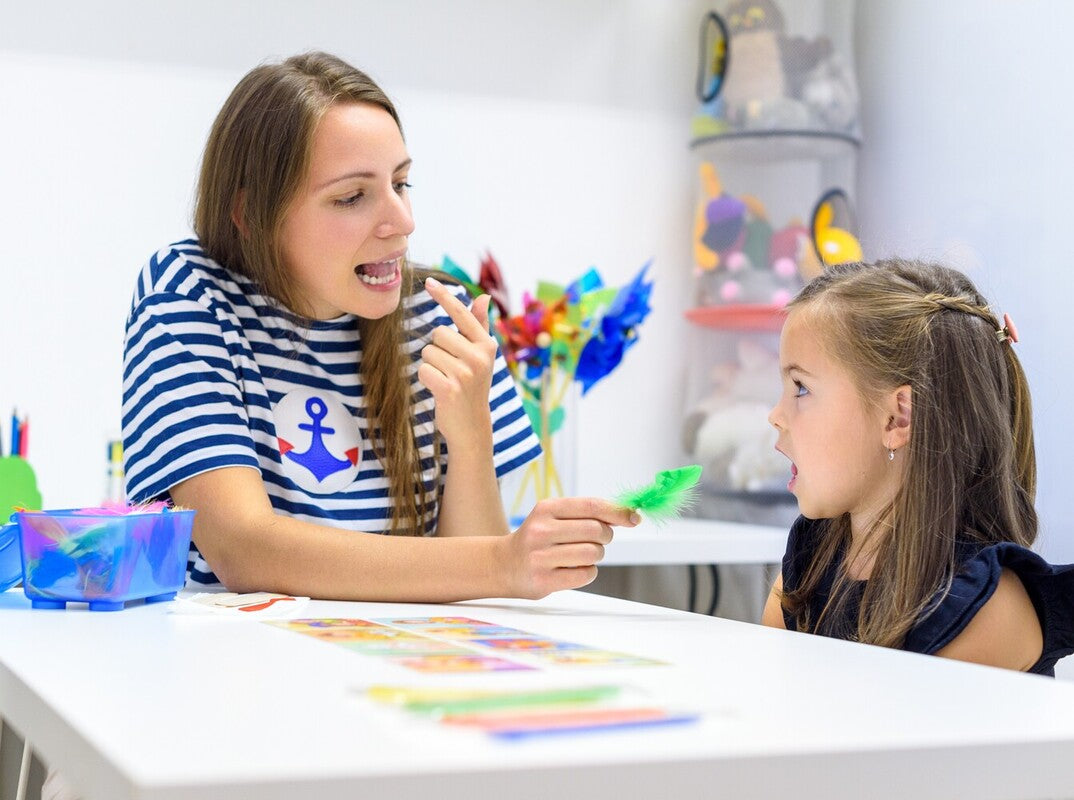
T is for focus on Transitions. This begins with the initial articulatory position, or where the speech articulators are to start the word. The vowel in the first syllable (regardless of whether the word starts with a consonant or vowel) is a big determining factor in the initial articulatory configuration. So, if we have a rounded vowel, our lips are rounded. If we have a retracted vowel, then our lips are spread. A common example is if we're saying “me,” then our lips are more spread, because /i/ is a retracted vowel. In contrast, if we're saying “moo,” then our lips are tight and round in anticipation of that round vowel. To cue for the initial articulatory configuration, before you start the movement, you get in the right place for the movement. This means telling the child: “Get your round lips ready and touching” to say the target “moo” before we start to say it, or “Get your happy lips ready and touching” before we say “me.”
We also want to think about coarticulation, which is how sounds influence the other sounds around them. Thinking about the initial articulatory configuration and how that is determined by the vowel, is an example of coarticulation. We also think about coarticulation in other anticipatory contexts of what sound is coming next and how that changes the sound production. So, really thinking about the entire movement to produce that target, not thinking about individual sounds. We're thinking about the movement and the sequencing and how that actually looks and feels.
The last factor in considering transitions is thinking about avoiding an intrusive schwa. An intrusive schwa can happen when the child has some errors in timing with their voice offset time. It can also be influenced by extra movements, like dropping the jaw at the end of the word. We want to really think about making sure that transition at the end of the word is the way we want it to be and avoid that intrusive schwa.
A is for the appropriate number of targets. For this deck, we designed it thinking of children who are at the early part of their speech journey, who probably don't have a huge spoken vocabulary that they're using spontaneously, independently, and accurately. In that case, we're looking at probably 5 to 10 targets, so we can get a really high number of repetitions of each target in every session.
L is for life-relevant. The target words need to be important words for the child. The targets can build on well-practiced words, such as using a CV to make a VCV or CVCV. Most importantly, the target words should be words the child can and will use in everyday life. Be sure to consider the child’s motivation – sometimes this is different than the words that their caregivers, teachers or therapists might select.
Stay Tuned
To learn more about the types of cueing and ways to use the Grab & Grow Apraxia Targets for Early Syllable Shapes Deck, stay tuned for part 2!