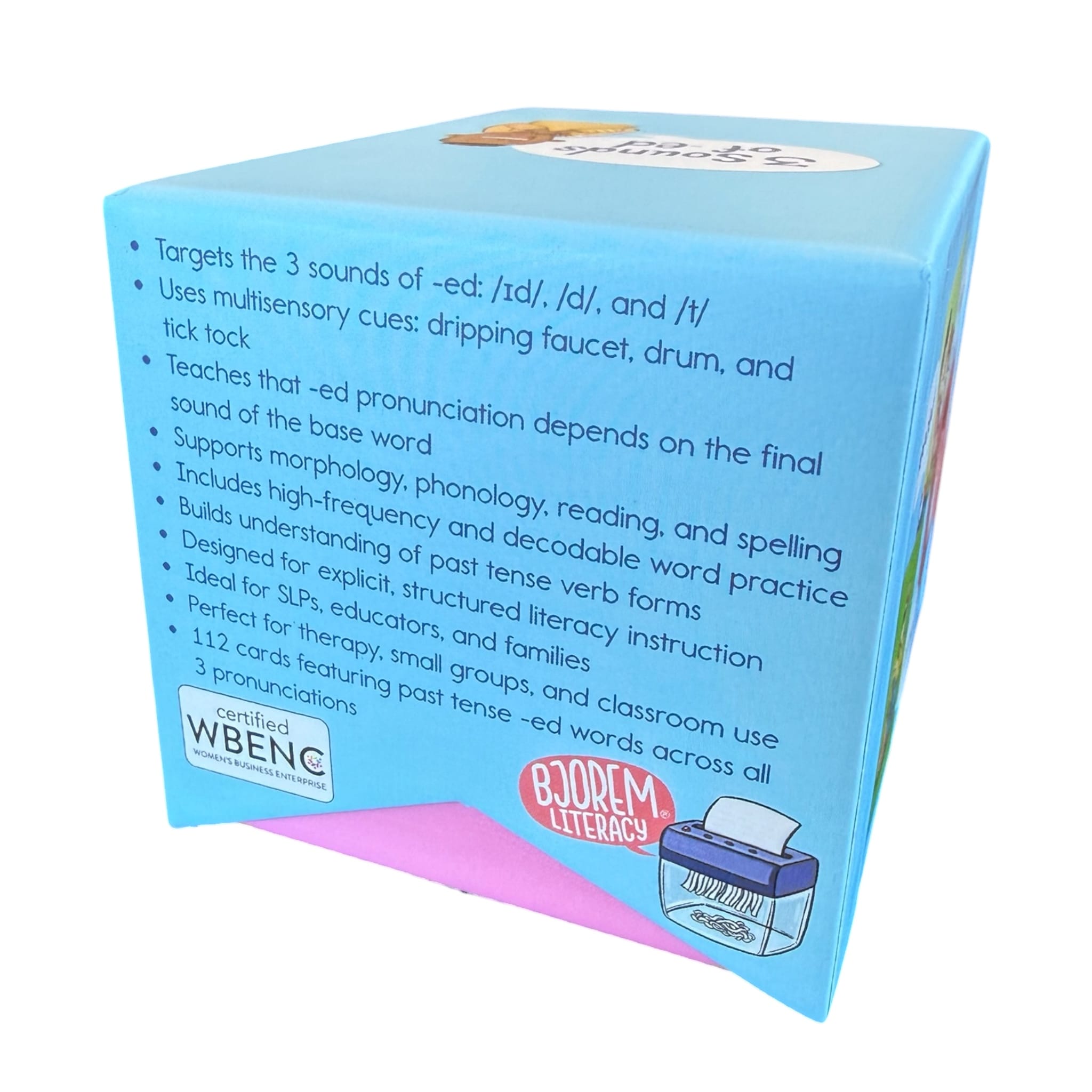
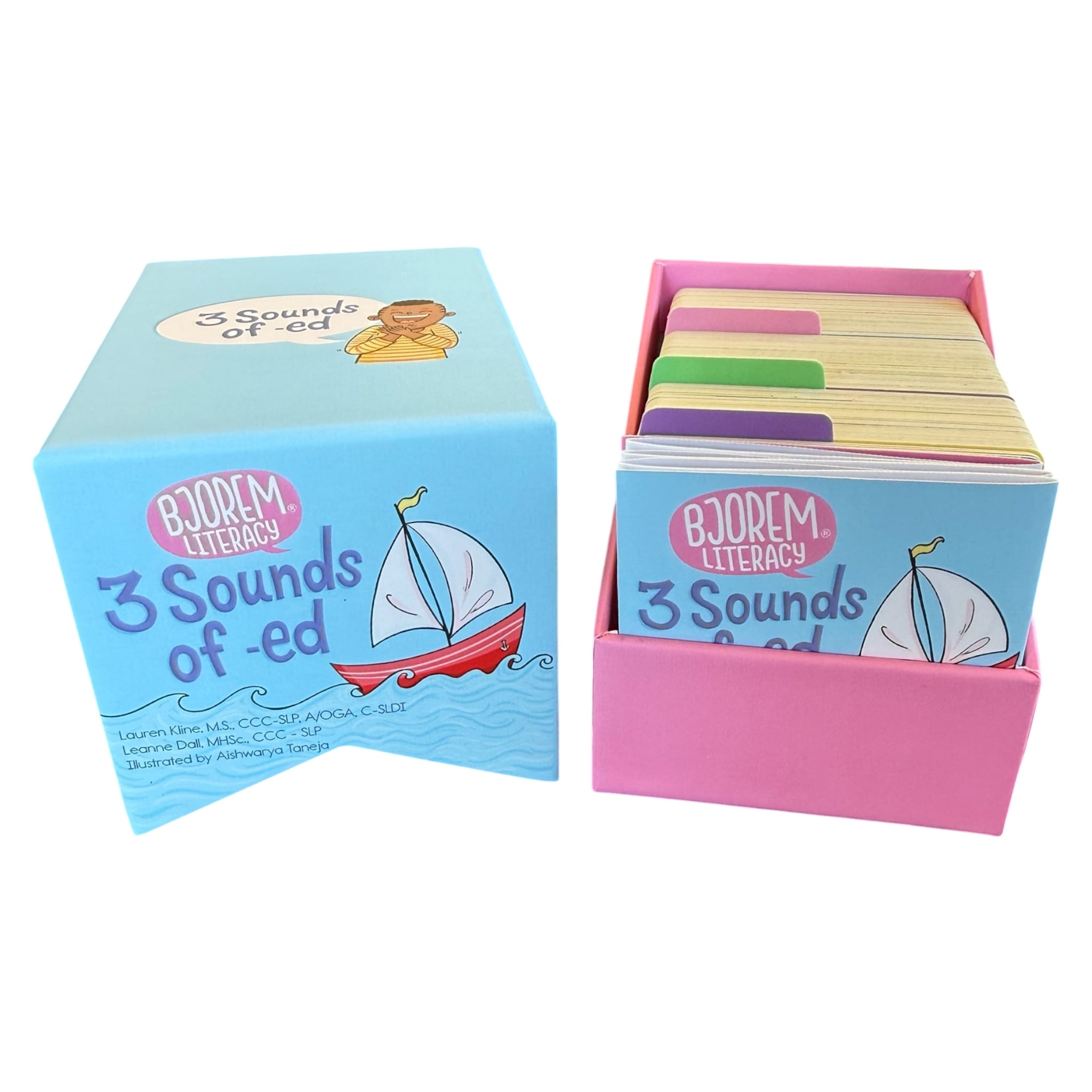
Words are stored in memory through orthographic mapping — the process that links sound, letters, and meaning. The suffix -ed is one of the clearest examples in English: it carries past tense meaning while changing its pronunciation based on the final sound of the base word. That makes it a perfect bridge between the speech work you already do and the literacy work your students need.
This deck lets you:
- Know which problem you’re looking at. A student who writes jumpt has a spelling problem. A student who says /jʌmpɪd/ has a pronunciation problem. This deck gives you a clear view of both.
- Teach voicing explicitly, using the same voiced and voiceless contrasts you already teach in articulation.
- Build morphological awareness, which research links to gains in spelling, vocabulary, and reading comprehension.
- Generalize to untaught words, because students learn a rule rather than 112 memorized items.
- Take real data, with sort tasks that work as pre- and post-probes.
If you already do error analysis on an articulation test, you already have the skills to teach this. The deck gives you the structure.
Speech-language pathologists bridging speech and literacy
Classroom teachers and reading specialists
Structured literacy and dyslexia intervention
Small group instruction, RTI, and literacy centers
Home educators and caregivers