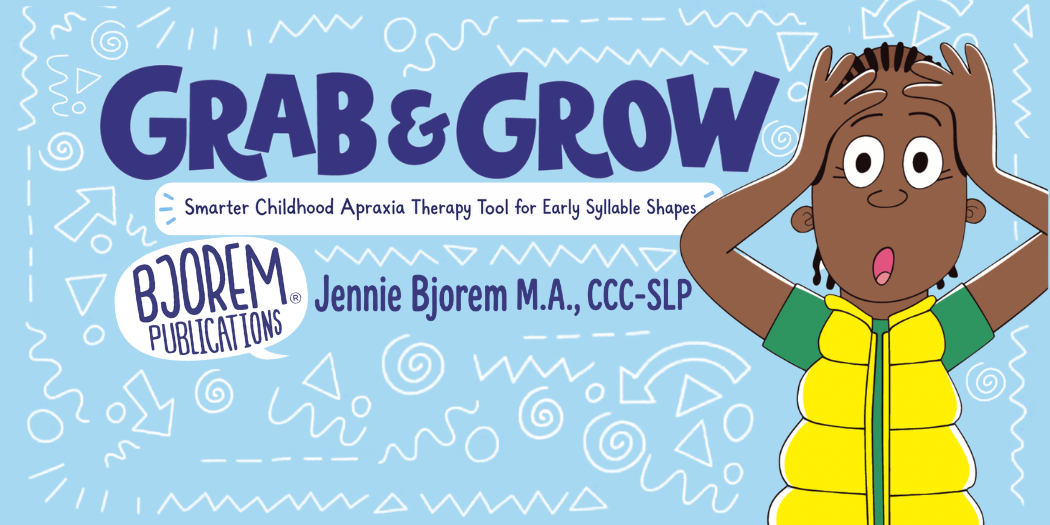
Grab and Grow: A Smarter Childhood Apraxia Therapy Tool for Early Syllable Shapes
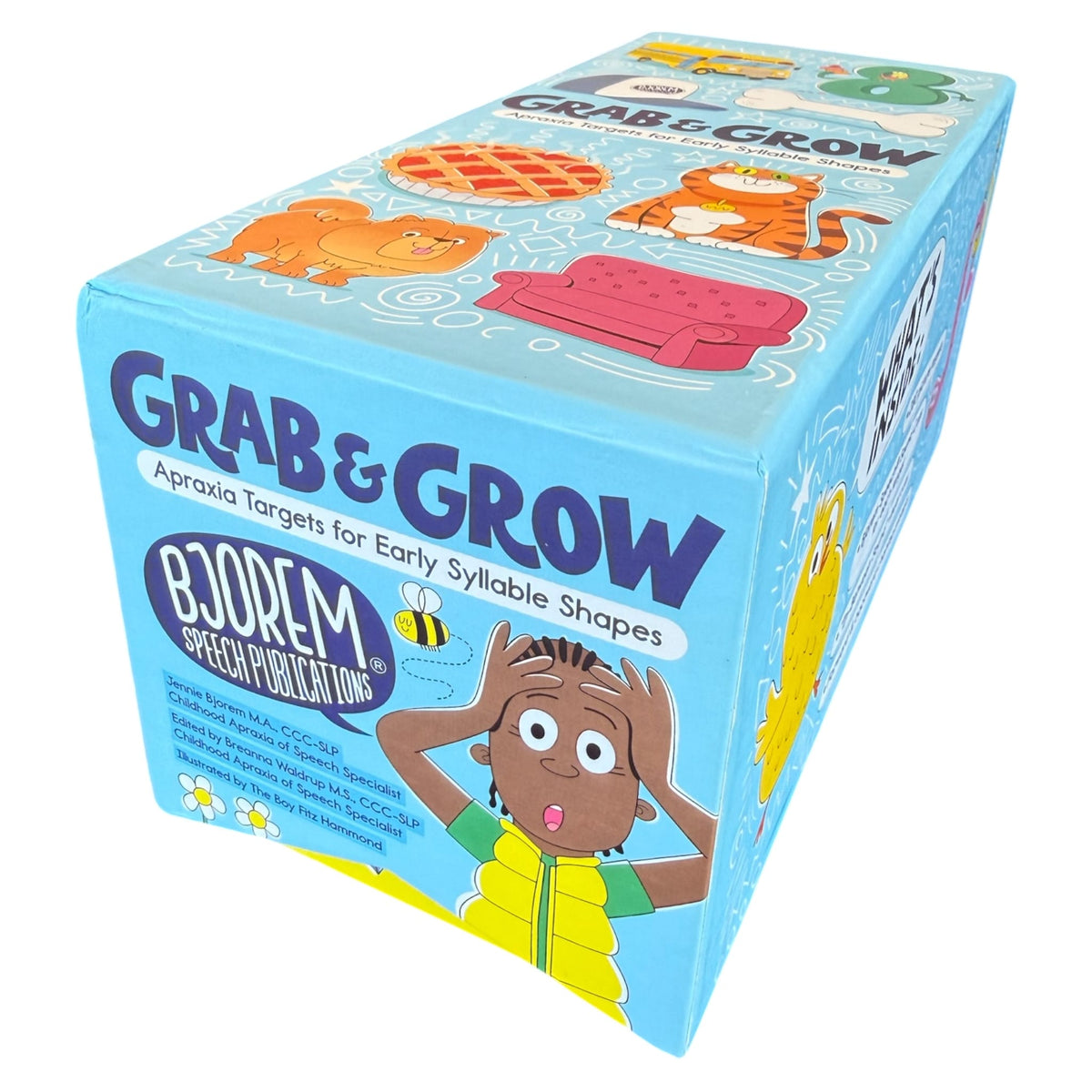
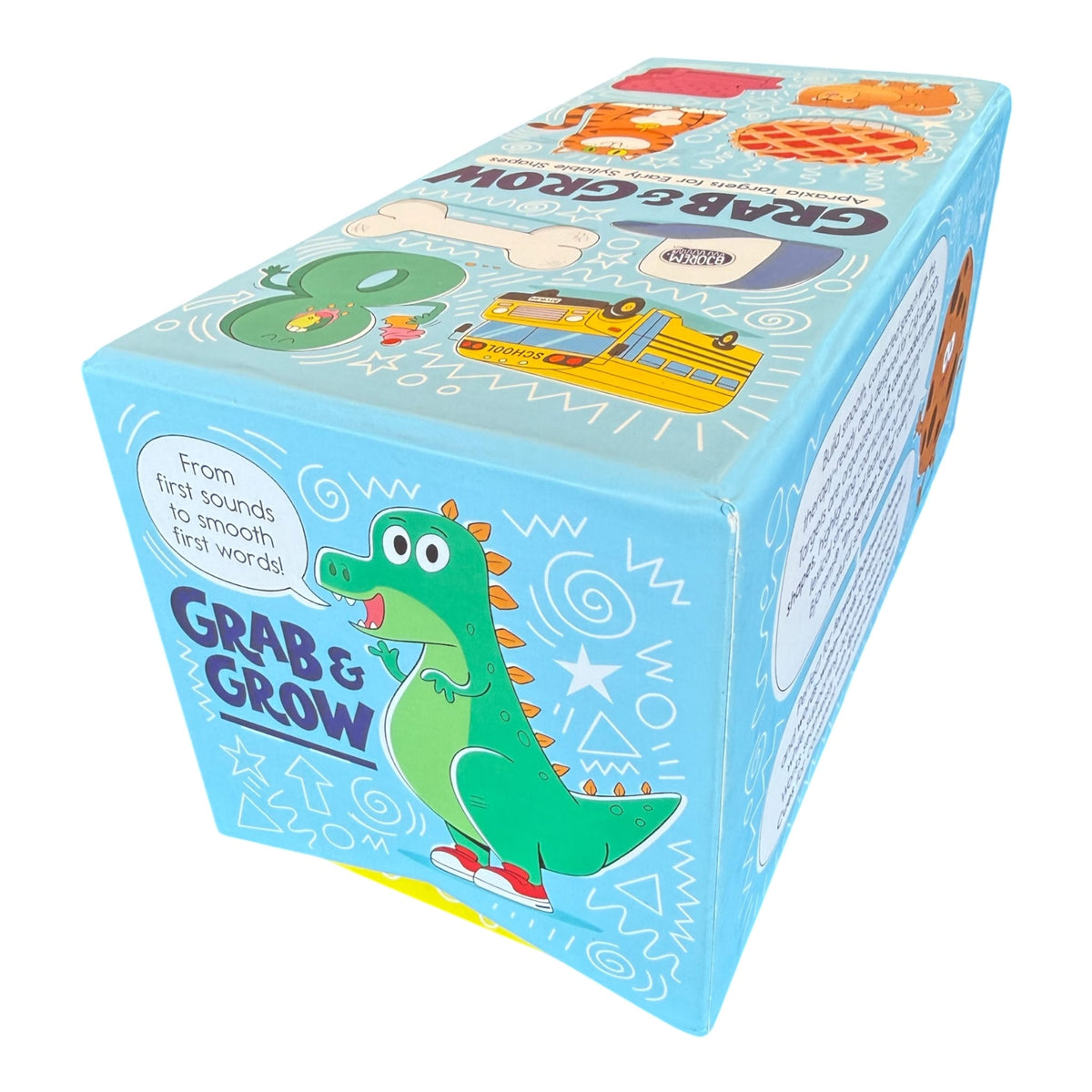
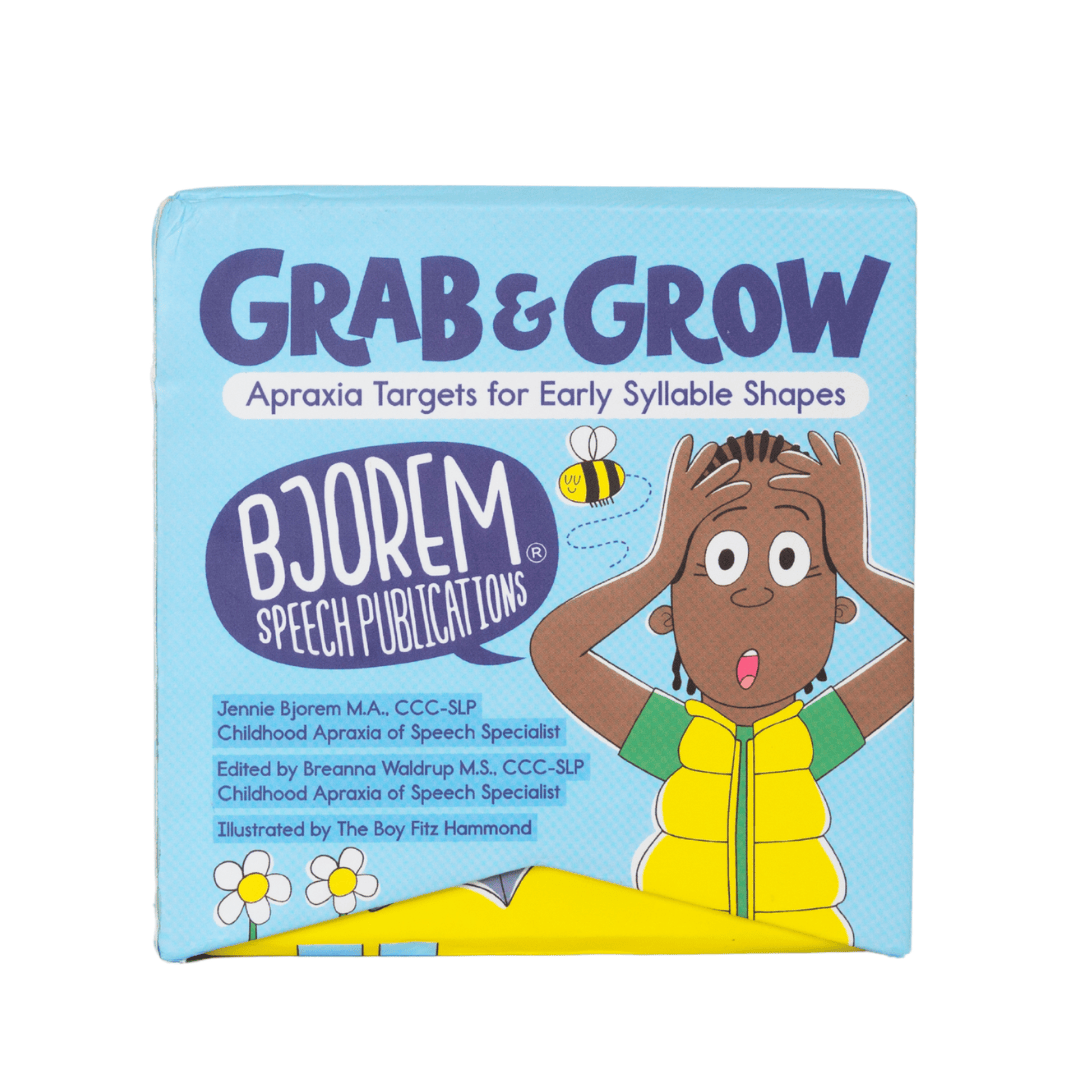
Most apraxia card decks hand you a stack of words and don't give you guidance on where to start. Grab and Grow Apraxia Targets for Early Syllable Shapes does the opposite. Built by a childhood apraxia of speech specialist with more than two decades of clinical and training experience, this deck puts clinical judgment first and volume second. It is grounded in motor learning research, designed around a structured target selection framework, and packed with on-card cueing support that helps speech-language pathologists, classroom educators, and families deliver confident, intentional practice from session one.
Whether you are an experienced CAS specialist or a clinician who never got enough training in motor speech, Grab and Grow was designed to meet you where you are and raise the level of care for every child you work with.
Why I Created Grab and Grow Apraxia Targets
I am a childhood apraxia of speech specialist, and I have spent more than two years building the Grab and Grow Apraxia Targets for Early Syllable Shapes deck. The clinical experience behind it goes back much further. I train speech-language pathologists across the United States, Canada, and many countries around the world on how to treat childhood apraxia of speech, and the same gaps show up in every single training. Clinicians want to help these kids. They care deeply. And they were never taught enough about co-articulation, cueing, or clinical judgment in target selection for the children early in their speech journey.
That is the gap Grab and Grow was built to close.
The Research Behind Grab and Grow
The need for a better apraxia therapy tool is not just something I have noticed in trainings. It is well documented in the research.
A 2019 survey of more than 100 SLPs in Australia and New Zealand found that clinicians strongly preferred eclectic, hybrid approaches to treating childhood apraxia of speech, even though the effectiveness of those eclectic CAS approaches has not been empirically evaluated. The same clinicians said they valued evidence-based practice, but they identified a range of barriers that made it hard to implement empirical research in their CAS therapy sessions (Gomez, McCabe, and Purcell, 2019).
A 2026 study of nearly 300 early intervention SLPs in the United States went further. It found that continuing education on CAS was the only significant predictor of accurate clinical knowledge. Years of experience, work setting, and general CAS knowledge were not predictors. The same study also found that highly structured, clinician-directed approaches, the very ones with the strongest evidence base for treating childhood apraxia of speech, remain relatively underused. Only 7% of SLPs who diagnose and treat CAS in young children report using these motor-based approaches a great deal (Valentine, Keller, Harel, and Grigos, 2026).
The takeaway is simple. A clinician can spend a full career treating kids and still not feel solid in childhood apraxia of speech therapy unless she actively pursues continuing education in it. When that training is not there, she defaults to whatever feels familiar, even when the research has not validated it.
What Happens in the Therapy Room Without the Right Tools
That research gap shows up the moment a clinician sits down with a child who has CAS. She opens a deck of apraxia cards, starts at card one, and works through every word in sequence. She guesses at cueing. She picks targets the child has no interest in. The child practices the same syllable shape repeatedly, gets stuck, and the parents wonder why progress is so slow.
Meanwhile, when inaccurate motor patterns are repeated without correction, they become ingrained (Bernstein, 1957; Case, Caspari, Aggarwal, and Stoeckel, 2024). Wrong motor plans get reinforced just as effectively as correct ones, and they get harder to undo with every session that passes. A month of generic apraxia practice is not a neutral month. It is a month of habits we will later have to undo.
Children with childhood apraxia of speech deserve high-quality, intentional, motor-based practice from the very first session. Clinicians deserve a tool that supports them while they deliver it.
How Grab and Grow Is Different from Other Apraxia Cards
Grab and Grow Apraxia Targets for Early Syllable Shapes is not a sequential apraxia program. Most other apraxia therapy cards on the market are built on volume and clinicians take a fixed clinician-led order. Some have 240 cards. Some have over a thousand. They tell the SLP to work through the deck. Grab and Grow tells the SLP to STOP.
The first card in our deck is a stop sign. Before a clinician uses a single target, she is reminded that these are not flashcards, and this deck is not a therapy prescription. Targets are chosen intentionally for each child based on the VITAL framework.
The VITAL Framework for CAS Target Selection
-
V: Variety of consonants, vowels, syllable shapes, and stress patterns
-
I: Inventory based, drawn from sounds the child can already produce or is stimulable for
-
T: Transition aware, considering articulatory configuration and the movement between sounds
-
A: Appropriate number of targets, 10 or fewer at a time
-
L: Life relevant words that matter to the child and to the family
No other apraxia of speech therapy deck on the market builds target selection into the product itself. That clinical decision making is what makes the difference between sequential card flipping and real motor-based intervention for childhood apraxia of speech.
What Is on the Back of Every Grab and Grow Card
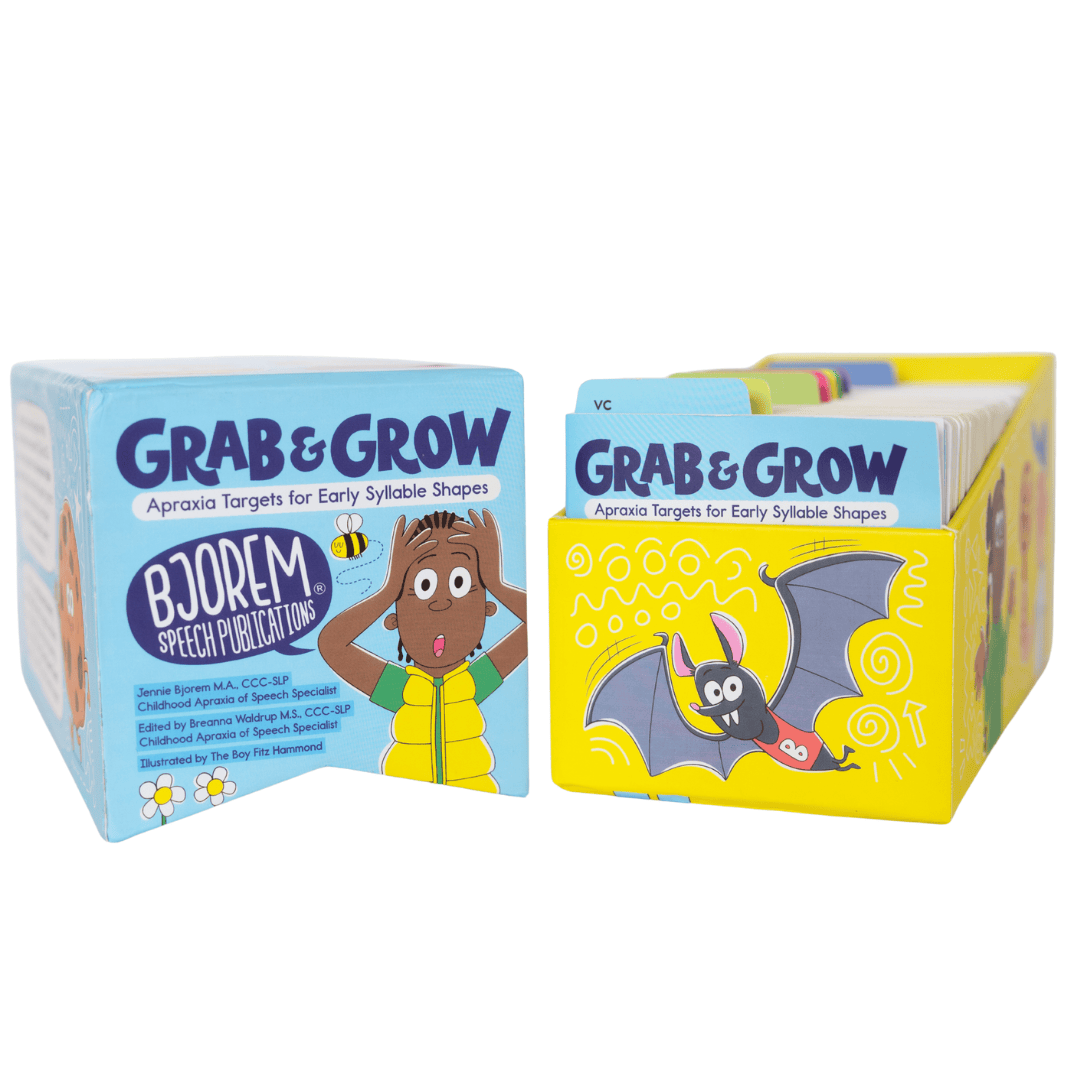
Every card in the deck delivers clinical support to the SLP while she treats the child. On the back of every card, you will find:
-
Individualized cueing guidance for that specific target
-
Bjorem Speech® Sound Cues, our visual support system for individual sounds and combinations
-
In-Between Sound Cues for smoother transitions between voiced and voiceless cognates
-
Stop Cues to remind the clinician where to mark sound placement
-
Forward chaining and backward chaining direction
-
Initial articulatory mouth positions
Grab and Grow also includes words-within-words connections to give the child meaningful motor links between targets, instead of practicing isolated nonsense syllables. And the deck explicitly honors approximations like wawa for water, bibi for baby, and appbow for apple as real progress and real motor planning milestones, not errors to correct.
Why Grab and Grow Belongs in Therapy Sessions
For speech-language pathologists treating childhood apraxia of speech, Grab and Grow is a clinical tool that supports confident, motor-based therapy from the first session. The cueing guidance on the back of every card gives the SLP a quiet, on-the-spot reminder of what to do, how to chain, and where to place her hands and her words. For SLPs who have not yet had a deep dive course on CAS, this deck delivers professional development while she works. For experienced apraxia specialists, it is a streamlined, evidence-aligned tool that respects how she already practices.
Why Grab and Grow Belongs in Classrooms
Classroom teachers, early childhood educators, and special education staff often work alongside SLPs to support children with childhood apraxia of speech. Grab and Grow gives them a structured, clinician-designed way to support speech motor practice during classroom routines, small group instruction, and learning centers. The visuals are inclusive, age appropriate, and easy to use without specialized training, while the clinical guidance on the back keeps the practice aligned with what the child's SLP is targeting in therapy.
Why Grab and Grow Belongs in Homes
Parents and caregivers are the most powerful intervention partners a child with CAS will ever have. Grab and Grow is designed to travel from the therapy room to the home, with cueing guidance and target words that a parent can use during everyday routines like meals, bath time, and play, when trained by a speech language pathologist. When families have a clear, clinician-guided way to support their child's motor planning at home, the work of every therapy session goes further. That is what real carryover looks like.
How Grab and Grow Supports Evidence-Based Apraxia Therapy
Grab and Grow Apraxia Targets for Early Syllable Shapes is grounded in the principles of motor learning, the very approach that has the strongest evidence base for treating childhood apraxia of speech. By giving SLPs a target selection framework, cueing support, and clinical decision making built directly into the product, the deck helps close the research-to-practice gap that the Valentine and Gomez studies have documented.
This is what Bjorem Publications was built to do. We over serve the clinicians who are over serving these kids.
Get Grab and Grow Apraxia Targets for Early Syllable Shapes
Grab and Grow is $125 and is available for presale on May 29, 2026 at bjoremspeech.com. It is a single, lasting investment in better childhood apraxia of speech therapy for every child you treat, every classroom you support, and every family you partner with.
If you are an SLP looking for evidence-based CAS therapy materials, a teacher supporting a student with motor speech challenges, or a parent searching for the right apraxia therapy tools to use at home, this deck was built for you.
References
Bernstein, N. (1957). Some emergent problems of the regulation of motor acts. In H. T. A. Whiting (Ed.), Human motor actions: Bernstein reassessed (pp. 343 to 371). Elsevier.
Case, J., Caspari, S., Aggarwal, P., and Stoeckel, R. (2024). A goal-writing framework for motor-based intervention for childhood apraxia of speech. American Journal of Speech-Language Pathology, 33(4), 1590 to 1607.
Gomez, M., McCabe, P., and Purcell, A. (2019). Clinical management of childhood apraxia of speech: A survey of speech-language pathologists in Australia and New Zealand. International Journal of Speech-Language Pathology, 21(3), 295 to 304. https://doi.org/10.1080/17549507.2019.1608301
Valentine, H. C., Keller, S., Harel, D., and Grigos, M. I. (2026). Clinicians' perspectives on diagnosing and treating childhood apraxia of speech in children under 3 years old. American Journal of Speech-Language Pathology, 35(1), 266 to 283. https://doi.org/10.1044/2025_AJSLP-25-00215