Thematic Vocabulary Approach
Bjorem Publications logo (purple)

What It Is

A thematic vocabulary approach teaches words that are connected by a shared topic or theme, rather than teaching unrelated words one at a time. For example, instead of teaching random words like apple, jump, and big, vocabulary might be organized around themes such as:

  • Farm
  • Zoo
  • Transportation
  • Community Helpers
  • Dogs

Within each theme, learners explore many related words that naturally go together, helping them understand the topic more deeply while expanding their vocabulary.

How It Works

Thematic vocabulary instruction builds vocabulary within meaningful word networks.

Students learn multiple related words and concepts within a theme and explore how those words connect through activities such as:

  • discussing pictures and real-world experiences
  • sorting and categorizing words
  • describing and comparing items
  • hearing and using the words in stories and conversation
  • integrating the words into play

Because the words are connected, learners begin to see how vocabulary fits together, rather than memorizing isolated definitions.

How We Can Help

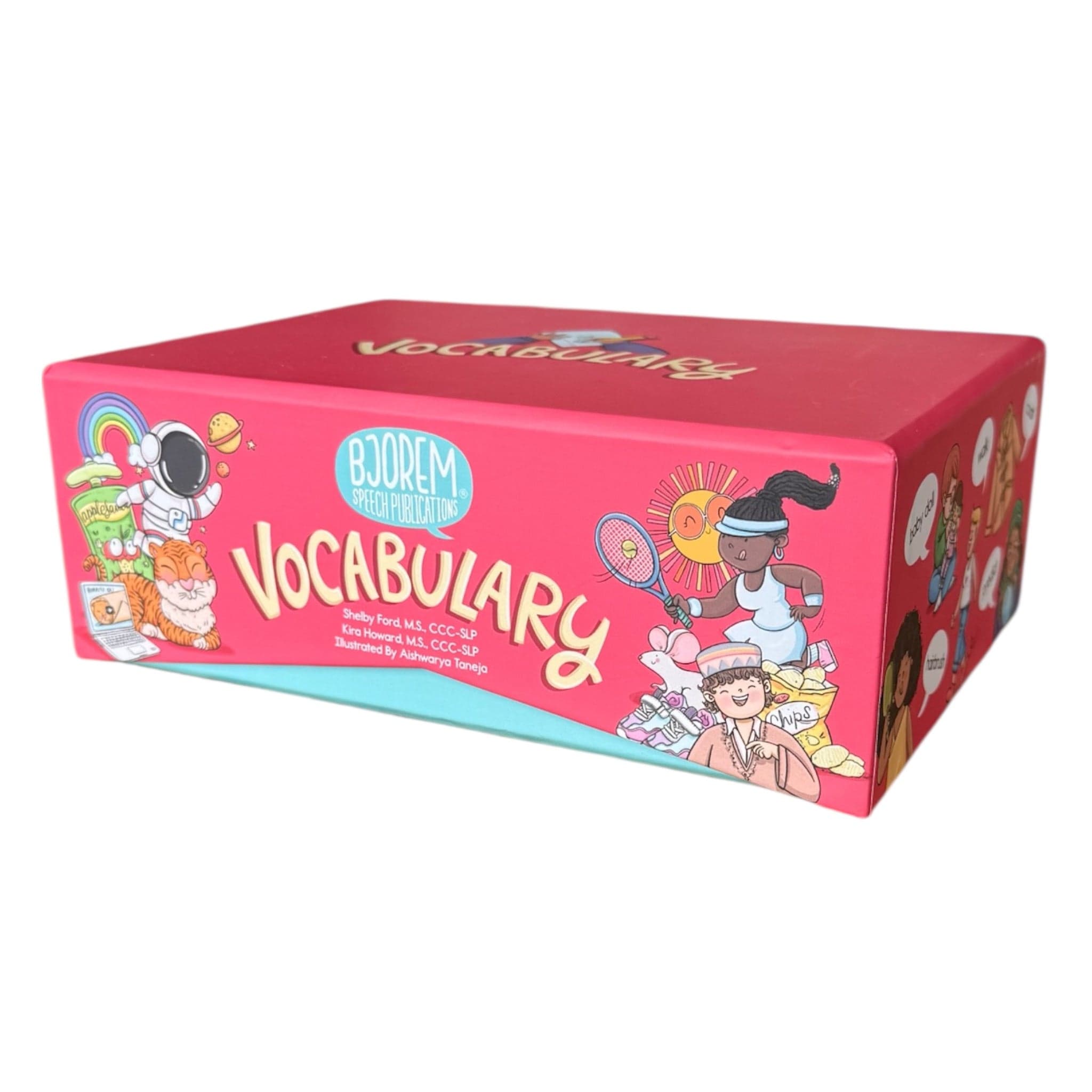
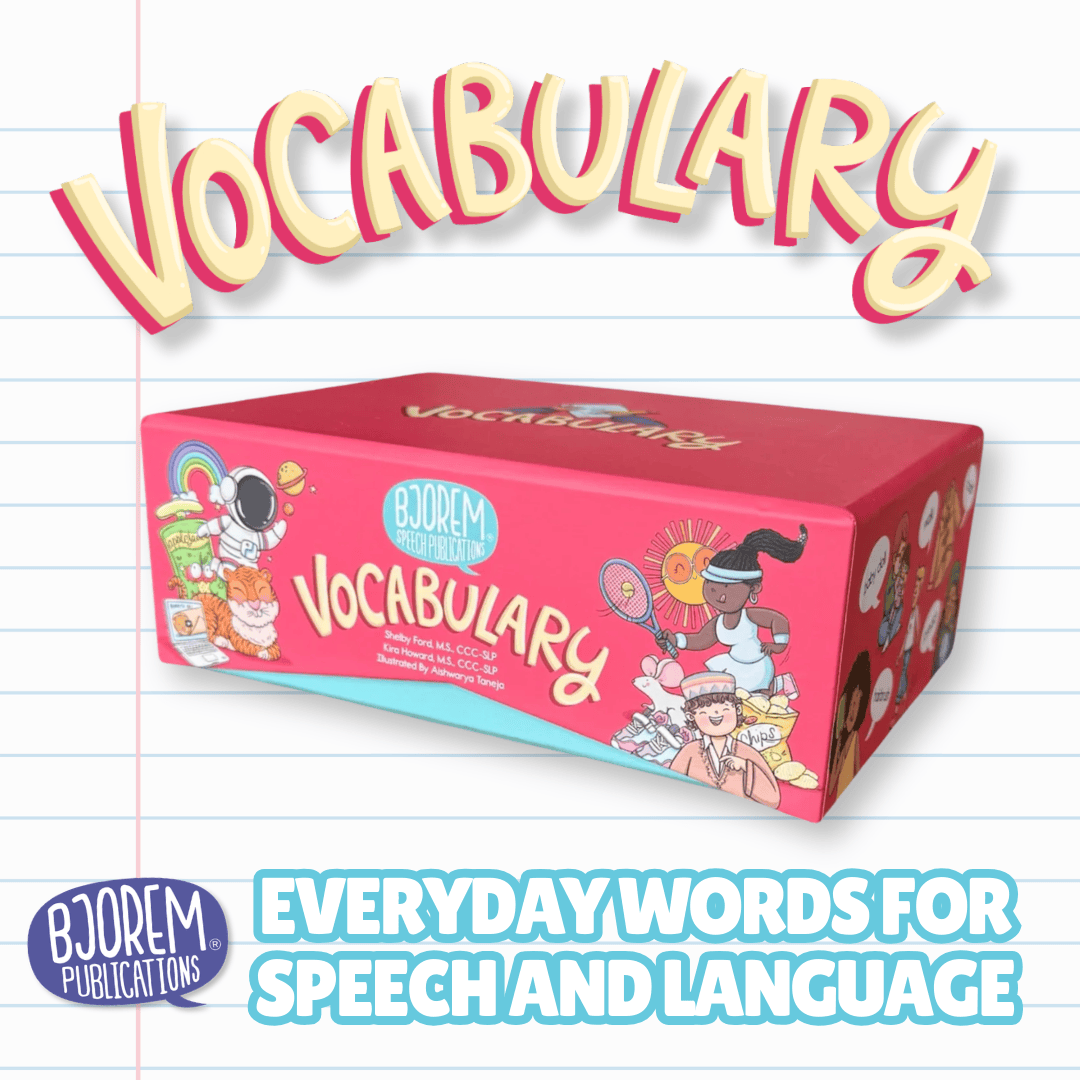
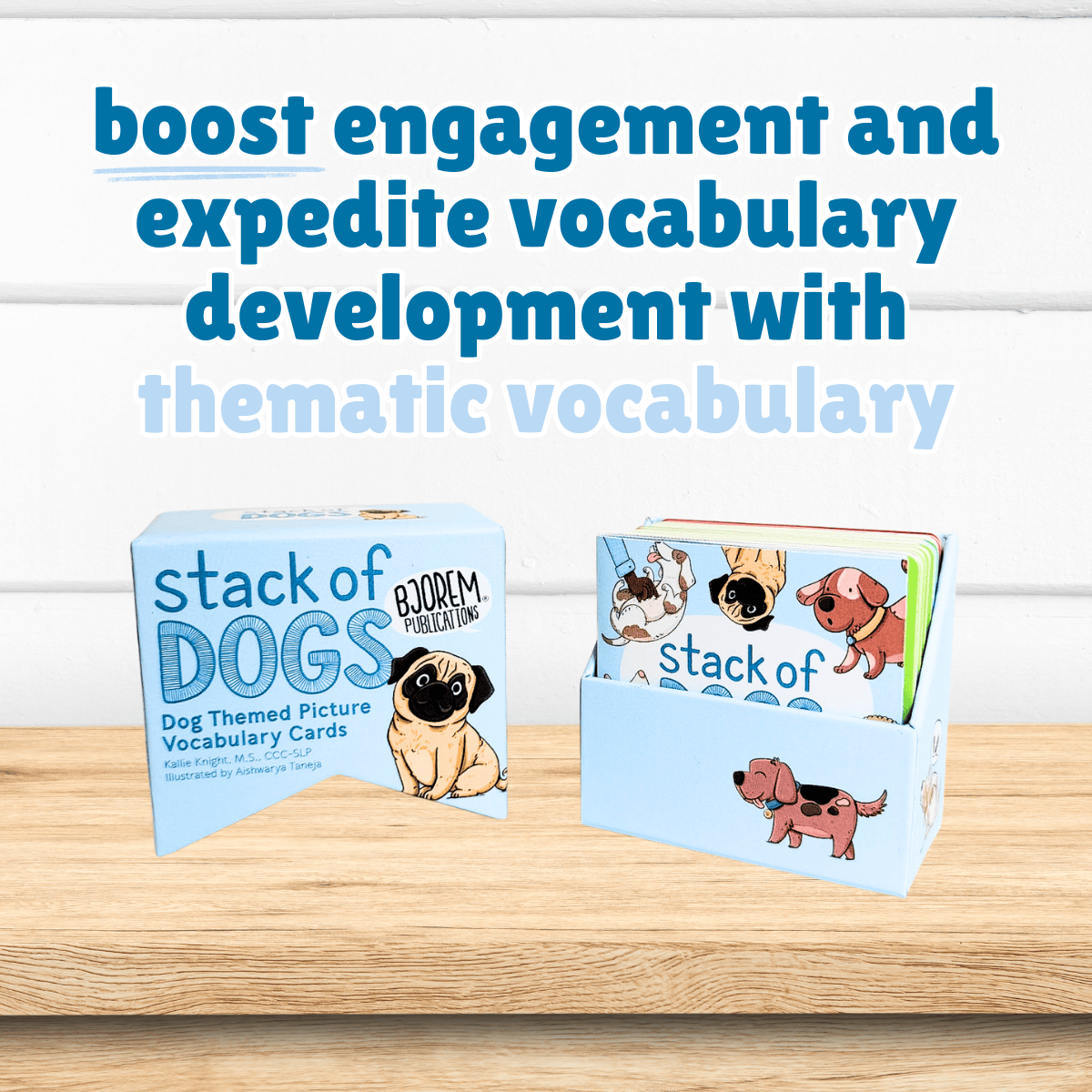
Skip the prep! The Bjorem Speech Vocabulary Deck and Stack of Thematic Vocabulary Series help you easily choose themed vocabulary sets to use in your themed speech and language sessions.

Using a thematic vocabulary approach...

  • Builds stronger semantic networks
    Teaching related words together helps the brain organize and store vocabulary more efficiently.
  • Boosts vocabulary retention and retrieval
    Words learned within meaningful contexts are easier for students to remember and use.
  • Accelerates vocabulary growth
    Targeting connected words within a theme allows students to learn and apply multiple words at once.
  • Supports higher-level language skills
    Thematic vocabulary naturally strengthens skills like categorization, describing, comparing, inferencing, and narrative language.
  • Creates meaningful, engaging learning
    Real-world themes make vocabulary instruction more relevant, motivating, and easier for students to connect to prior knowledge.

The Research

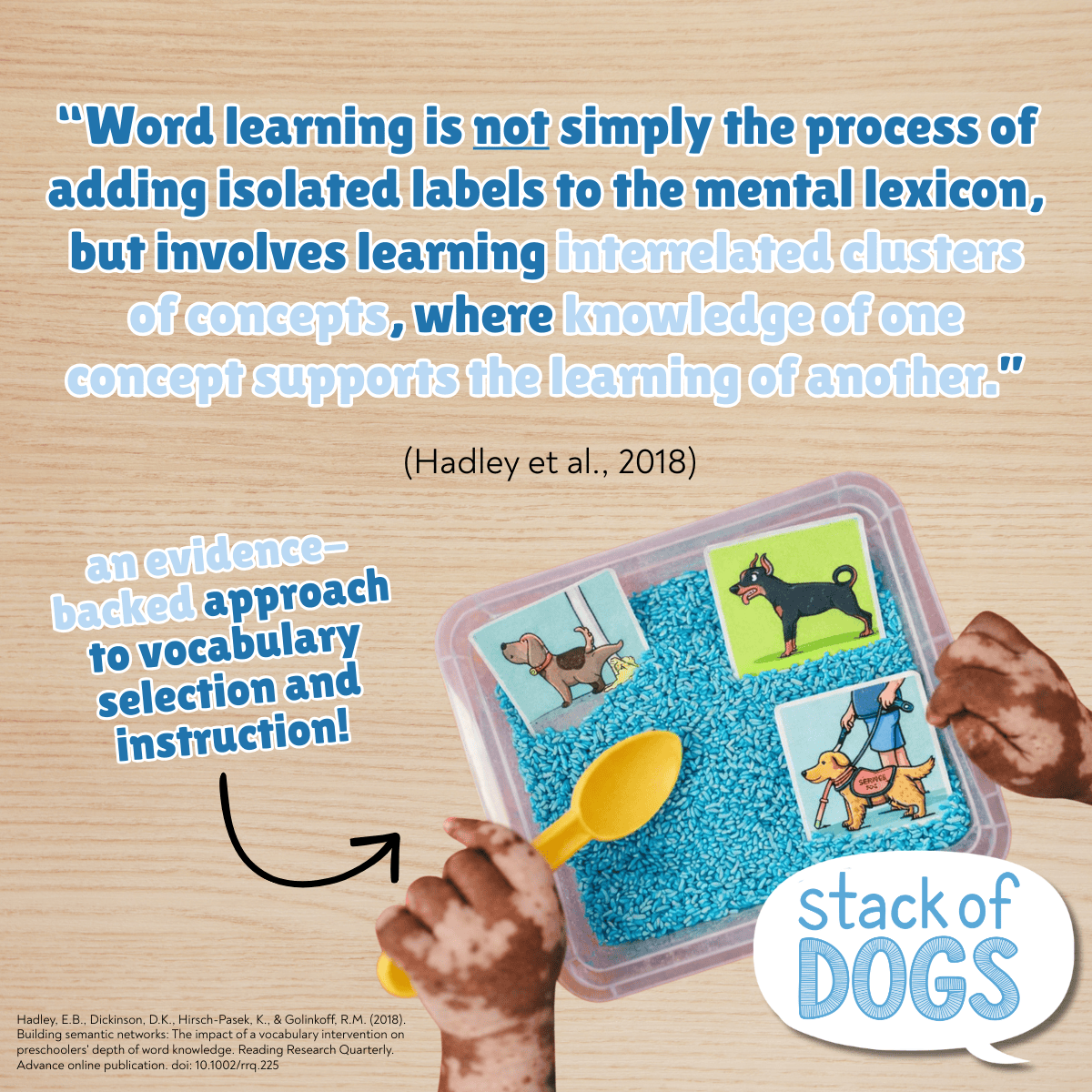
Research in language and learning shows that our brains store words in connected networks called semantic networks. When new words are learned alongside related words, they are easier to understand, remember, and use.

A thematic vocabulary approach helps learners build rich, connected word knowledge, making vocabulary learning more meaningful, memorable, and effective.

_____

Beck, I. L., McKeown, M. G., & Kucan, L. (2013). Bringing words to life: Robust vocabulary instruction (2nd ed.). Guilford Press.

Hadley, E.B., Dickinson, D.K., Hirsch-Pasek, K., & Golinkoff, R.M. (2018). Building semantic networks: The impact of a vocabulary intervention on preschoolers' depth of word knowledge. Reading Research Quarterly. Advance online publication. doi: 10.1002/rrq.225

Ukrainetz, T. A. (2006). Contextualized language intervention: Scaffolding prek-12 literacy achievement ; teaching students with language impairments the language needed for academic success through scaffolding explicit skills in purposeful contexts. Pro ed.